
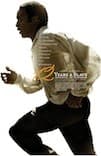
12 Years a Slave (2013)
Synopsis
In pre-Civil War United States, Solomon Northup, a free black man from upstate New York, is abducted and sold into slavery. Facing cruelty as well as unexpected kindnesses, Solomon struggles not only to stay alive, but to retain his dignity.
What is the budget of 12 Years a Slave?
12 Years a Slave, directed by Steve McQueen, made a significant impact upon its release in 2013. The film stars Chiwetel Ejiofor as Solomon Northup, alongside a talented cast that includes Michael Fassbender, Lupita Nyong'o, and Sarah Paulson. This powerful narrative, based on a true story, explores the harrowing experiences of a free black man who is kidnapped and sold into slavery. The budget of this critically acclaimed film plays a crucial role in understanding its production and financial success.
What was the production budget?
The production budget for 12 Years a Slave was set at $20,000,000. This figure places it within a reasonable range for a historical drama, especially considering the film's ambitious scope and the talent involved. When compared to similar films in the genre, such as Django Unchained, which had a budget of approximately $100 million, 12 Years a Slave stands out for its ability to deliver a compelling story on a more modest budget.
Key Budget Allocation Categories
While specific breakdowns of budget allocation are not publicly available, major cost factors typically include:
- Talent: The salaries of the well-known cast members likely constituted a significant portion of the budget.
- Locations: Filming in authentic settings to capture the period accurately can be costly.
- Production Design: Creating the historical context required detailed set designs and costumes.
What were the major production costs?
Several elements contributed to the overall production costs of 12 Years a Slave. Notable expenses included:
- Location Filming: Authentic locations were essential for the film's realism, which may have increased costs.
- Costumes and Set Design: The film's period accuracy demanded high-quality costumes and sets, adding to the budget.
- Talent: The involvement of acclaimed actors likely required a significant investment.
Challenges during production included managing the expectations of a high-profile cast and ensuring that the film's emotional weight was effectively conveyed without exceeding the budget.
How did 12 Years a Slave perform at the box office?
The box office performance of 12 Years a Slave was impressive, with worldwide earnings reaching $180,765,061.00. In the domestic market, the film grossed $56,671,993.00.
Break-even Point Analysis
To determine the break-even point, one must consider the production budget and marketing costs. Typically, a film needs to earn about double its production budget to cover all expenses. In this case, 12 Years a Slave not only met but exceeded this threshold, indicating strong financial performance.
ROI Percentage
The return on investment (ROI) for 12 Years a Slave can be calculated as follows:
- Total Earnings: $180,765,061.00
- Production Budget: $20,000,000
- ROI: \[(Total Earnings - Production Budget) / Production Budget\] x 100 = \[(180,765,061 - 20,000,000) / 20,000,000\] x 100 = 803.83%
This impressive ROI highlights the film's financial success.
Was 12 Years a Slave profitable?
Absolutely, 12 Years a Slave was profitable. The film not only recouped its production costs but also generated substantial earnings, making it a financial success for the production companies involved, including Regency Enterprises and Plan B Entertainment.
Impact on the Studio and Future Budgets
The success of 12 Years a Slave likely influenced future projects by demonstrating that powerful storytelling can resonate with audiences without requiring exorbitant budgets. This film set a precedent for studios to invest in meaningful narratives, potentially leading to more diverse and impactful films in the genre.
Records Set
While 12 Years a Slave may not have set box office records, it did achieve critical acclaim, winning three Academy Awards, including Best Picture. This recognition further solidified its place in cinematic history.
Commonly Asked Questions
How much did 12 Years a Slave (2013) cost to make?
The production cost of 12 Years a Slave was $20,000,000.
Was 12 Years a Slave (2013) profitable?
Yes, the film was profitable, earning over $180 million worldwide.
What was the most expensive element of 12 Years a Slave (2013)?
While specific figures are not disclosed, the talent salaries and production design likely represented significant costs.
How much did 12 Years a Slave (2013) make at the box office?
The film grossed $180,765,061.00 worldwide.
Did 12 Years a Slave (2013) go over budget?
No, the film was produced within its budget of $20 million.
In summary, 12 Years a Slave stands as a testament to the power of storytelling in cinema. With a budget of $20 million and a worldwide box office of over $180 million, it showcases how impactful narratives can achieve financial success while addressing important historical themes.






























Budget Templates
Build your own production budget
Create professional budgets with AICP and feature film templates. Real-time collaboration, no spreadsheets.
Start Budgeting Free