
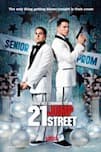
21 Jump Street
Synopsis
In the action-comedy 21 Jump Street, Schmidt and Jenko are more than ready to leave their adolescent problems behind. Joining the police force and the secret Jump Street unit, they use their youthful appearances to go undercover in a local high school. As they trade in their guns and badges for backpacks, Schmidt and Jenko risk their lives to investigate a violent and dangerous drug ring. But they find that high school is nothing like they left it just a few years earlier - and neither expects that they will have to confront the terror and anxiety of being a teenager again and all the issues they thought they had left behind
What is the budget of 21 Jump Street?
21 Jump Street, directed by Phil Lord and Christopher Miller, is a film that blends action and comedy in a unique way. Released on March 16, 2012, the movie stars Jonah Hill and Channing Tatum as two police officers who go undercover in a high school. The film's budget plays a significant role in its production and overall success, making it an interesting topic for fans and industry analysts alike.
What was the production budget?
The production budget for 21 Jump Street was set at $42,000,000. This figure is relatively standard for a high-profile comedy-action film, especially one featuring well-known actors and a robust marketing campaign. When compared to similar films in the genre, such as Superbad (with a budget of $20 million) and The Hangover (which had a budget of $35 million), 21 Jump Street's budget reflects the increasing costs associated with star power and production quality.
Key Budget Allocation Categories
While specific breakdowns of budget allocation are not publicly available, major cost factors typically include:
- Talent: Salaries for lead actors Jonah Hill and Channing Tatum likely comprised a significant portion of the budget.
- Locations: Filming in various locations, including high schools and urban settings, contributes to overall costs.
- Special Effects: Action sequences and stunts require investment in safety measures and visual effects.
What were the major production costs?
Several elements contributed to the production costs of 21 Jump Street. Notable expenses included:
- Talent: The film's stars commanded high salaries, which is common for major studio productions.
- Locations: Filming in real high schools and urban environments added logistical challenges and costs.
- Action Sequences: The film features several elaborate action scenes that require careful planning and execution.
Budget challenges were minimal, and the film remained within its initial budget of $42 million, avoiding significant overruns.
How did 21 Jump Street perform at the box office?
The box office performance of 21 Jump Street was impressive, with worldwide earnings reaching $202,812,429. The domestic box office alone accounted for $138,447,667, showcasing the film's popularity in the United States.
Break-even Point Analysis
To determine the break-even point, one must consider marketing costs, which can often double the production budget. Assuming an additional $20 million for marketing, the break-even point would be approximately $62 million. Given its earnings, 21 Jump Street not only broke even but also generated a substantial profit.
ROI Percentage
The return on investment (ROI) for 21 Jump Street can be calculated as follows:
- Total Earnings: $202,812,429
- Total Costs: $62,000,000 (production + marketing)
- Profit: $140,812,429
The ROI percentage is approximately 227%, indicating a highly successful financial outcome.
Was 21 Jump Street profitable?
Absolutely, 21 Jump Street was profitable. The film's earnings far exceeded its production and marketing costs, making it a financial success for Columbia Pictures and its partners. The success of this film also paved the way for a sequel, 22 Jump Street, which further capitalized on the franchise's popularity.
Impact on Future Movie Budgets
The financial success of 21 Jump Street has influenced future budgets in the comedy-action genre. Studios are more willing to invest in similar projects, knowing that a well-executed film can yield significant returns.
Records Set
While 21 Jump Street may not have set any major box office records, its success contributed to the resurgence of buddy cop comedies in Hollywood, inspiring a new wave of films in the genre.
Commonly Asked Questions
How much did 21 Jump Street cost to make?
The production cost of 21 Jump Street was $42,000,000.
Was 21 Jump Street profitable?
Yes, the film was highly profitable, earning over $202 million worldwide.
What was the most expensive element of 21 Jump Street?
The most expensive elements likely included the salaries of the lead actors and the costs associated with action sequences.
How much did 21 Jump Street make at the box office?
21 Jump Street grossed $202,812,429 worldwide.
Did 21 Jump Street go over budget?
No, the film stayed within its initial budget of $42 million.
In summary, 21 Jump Street stands out not only for its comedic elements and engaging storyline but also for its impressive financial performance. The film's budget and box office success highlight the potential for profitability in the comedy-action genre, setting a precedent for future productions.
































Budget Templates
Build your own production budget
Create professional budgets with AICP and feature film templates. Real-time collaboration, no spreadsheets.
Start Budgeting Free