
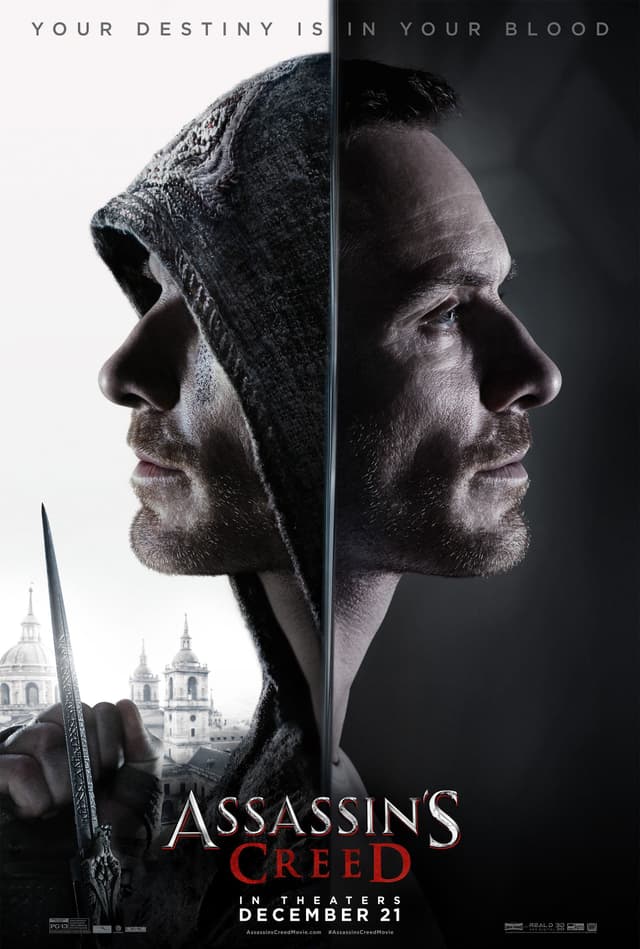
Assassin’s Creed (2016)
Synopsis
Through a revolutionary technology that unlocks his genetic memories, Callum Lynch experiences the adventures of his ancestor, Aguilar, in 15th Century Spain. Callum discovers he is descended from a mysterious secret society, the Assassins, and amasses incredible knowledge and skills to take on the oppressive and powerful Templar organization in the present day.
What is the budget of Assassin’s Creed?
Assassin’s Creed (2016) is a cinematic adaptation of the popular video game franchise, directed by Justin Kurzel. The film features a star-studded cast, including Michael Fassbender, Marion Cotillard, and Jeremy Irons. Released on December 21, 2016, this action-packed film aimed to capture the essence of its source material while delivering a thrilling experience. The budget of Assassin’s Creed plays a significant role in understanding its financial performance and overall impact on the film industry.
What was the production budget?
The production budget for Assassin’s Creed was a staggering $125,000,000. This figure places it among the higher echelons of video game adaptations, comparable to other big-budget films in the action and adventure genre. For instance, films like Warcraft (2016) and Tomb Raider (2018) also had substantial budgets, highlighting the financial commitment studios are willing to make for adaptations of popular franchises.
Key Budget Allocation Categories
While specific breakdowns of budget allocation are not always publicly available, major cost factors typically include:
- Special Effects: Given the film's action sequences and historical settings, a significant portion of the budget likely went towards CGI and practical effects.
- Locations: Filming in various locations, including Spain and the UK, incurs substantial costs.
- Talent: The salaries of high-profile actors and the director contribute significantly to the overall production cost.
What were the major production costs?
Several elements contributed to the high production costs of Assassin’s Creed. Notable expenses included:
- Special Effects: The film's intricate action scenes and visual effects required advanced technology and skilled professionals.
- Set Design and Locations: Creating authentic historical settings demanded extensive resources and investment in location shoots.
- Cast Salaries: With a leading actor like Michael Fassbender, the talent costs were considerable.
Budget challenges were present, as the film faced scrutiny over its financial viability. Initial estimates suggested a lower budget, but as production progressed, costs escalated, leading to a final budget of $125 million.
How did Assassin’s Creed perform at the box office?
Assassin’s Creed grossed approximately $240,759,682 worldwide, with domestic earnings of $54,647,948. This performance raises questions about its profitability and overall financial success.
Break-even Point Analysis
To determine the break-even point, a film typically needs to earn about twice its production budget to cover marketing and distribution costs. For Assassin’s Creed, this means it needed to gross around $250 million. While it came close, it ultimately fell short of this target.
ROI Percentage
Calculating the return on investment (ROI) for Assassin’s Creed reveals a complex picture. With a production budget of $125 million and worldwide earnings of $240.7 million, the film's ROI is approximately 92%. While this indicates a return, it does not account for marketing expenses, which could further impact profitability.
Was Assassin’s Creed profitable?
Despite its impressive box office numbers, Assassin’s Creed did not achieve profitability in the traditional sense. The film's earnings were insufficient to cover its production and marketing costs, leading to a financial loss for the studio. This outcome has implications for future adaptations of video game franchises, as studios may reconsider their investment strategies.
Impact on the Studio and Franchise
The financial performance of Assassin’s Creed influenced the studio's approach to future projects. While the film did not meet expectations, it did contribute to ongoing discussions about the viability of video game adaptations in Hollywood. The mixed reception may lead studios to adjust their budgets and marketing strategies for similar projects in the future.
Records Set
While Assassin’s Creed did not set any major box office records, it remains a notable entry in the genre of video game adaptations, highlighting the challenges faced by filmmakers in translating interactive experiences to the big screen.
Commonly Asked Questions
How much did Assassin’s Creed (2016) cost to make?
The production cost of Assassin’s Creed was $125,000,000.
Was Assassin’s Creed (2016) profitable?
No, the film did not achieve profitability, as its earnings fell short of covering production and marketing costs.
What was the most expensive element of Assassin’s Creed (2016)?
The most expensive elements likely included special effects and the salaries of the high-profile cast.
How much did Assassin’s Creed (2016) make at the box office?
Assassin’s Creed grossed approximately $240,759,682 worldwide.
Did Assassin’s Creed (2016) go over budget?
Yes, the film's final budget of $125 million exceeded initial estimates.
In summary, Assassin’s Creed (2016) serves as a case study in the complexities of adapting video games into films. With a substantial budget and mixed box office performance, it highlights the financial risks involved in such projects and the ongoing challenges faced by studios in this genre.

































Budget Templates
Build your own production budget
Create professional budgets with AICP and feature film templates. Real-time collaboration, no spreadsheets.
Start Budgeting Free