
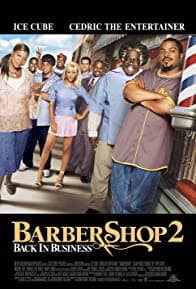
Barbershop 2: Back in Business (2004)
Synopsis
"Barbershop 2: Back in Business" continues the story of Calvin Palmer Jr., who is determined to keep his family-owned barbershop thriving in the face of new challenges. Set in Chicago, the film explores the dynamics of the barbershop community as Calvin faces the threat of a corporate chain opening nearby. With the help of his loyal staff and customers, he rallies to preserve the unique culture and camaraderie that his shop represents. Alongside humorous and heartfelt moments, the film delves into themes of friendship, loyalty, and the importance of community, all while showcasing the vibrant personalities that frequent the barbershop. As Calvin navigates the ups and downs of business and personal relationships, he learns valuable lessons about heritage and the significance of staying true to one's roots.
What is the budget of Barbershop 2: Back in Business?
"Barbershop 2: Back in Business," released in 2004, is a sequel that continues the beloved story of Calvin Palmer Jr., portrayed by Ice Cube. Directed by Kevin Rodney Sullivan, this film features a talented ensemble cast, including Cedric the Entertainer and Queen Latifah. The movie not only entertains but also highlights the importance of community and heritage. Understanding the budget of this film provides insight into its financial success and the dynamics of the film industry.
What was the production budget?
The production budget for "Barbershop 2: Back in Business" was set at $18,000,000. This figure places it within a reasonable range for a comedy sequel during the early 2000s. When compared to similar films in the genre, such as "The Hangover" (2009) with a budget of $35 million, "Barbershop 2" was more modestly financed.
Key Budget Allocation Categories
While specific breakdowns of budget allocation are not publicly available, typical costs for films like this often include:
- Talent Salaries: A significant portion goes to the cast, especially with stars like Ice Cube and Cedric the Entertainer.
- Location Costs: Filming in Chicago likely incurred expenses related to permits and set design.
- Marketing: A substantial budget is usually allocated for promotional activities to ensure box office success.
What were the major production costs?
Several factors contributed to the overall production costs of "Barbershop 2: Back in Business."
- Talent: The salaries of the main cast members were likely among the highest expenses.
- Locations: Filming in urban settings can be costly due to logistics and permits.
- Set Design: Creating an authentic barbershop environment would have required investment in set design and props.
Notable scenes that may have incurred higher costs include those featuring large crowds or elaborate set pieces, which often require additional resources.
How did the box office perform?
"Barbershop 2: Back in Business" achieved impressive box office earnings, grossing a total of $65,842,412 worldwide. The domestic box office alone accounted for $65,070,412, showcasing its popularity in the United States.
Break-even Point Analysis
To determine the break-even point, one must consider the production budget and marketing costs. Assuming marketing costs were around 50% of the production budget, the estimated break-even point would be approximately $27 million. With earnings exceeding this figure, the film was a financial success.
ROI Percentage
The return on investment (ROI) for "Barbershop 2" can be calculated as follows:
- Total Earnings: $65,842,412
- Total Costs: $18,000,000 (production) + $9,000,000 (estimated marketing) = $27,000,000
- ROI: (($65,842,412 - $27,000,000) / $27,000,000) * 100 = approximately 143.5%
Was the movie profitable?
Yes, "Barbershop 2: Back in Business" was profitable. The film not only recouped its production costs but also generated significant earnings, contributing positively to the studio's financial standing.
Impact on the Studio/Franchise
The success of this sequel reinforced the viability of the "Barbershop" franchise, leading to further installments and spin-offs. It demonstrated that there was a strong audience for stories centered around community and culture.
Future Movie Budgets in the Genre
The financial success of "Barbershop 2" likely influenced future budgets for similar films, encouraging studios to invest in projects that resonate with audiences while maintaining a balance between cost and potential earnings.
Commonly Asked Questions
How much did Barbershop 2: Back in Business (2004) cost to make?
The production cost was $18,000,000.
Was Barbershop 2: Back in Business (2004) profitable?
Yes, it was profitable, grossing over $65 million worldwide.
What was the most expensive element of Barbershop 2: Back in Business (2004)?
The most expensive elements likely included talent salaries and location costs.
How much did Barbershop 2: Back in Business (2004) make at the box office?
The film made $65,842,412 worldwide.
Did Barbershop 2: Back in Business (2004) go over budget?
No, it did not go over budget, as it was produced within the $18 million budget.
Understanding the budget and financial performance of "Barbershop 2: Back in Business" provides valuable insights into the film's success and its impact on the industry. The film's ability to resonate with audiences while maintaining a reasonable budget showcases the potential for profitability in the comedy genre.































Budget Templates
Build your own production budget
Create professional budgets with AICP and feature film templates. Real-time collaboration, no spreadsheets.
Start Budgeting Free