
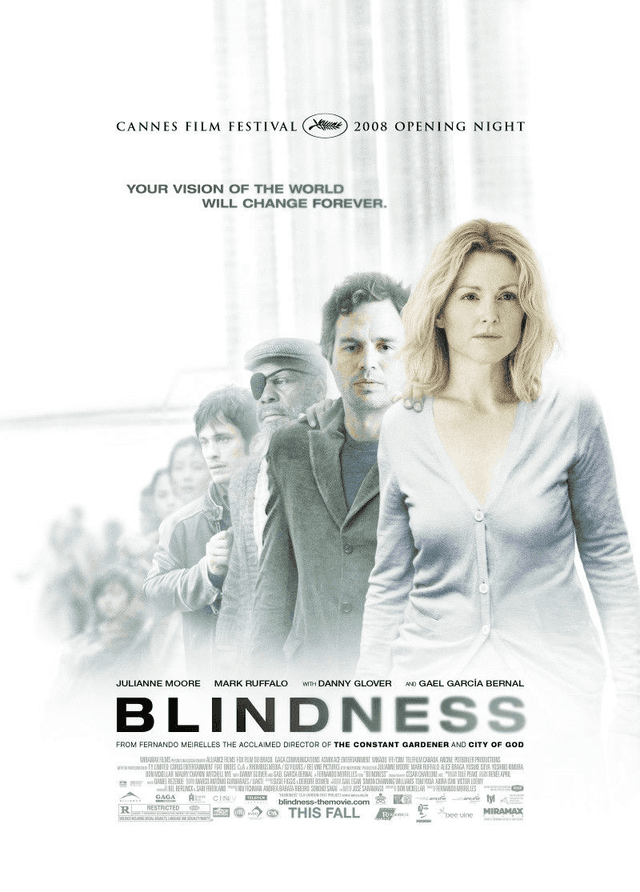
Blindness (2008)
Synopsis
"Blindness" (2008) is a thought-provoking dystopian drama directed by Fernando Meirelles, based on the novel by Nobel Prize-winning author José Saramago. The film opens with a sudden epidemic that causes an inexplicable blindness to sweep through an unnamed city, leaving its inhabitants in a state of chaos and despair. As society collapses, a small group of individuals, including a doctor and his wife, find themselves quarantined in a makeshift facility.
Amidst the growing panic and loss of civility, the film explores themes of human nature, morality, and the fragility of civilization. The characters must navigate their new reality, facing not only the physical challenges of blindness but also the moral dilemmas that arise in a world stripped of societal norms. As the situation deteriorates, the struggle for survival reveals the darker aspects of humanity, ultimately leading to a profound examination of what it means to truly see.
What is the budget of Blindness?
"Blindness" (2008) is a compelling dystopian drama that challenges viewers with its thought-provoking narrative. Directed by Fernando Meirelles, the film features a talented cast, including Julianne Moore, Mark Ruffalo, and Gael García Bernal. Released on May 29, 2008, this adaptation of José Saramago's Nobel Prize-winning novel explores the depths of human nature amidst a catastrophic epidemic. The film's budget plays a significant role in understanding its production and financial outcomes.
What was the production budget of Blindness?
The production budget for "Blindness" was set at $25,000,000. This figure places it within a moderate range for films in the dystopian genre, especially considering the ambitious themes and visual storytelling involved. Compared to similar films, "Blindness" had a budget that allowed for a strong cast and significant production values, yet it still faced challenges in recouping its costs.
Key Budget Allocation Categories
While specific breakdowns of budget allocation are not publicly available, major cost factors typically include:
- Talent: The salaries of well-known actors like Julianne Moore and Mark Ruffalo likely constituted a significant portion of the budget.
- Locations: Filming in various locations to create the film's unique atmosphere would have added to production costs.
- Special Effects: Although not heavily reliant on CGI, any special effects used to depict the epidemic and its consequences would have contributed to the overall expenses.
What were the major production costs?
Several elements contributed to the production costs of "Blindness." Notable expenses likely included:
- Casting: The film's star-studded cast would have required a substantial investment.
- Set Design: Creating the makeshift quarantine facility and other settings demanded careful planning and resources.
- Filming Locations: The choice of locations to authentically portray the film's dystopian environment added to the budget.
Challenges during production may have arisen, but specific details on budget overruns or adjustments are not widely documented.
How did Blindness perform at the box office?
"Blindness" earned a total of $20,052,958 worldwide, with a domestic box office of $3,073,392. This performance indicates that the film struggled to reach its break-even point, which is typically estimated at around double the production budget when considering marketing and distribution costs.
Break-even Point Analysis
To break even, "Blindness" would have needed to earn approximately $50 million, factoring in production and marketing expenses. The film's earnings fell significantly short of this target, resulting in a negative return on investment.
Was Blindness profitable?
Given the box office performance, "Blindness" was not profitable. The film's financial struggles impacted the studio's future projects, as it highlighted the risks associated with adapting complex literary works into film. The lack of profitability may have influenced budget decisions for subsequent films in the genre.
Impact on Future Movie Budgets
The financial outcome of "Blindness" serves as a cautionary tale for studios considering similar adaptations. It underscores the importance of balancing artistic ambition with commercial viability, potentially leading to more conservative budget allocations for future dystopian films.
Commonly Asked Questions
How much did Blindness (2008) cost to make?
The production cost of "Blindness" was $25,000,000.
Was Blindness (2008) profitable?
No, "Blindness" was not profitable, as it earned $20,052,958 at the box office.
What was the most expensive element of Blindness (2008)?
While specific details are not available, the most expensive elements likely included the cast salaries and set design.
How much did Blindness (2008) make at the box office?
"Blindness" made a total of $20,052,958 worldwide, with $3,073,392 from the domestic box office.
Did Blindness (2008) go over budget?
There are no specific reports indicating that "Blindness" went over budget, but the final box office earnings suggest it did not recoup its production costs.
In summary, "Blindness" serves as a fascinating case study in film budgeting and box office performance. Despite its ambitious narrative and strong cast, the film struggled to achieve financial success, raising important questions about the viability of adapting complex literary works for the screen.
































Budget Templates
Build your own production budget
Create professional budgets with AICP and feature film templates. Real-time collaboration, no spreadsheets.
Start Budgeting Free