
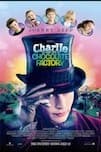
Charlie and the Chocolate Factory (2005)
Synopsis
"Charlie and the Chocolate Factory," directed by Tim Burton and released in 2005, is a whimsical adaptation of Roald Dahl's beloved children's book. The story follows young Charlie Bucket, a kind-hearted boy from a poor family who dreams of a better life. His fortunes change when Willy Wonka, the eccentric owner of the world's most famous chocolate factory, announces a contest: five golden tickets hidden inside chocolate bars. The lucky finders will win a tour of the factory and a lifetime supply of chocolate.
Charlie, against all odds, discovers one of the golden tickets and embarks on an extraordinary adventure alongside four other children, each with their own unique quirks and flaws. As they explore the fantastical factory, they encounter magical inventions, delightful confections, and the peculiar Oompa-Loompas, who sing and dance throughout the tour. However, the journey also serves as a cautionary tale, as the other children face consequences for their bad behavior, highlighting themes of greed, gluttony, and the importance of family.
Ultimately, Charlie's humility and goodness shine through, leading to a heartwarming conclusion that emphasizes the value of love and integrity over material wealth. The film combines stunning visuals, a captivating score, and Johnny Depp's quirky portrayal of Willy Wonka, making it a memorable cinematic experience for audiences of all ages.
What is the budget of Charlie and the Chocolate Factory?
Tim Burton's whimsical adaptation of Roald Dahl's classic tale, "Charlie and the Chocolate Factory," hit theaters in 2005, captivating audiences with its vibrant visuals and quirky characters. Starring Johnny Depp as the eccentric Willy Wonka and Freddie Highmore as the kind-hearted Charlie Bucket, the film brought a beloved story to life. With a production budget of $150 million, the financial aspects of this film are as intriguing as its narrative.
What was the production budget?
The production budget for "Charlie and the Chocolate Factory" was a staggering $150,000,000. This figure places it among the higher echelons of film budgets, especially for a family-oriented fantasy. When compared to similar films in the genre, such as "Alice in Wonderland" (2010) with a budget of $200 million, it showcases the significant investment studios are willing to make in visually rich storytelling.
Key Budget Allocation Categories
While specific breakdowns of budget allocation are not publicly detailed, major cost factors typically include:
- Special Effects: The film features numerous fantastical elements that require advanced CGI and practical effects.
- Set Design: The iconic chocolate factory sets were elaborate and required significant resources.
- Talent: High-profile actors and a renowned director contribute to the overall production costs.
What were the major production costs?
Several factors contributed to the overall production costs of "Charlie and the Chocolate Factory." Notable expenses included:
- Special Effects: The film's magical sequences, such as the chocolate river and the Oompa-Loompa performances, demanded cutting-edge technology.
- Location and Set Design: Creating the whimsical world of Willy Wonka's factory required extensive set construction and design.
- Talent: The casting of Johnny Depp and other prominent actors added to the financial outlay.
Challenges arose during production, particularly in managing the extensive visual effects and set designs, which could have led to budget overruns. However, the film managed to stay within its initial budget of $150 million.
How did the box office perform?
"Charlie and the Chocolate Factory" achieved impressive box office earnings, grossing $475,825,484 worldwide. The domestic box office alone accounted for $206,459,076.
Break-even Point Analysis
To determine the break-even point, a film typically needs to earn about twice its production budget to cover marketing and distribution costs. In this case, the break-even point would be approximately $300 million. With worldwide earnings surpassing this figure, the film was deemed a financial success.
ROI Percentage
The return on investment (ROI) for "Charlie and the Chocolate Factory" can be calculated as follows:
- Total Earnings: $475,825,484
- Production Budget: $150,000,000
- ROI: \[(Total Earnings - Production Budget) / Production Budget\] x 100 = \[(475,825,484 - 150,000,000) / 150,000,000\] x 100 = 217.22%
This impressive ROI indicates that the film was not only profitable but also a significant financial success for the studio.
Was the movie profitable?
Yes, "Charlie and the Chocolate Factory" was profitable. The film's earnings far exceeded its production costs, leading to a substantial profit margin. This success positively impacted Warner Bros. and the associated production companies, including Village Roadshow Productions and Plan B Entertainment.
Impact on Future Movie Budgets
The financial success of "Charlie and the Chocolate Factory" likely influenced future budgets in the fantasy genre. Studios may have felt encouraged to invest more in high-quality productions, knowing that audiences are drawn to visually stunning and imaginative storytelling.
Records Set
While "Charlie and the Chocolate Factory" may not have set specific box office records, its strong performance contributed to the ongoing trend of successful adaptations of beloved children's literature.
Commonly Asked Questions
How much did Charlie and the Chocolate Factory (2005) cost to make?
The production cost of "Charlie and the Chocolate Factory" was $150,000,000.
Was Charlie and the Chocolate Factory (2005) profitable?
Yes, the film was profitable, grossing $475,825,484 worldwide.
What was the most expensive element of Charlie and the Chocolate Factory (2005)?
The most expensive elements likely included special effects and elaborate set designs.
How much did Charlie and the Chocolate Factory (2005) make at the box office?
The film earned $475,825,484 globally.
Did Charlie and the Chocolate Factory (2005) go over budget?
No, the film managed to stay within its initial budget of $150 million.
In summary, "Charlie and the Chocolate Factory" stands as a testament to the potential financial success of high-budget family films. With its captivating story and impressive box office performance, it remains a significant entry in the realm of cinematic adaptations.
Plan Your Own Film Budget
Looking to manage a real production? [Saturation](https://saturation.io) is cloud-based film budgeting software built for producers — with collaborative budgets, expense tracking, and production banking in one place. [Start free](https://app.saturation.io/signup).



























Budget Templates
Build your own production budget
Create professional budgets with AICP and feature film templates. Real-time collaboration, no spreadsheets.
Start Budgeting Free
.png&w=1200&q=75)