
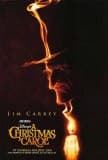
Disney's A Christmas Carol (2009): $200M Budget & $325M Box Office
Synopsis
In Disney's 2009 adaptation of "A Christmas Carol," the timeless tale of redemption and the spirit of Christmas comes to life through stunning animation and innovative technology. The story follows Ebenezer Scrooge, a miserly old man who despises Christmas and all things joyful. On Christmas Eve, he is visited by the ghost of his former business partner, Jacob Marley, who warns him of the consequences of his selfish ways. Marley informs Scrooge that he will be visited by three spirits throughout the night: the Ghost of Christmas Past, the Ghost of Christmas Present, and the Ghost of Christmas Yet to Come.
As Scrooge journeys through time with these spectral guides, he confronts his own past mistakes, witnesses the joy and warmth of the present, and faces the grim future that awaits him if he continues on his current path. This visually captivating film combines heartfelt storytelling with a powerful message about the importance of compassion, generosity, and the true meaning of Christmas. Ultimately, Scrooge's transformation from a cold-hearted miser to a warm-hearted benefactor serves as a reminder that it is never too late to change and embrace the spirit of the season.
What is the budget of Disney’s A Christmas Carol?
Disney’s 2009 adaptation of "A Christmas Carol" is a visually stunning reimagining of Charles Dickens' classic tale. Directed by Robert Zemeckis, the film features a star-studded cast, including Jim Carrey, Gary Oldman, and Colin Firth. Released on November 6, 2009, this animated feature not only captivated audiences with its innovative technology but also raised questions about its financial performance, particularly its budget.
The budget for Disney’s A Christmas Carol was a staggering $190 million. This significant investment highlights the studio's commitment to delivering a high-quality animated film, but how does this budget compare to other films in the same genre?
What was the production budget?
With a production budget of $190 million, Disney’s A Christmas Carol ranks among the higher-end animated films. For context, other animated features like "Shrek Forever After" had a budget of around $165 million, while "Frozen" was produced for approximately $150 million. The substantial budget for A Christmas Carol can be attributed to its advanced motion capture technology and the high-profile talent involved.
Key Budget Allocation Categories
While specific breakdowns of the budget are not publicly available, several key factors likely contributed to the overall costs:
- Special Effects: The film utilized cutting-edge animation techniques, which typically require significant investment in technology and talent.
- Voice Talent: The involvement of A-list actors like Jim Carrey and Gary Oldman would have commanded a large portion of the budget.
- Production Design: Creating the film's intricate settings and characters also contributed to the overall production costs.
What were the major cost factors?
Several elements played a crucial role in driving up the production costs of Disney’s A Christmas Carol:
- Special Effects: The film's innovative animation techniques required extensive resources and expertise.
- Voice Talent: High-profile actors brought both star power and higher salaries.
- Notable Scenes: The film features elaborate sequences, such as the ghostly visits, which likely incurred additional costs.
Budget challenges were present, as the film's ambitious scope may have led to overruns. The initial budget was set at $150 million, but the final costs reached $190 million.
How did the movie perform at the box office?
Disney’s A Christmas Carol grossed approximately $315,709,697 worldwide. The domestic box office earnings stood at $137,855,863, while international markets contributed significantly to the overall total.
Break-even Point Analysis
To determine the break-even point, a film typically needs to earn about twice its production budget to cover marketing and distribution costs. In this case, A Christmas Carol would have needed to gross around $380 million to break even, indicating that it fell short of this target.
ROI Percentage
Calculating the return on investment (ROI) reveals that the film's financial performance was less than ideal. With a production budget of $190 million and total earnings of $315.7 million, the ROI percentage is approximately 66%, which is relatively low for a major studio release.
Was the movie profitable?
Despite its impressive box office earnings, Disney’s A Christmas Carol did not achieve profitability when considering its production and marketing costs. The film's financial performance raised questions about the viability of high-budget animated features in the future.
Impact on the Studio and Franchise
The film's underwhelming financial success may have influenced Disney's approach to future animated projects. Studios often reassess their strategies based on the performance of previous releases, and A Christmas Carol's results likely played a role in shaping budget decisions for subsequent films.
Records Set
While the film did not set any notable records, its budget and box office performance serve as a case study for the challenges faced by animated films in a competitive market.
Commonly Asked Questions
How much did Disney’s A Christmas Carol (2009) cost to make?
The production cost of Disney’s A Christmas Carol was $190 million.
Was Disney’s A Christmas Carol (2009) profitable?
No, the film did not achieve profitability when considering its production and marketing costs.
What was the most expensive element of Disney’s A Christmas Carol (2009)?
The most expensive elements likely included special effects and the salaries of high-profile voice talent.
How much did Disney’s A Christmas Carol (2009) make at the box office?
The film grossed approximately $315,709,697 worldwide.
Did Disney’s A Christmas Carol (2009) go over budget?
Yes, the film's final budget of $190 million exceeded its initial estimate of $150 million.
In summary, Disney’s A Christmas Carol stands as a significant entry in the realm of animated films, showcasing both the potential and challenges of high-budget productions. While it achieved impressive box office numbers, the financial implications highlight the complexities of producing animated features in a competitive landscape.
Plan Your Own Film Budget
Looking to manage a real production? [Saturation](https://saturation.io) is cloud-based film budgeting software built for producers — with collaborative budgets, expense tracking, and production banking in one place. [Start free](https://app.saturation.io/signup).






























Budget Templates
Build your own production budget
Create professional budgets with AICP and feature film templates. Real-time collaboration, no spreadsheets.
Start Budgeting Free
.png&w=1200&q=75)