
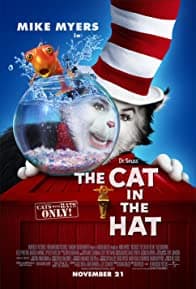
Dr. Seuss’ The Cat in the Hat (2003)
Synopsis
The trouble-making Cat in the Hat arrives at the home of bored young Sally Walden and her brother, Conrad, while their mother is out. The family’s pet fish objects to the Cat’s presence, but that doesn’t stop the hat-wearing giant feline from trying to have fun, no matter how much destruction is left in his wake.
What is the budget of Dr. Seuss’ The Cat in the Hat?
Dr. Seuss’ The Cat in the Hat, released in 2003, is a live-action adaptation of the beloved children's book. Directed by Bo Welch, the film features notable performances from Mike Myers, who plays the mischievous Cat, alongside Dakota Fanning and Spencer Breslin. The movie's budget is particularly significant, as it reflects the financial stakes involved in bringing such a classic character to life on the big screen.
What was the production budget?
The production budget for Dr. Seuss’ The Cat in the Hat was a staggering $109 million. This figure places it among the higher-budget films in the family and comedy genres, especially for adaptations of children's literature. For context, similar films like "The Grinch" (2000) had a budget of around $123 million, showcasing the financial commitment studios are willing to make for family-friendly content.
Key Budget Allocation Categories
While specific breakdowns of the budget are not publicly available, several key factors typically contribute to the overall production costs:
- Special Effects: Given the fantastical nature of the story, significant resources were allocated to visual effects to create the whimsical world of Dr. Seuss.
- Talent: The casting of high-profile actors like Mike Myers likely contributed to the budget, as top-tier talent commands higher salaries.
- Set Design and Locations: Creating the vibrant and imaginative settings required extensive set design and possibly location shooting.
What were the major production costs?
Several elements drove the production costs of Dr. Seuss’ The Cat in the Hat:
- Special Effects: The film relied heavily on CGI to bring the Cat's antics to life, which can be a costly endeavor.
- Costumes and Makeup: The elaborate costume design for the Cat and other characters required skilled artisans and significant materials.
- Filming Locations: The choice of filming locations and the construction of sets to match the whimsical style of Dr. Seuss added to the overall expenses.
Budget challenges were present, as is common in large productions. The initial budget was set at a lower figure, but as the project progressed, costs increased due to the complexity of the visual effects and the need for reshoots.
How did the film perform at the box office?
Dr. Seuss’ The Cat in the Hat grossed approximately $133.8 million worldwide, with $101 million coming from the domestic box office. This performance indicates a struggle to reach the break-even point, which is typically estimated to be around 2.5 times the production budget for a film to be considered financially successful.
ROI Percentage
Calculating the return on investment (ROI) for the film reveals a modest performance. With a production budget of $109 million and worldwide earnings of $133.8 million, the ROI stands at approximately 22.5%. While this is a positive figure, it does not reflect the blockbuster status that studios often aim for.
Was the movie profitable?
Despite its high production costs, Dr. Seuss’ The Cat in the Hat did not achieve significant profitability. The film's earnings fell short of expectations, leading to discussions about the financial viability of similar adaptations in the future. The mixed reception from audiences and critics may have influenced its box office performance.
Impact on the Studio and Franchise
The financial outcome of Dr. Seuss’ The Cat in the Hat had implications for the studios involved, including DreamWorks Pictures and Universal Pictures. The film's performance may have led to more cautious budgeting for future family-oriented projects, as studios reassess the risks associated with adapting beloved children's stories.
Commonly Asked Questions
How much did Dr. Seuss’ The Cat in the Hat (2003) cost to make?
The production cost of Dr. Seuss’ The Cat in the Hat was $109 million.
Was Dr. Seuss’ The Cat in the Hat (2003) profitable?
The film was not particularly profitable, with earnings falling short of its high production budget.
What was the most expensive element of Dr. Seuss’ The Cat in the Hat (2003)?
Special effects and high-profile talent likely represented the most significant expenses in the film's budget.
How much did Dr. Seuss’ The Cat in the Hat (2003) make at the box office?
The film grossed approximately $133.8 million worldwide.
Did Dr. Seuss’ The Cat in the Hat (2003) go over budget?
Yes, the film experienced budget overruns, with the final production cost exceeding initial estimates.
In summary, Dr. Seuss’ The Cat in the Hat serves as a case study in the financial dynamics of adapting beloved children's literature for the big screen. With a production budget of $109 million and a box office performance that did not meet expectations, the film highlights the challenges studios face in balancing creative vision with financial realities.































Budget Templates
Build your own production budget
Create professional budgets with AICP and feature film templates. Real-time collaboration, no spreadsheets.
Start Budgeting Free
.png&w=1200&q=75)