
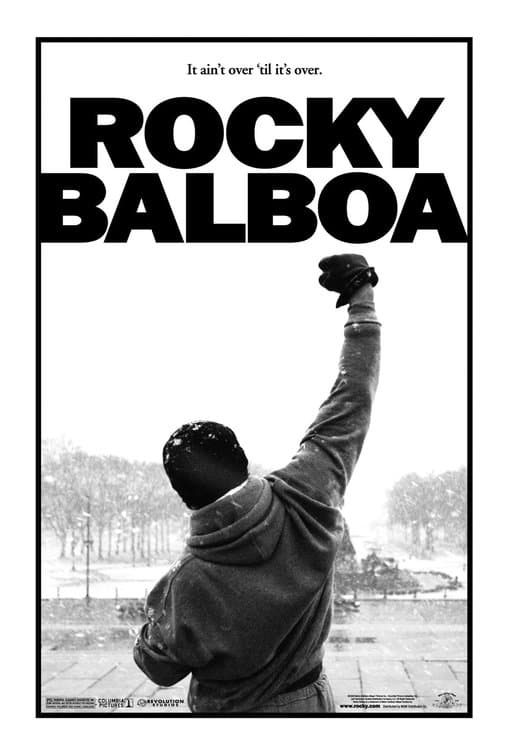
Rocky Balboa (2006)
Synopsis
The greatest underdog story of our time is back for one final round of the Academy Award-winning Rocky franchise. Former heavyweight champion Rocky Balboa steps out of retirement and back into the ring, putting himself against a new rival in a dramatically different era. After a virtual boxing match declares Rocky Balboa the victor over current champion Mason ‘The Line’ Dixon, the legendary fighter’s passion and spirit are reignited. But when his desire to fight in small, regional competitions is trumped by promoters calling for a rematch of the cyber-fight, Balboa must weigh the mental and physical risks of a high profile exhibition match against his need to be in the ring.
What is the budget of Rocky Balboa?
Rocky Balboa (2006) marks a significant return for the iconic character, showcasing the enduring appeal of the underdog story. Directed by Sylvester Stallone, who also stars as the titular character, the film features a strong supporting cast, including Antonio Tarver and Burt Young. Released on December 20, 2006, this installment of the beloved Rocky franchise not only reignited the passion of fans but also raised questions about its financial performance, particularly its budget.
What was the production budget?
The production budget for Rocky Balboa was set at $24,000,000. This figure places it within a reasonable range for sports dramas of its time, especially considering the franchise's legacy. When compared to similar films in the genre, such as "Cinderella Man" (2005), which had a budget of $88 million, Rocky Balboa's budget appears modest yet effective in delivering a compelling story.
Key Budget Allocation Categories
While specific breakdowns of budget allocation are not publicly available, typical costs for films like Rocky Balboa often include:
- Talent Salaries: A significant portion goes to the lead actors and supporting cast.
- Location Costs: Filming in authentic settings can drive up expenses.
- Production Design: Creating the right atmosphere for boxing matches and training montages is crucial.
What were the major production costs?
Several factors contributed to the overall production costs of Rocky Balboa. Key elements include:
- Talent: Sylvester Stallone's return as Rocky likely commanded a substantial salary.
- Filming Locations: Authentic boxing venues and training facilities were essential for realism.
- Special Effects: While not heavily reliant on CGI, the film required practical effects for fight scenes.
Noteworthy scenes, such as the climactic boxing match, demanded careful choreography and production design, which could have added to the costs. Despite the challenges, the film managed to stay within its budget, avoiding significant overruns.
How did Rocky Balboa perform at the box office?
Rocky Balboa achieved impressive box office earnings, grossing $156,229,050 worldwide. The domestic box office alone accounted for $70,269,899. This performance indicates a strong reception, especially considering the film's budget.
Break-even Point Analysis
To determine the break-even point, a film typically needs to earn about twice its production budget to cover marketing and distribution costs. For Rocky Balboa, this would mean reaching approximately $48 million. With its total earnings significantly surpassing this figure, the film was a financial success.
ROI Percentage
Calculating the return on investment (ROI) for Rocky Balboa reveals a profitable venture. With a production budget of $24 million and worldwide earnings of $156 million, the ROI stands at approximately 550%, showcasing the film's financial success.
Was Rocky Balboa profitable?
Indeed, Rocky Balboa was profitable. The film not only recouped its production costs but also generated substantial earnings, contributing positively to the franchise's legacy. The success of this installment likely influenced future projects within the genre, encouraging studios to invest in similar underdog narratives.
Impact on the Studio and Franchise
The financial success of Rocky Balboa revitalized interest in the franchise, leading to further sequels and spin-offs, including the Creed series. This resurgence has allowed the studio to explore new stories while maintaining the essence of the original films.
Future Movie Budgets in the Genre
The success of Rocky Balboa may have set a precedent for future sports dramas, encouraging studios to allocate budgets that balance quality storytelling with financial viability. The film's performance demonstrates that a well-crafted narrative can resonate with audiences, regardless of the budget.
Commonly Asked Questions
How much did Rocky Balboa (2006) cost to make?
Rocky Balboa had a production budget of $24,000,000.
Was Rocky Balboa (2006) profitable?
Yes, the film was profitable, grossing over $156 million worldwide.
What was the most expensive element of Rocky Balboa (2006)?
While specific figures are not disclosed, talent salaries and production design for key scenes likely represented significant costs.
How much did Rocky Balboa (2006) make at the box office?
The film earned $156,229,050 globally, with $70,269,899 from the domestic box office.
Did Rocky Balboa (2006) go over budget?
No, Rocky Balboa stayed within its budget of $24 million, avoiding any significant overruns.
In summary, Rocky Balboa stands as a testament to the enduring appeal of the franchise, both in storytelling and financial success. With a budget of $24 million and worldwide earnings exceeding $156 million, the film not only captured the hearts of audiences but also solidified its place in cinematic history.

































Budget Templates
Build your own production budget
Create professional budgets with AICP and feature film templates. Real-time collaboration, no spreadsheets.
Start Budgeting Free