
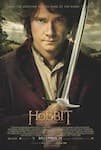
The Hobbit: An Unexpected Journey (2012)
Synopsis
Hobbit Bilbo Baggins is swept into an epic quest to reclaim the lost Dwarf Kingdom of Erebor from the fearsome Dragon Smaug. Approached out of the blue by the Wizard Gandalf the Grey, Bilbo finds himself joining a company of 13 Dwarves led by the legendary warrior Thorin Oakenshield. Their journey will take them into the Wild, through treacherous lands swarming with Goblins, Orcs and deadly Wargs, as well as a mysterious and sinister figure known only as the Necromancer.
Although their goal lies to the East and the wastelands of the Lonely Mountain, first they must escape the Goblin tunnels, where Bilbo meets the creature that will change his life forever...Gollum.
Here, alone with Gollum, on the shores of an underground lake, the unassuming Bilbo Baggins not only discovers depths of ingenuity and courage that surprise even him, he also gains possession of Gollum's "precious" ring that holds unexpected and useful qualities... A simple, gold ring that is tied to the fate of all Middle-earth in ways Bilbo cannot begin to know.
What is the budget of The Hobbit: An Unexpected Journey?
The Hobbit: An Unexpected Journey, released in 2012, marked the return to Middle-earth for fans of J.R.R. Tolkien's work. Directed by the acclaimed Peter Jackson, this film features a stellar cast, including Martin Freeman as Bilbo Baggins, Ian McKellen as Gandalf, and Richard Armitage as Thorin Oakenshield. With a production budget of $200 million, the financial aspects of this film are as captivating as its storyline, making it a significant entry in the fantasy genre.
What was the production budget?
The production budget for The Hobbit: An Unexpected Journey was a staggering $200,000,000. This figure places it among the highest-budget films in cinematic history, particularly within the fantasy genre. For context, other major films like Avatar and the later installments of the Lord of the Rings series also had similar or higher budgets, showcasing the financial commitment required to bring such epic tales to life.
Key Budget Allocation Categories
While specific breakdowns of the budget are not publicly detailed, several key factors typically contribute to the overall production costs:
- Special Effects: Given the film's reliance on CGI and visual effects to create fantastical creatures and landscapes, a significant portion of the budget was allocated here.
- Locations: Filming in New Zealand, known for its stunning landscapes, added to the production costs, as did the logistics of shooting in various locations.
- Talent: The salaries of the high-profile cast and crew, including Peter Jackson's direction, also contributed to the budget.
What were the major cost factors?
Several elements drove the costs of The Hobbit: An Unexpected Journey:
- Special Effects: The film utilized cutting-edge technology to create the world of Middle-earth, which is known for its intricate visual storytelling.
- Set Design and Locations: Building elaborate sets and securing picturesque filming locations in New Zealand were significant expenses.
- Cast Salaries: The ensemble cast, featuring well-known actors, commanded high salaries, impacting the overall budget.
Notable scenes, such as the encounters with Gollum and the epic battles, required extensive special effects and choreography, further increasing production costs. Initial estimates suggested a lower budget, but as the project evolved, costs escalated.
How did the box office perform?
The Hobbit: An Unexpected Journey achieved remarkable box office success, grossing $1,014,938,545 worldwide. Domestically, it earned $303,003,568, showcasing its broad appeal across various markets.
Break-even Point Analysis
To determine profitability, the break-even point is crucial. Typically, a film needs to earn about twice its production budget to cover marketing and distribution costs. In this case, The Hobbit: An Unexpected Journey surpassed that threshold, indicating a strong financial performance.
ROI Percentage
The return on investment (ROI) for The Hobbit: An Unexpected Journey can be calculated as follows:
- Total Earnings: $1,014,938,545
- Production Budget: $200,000,000
The ROI percentage is approximately 407%, highlighting the film's financial success.
Was the movie profitable?
Absolutely, The Hobbit: An Unexpected Journey was profitable. The film not only recouped its production costs but also generated substantial earnings, contributing positively to the studio's financial standing. This success paved the way for subsequent films in the franchise, reinforcing the viability of high-budget fantasy adaptations.
Impact on the Studio and Franchise
The financial success of The Hobbit: An Unexpected Journey had a ripple effect on the studio, New Line Cinema, and the broader franchise. It solidified the studio's confidence in producing high-budget adaptations of beloved literary works, influencing future projects in the genre.
Records Set
The film set several records upon its release, including being one of the highest-grossing films of 2012. Its success reaffirmed the enduring popularity of Tolkien's works and the appetite for epic fantasy films.
Commonly Asked Questions
How much did The Hobbit: An Unexpected Journey (2012) cost to make?
The production cost of The Hobbit: An Unexpected Journey was $200,000,000.
Was The Hobbit: An Unexpected Journey (2012) profitable?
Yes, the film was profitable, grossing over $1 billion worldwide.
What was the most expensive element of The Hobbit: An Unexpected Journey (2012)?
The most expensive elements included special effects and the salaries of the high-profile cast.
How much did The Hobbit: An Unexpected Journey (2012) make at the box office?
The film earned $1,014,938,545 globally.
Did The Hobbit: An Unexpected Journey (2012) go over budget?
Yes, the initial budget estimates were lower, but the final production cost reached $200 million.
In summary, The Hobbit: An Unexpected Journey stands as a testament to the financial potential of high-budget fantasy films. With its impressive box office earnings and significant impact on the studio and franchise, it remains a landmark in cinematic history.



























Budget Templates
Build your own production budget
Create professional budgets with AICP and feature film templates. Real-time collaboration, no spreadsheets.
Start Budgeting Free