
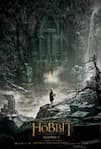
The Hobbit: The Desolation of Smaug (2013)
Synopsis
Having survived the beginning of their unexpected journey, the Company, consisting of Bilbo Baggins, the Wizard Gandalf, and thirteen Dwarves, led by Thorin Oakenshield, continues East, encountering along the way the skin-changer Beorn and a swarm of giant Spiders in the treacherous forest of Mirkwood. After escaping capture by the dangerous Wood-elves, the Dwarves journey to Lake-town, and finally to the Lonely Mountain itself, where they must face the greatest danger of all—a creature more terrifying than any other; one which will test not only the depth of their courage but the limits of their friendship and the wisdom of the journey itself—the Dragon Smaug.
What is the budget of The Hobbit: The Desolation of Smaug?
The Hobbit: The Desolation of Smaug, released in 2013, is a cinematic adaptation of J.R.R. Tolkien's beloved novel. Directed by Peter Jackson, this film features a stellar cast, including Martin Freeman as Bilbo Baggins, Ian McKellen as Gandalf, and Richard Armitage as Thorin Oakenshield. With a budget that reflects its grand scale, the financial aspects of this film are as intriguing as its storyline.
Understanding the budget of The Hobbit: The Desolation of Smaug is essential for grasping its financial success and impact on the film industry.
What was the production budget?
The production budget for The Hobbit: The Desolation of Smaug was a staggering $250,000,000. This figure places it among the highest-budget films in cinematic history, particularly within the fantasy genre. For comparison, other major films like Avatar and the Harry Potter series also had similar or higher budgets, showcasing the financial commitment required to bring such epic tales to life.
Key Budget Allocation Categories
While specific breakdowns of budget allocation are not always publicly available, major cost factors typically include:
- Special Effects: A significant portion of the budget went towards creating the stunning visual effects that brought the dragon Smaug and other fantastical elements to life.
- Locations: Filming in various locations, including New Zealand's breathtaking landscapes, added to the overall production costs.
- Talent: The salaries of the high-profile cast and crew contributed to the budget, reflecting the film's ambition and scale.
What were the major production costs?
Several elements contributed to the high production costs of The Hobbit: The Desolation of Smaug. Notable expenses included:
- Special Effects: The film's visual effects, particularly the creation of Smaug, were both intricate and costly.
- Set Design: Building elaborate sets, such as the Lonely Mountain and Lake-town, required significant investment.
- Action Sequences: The film features numerous action-packed scenes, which often necessitate extensive planning and resources.
Budget challenges were present, as the initial budget was subject to adjustments due to the film's ambitious scope.
How did The Hobbit: The Desolation of Smaug perform at the box office?
The box office performance of The Hobbit: The Desolation of Smaug was impressive, with worldwide earnings reaching $959,358,436. The domestic box office alone accounted for $258,241,522, showcasing its appeal both in the U.S. and internationally.
Break-even Point Analysis
To determine the film's financial success, it's essential to consider the break-even point. Typically, a film needs to earn approximately double its production budget to cover marketing and distribution costs. In this case, The Hobbit: The Desolation of Smaug surpassed this threshold, indicating a strong return on investment (ROI).
ROI Percentage
Calculating the ROI percentage reveals that the film was indeed profitable. With a production budget of $250 million and earnings of nearly $960 million, the ROI stands at approximately 284%, a remarkable figure for any film.
Was The Hobbit: The Desolation of Smaug profitable?
The financial success of The Hobbit: The Desolation of Smaug is evident. The film not only recouped its production costs but also generated substantial profit, contributing positively to the studio's bottom line. This success reinforced the viability of high-budget fantasy films and set a precedent for future projects within the genre.
Impact on the Studio and Franchise
The success of The Hobbit: The Desolation of Smaug had a ripple effect on the studio and the franchise as a whole. It solidified Peter Jackson's reputation as a leading director in the fantasy genre and paved the way for subsequent films in The Hobbit series.
Future Movie Budgets
The financial performance of this film influenced future movie budgets, encouraging studios to invest heavily in high-quality productions. The success demonstrated that audiences are willing to support well-crafted fantasy films, leading to increased budgets for similar projects.
Commonly Asked Questions
How much did The Hobbit: The Desolation of Smaug (2013) cost to make?
The production cost of The Hobbit: The Desolation of Smaug was $250,000,000.
Was The Hobbit: The Desolation of Smaug (2013) profitable?
Yes, the film was profitable, earning approximately $959,358,436 at the box office.
What was the most expensive element of The Hobbit: The Desolation of Smaug (2013)?
The most expensive elements included special effects, particularly the creation of the dragon Smaug, and elaborate set designs.
How much did The Hobbit: The Desolation of Smaug (2013) make at the box office?
The film grossed $959,358,436 worldwide, with $258,241,522 from the domestic box office.
Did The Hobbit: The Desolation of Smaug (2013) go over budget?
While the initial budget was $250 million, adjustments were made during production, but the film ultimately achieved significant box office success.
In summary, The Hobbit: The Desolation of Smaug stands as a testament to the potential financial success of high-budget films in the fantasy genre. Its impressive earnings and profitability have left a lasting impact on the industry, influencing future projects and budgets.






























Budget Templates
Build your own production budget
Create professional budgets with industry-standard feature film templates. Real-time collaboration, no spreadsheets.
Start Budgeting Free
.png&w=1200&q=75)