
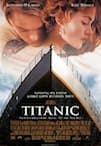
Titanic (1997): $200M Budget & $2.2 Billion Box Office Breakdown
Synopsis
"Titanic," directed by James Cameron, is an epic romance and disaster film set against the backdrop of the ill-fated maiden voyage of the RMS Titanic in 1912. The story follows the passionate love affair between Jack Dawson, a penniless artist, and Rose DeWitt Bukater, a young woman from an affluent family. As they navigate the constraints of class and societal expectations, their bond deepens amidst the grandeur of the ship.
The narrative unfolds with Rose's struggle against her impending arranged marriage to the wealthy but controlling Cal Hockley. Jack, who wins a third-class ticket in a poker game, represents freedom and adventure, contrasting sharply with Rose's stifling life. Their romance blossoms aboard the Titanic, culminating in iconic moments that have become etched in cinematic history.
Tragedy strikes when the ship collides with an iceberg, leading to chaos and despair. As the Titanic sinks, Jack and Rose fight for survival, showcasing the resilience of love in the face of disaster. The film masterfully intertwines historical events with a poignant love story, leaving audiences captivated by both the romance and the tragedy of one of history's most infamous maritime disasters.
What is the budget of Titanic?
Did you know that "Titanic" (1997) was one of the most expensive films ever made at the time of its release? Directed by the visionary James Cameron, this epic romance and disaster film starred Leonardo DiCaprio as Jack Dawson and Kate Winslet as Rose DeWitt Bukater. Released on December 19, 1997, "Titanic" not only captivated audiences with its poignant love story but also set new standards in filmmaking. The film's budget plays a significant role in understanding its monumental success.
What was the production budget?
The production budget for "Titanic" was a staggering $200,000,000. This figure places it among the highest-budget films of its era, especially for a romance and disaster genre. When compared to other films released around the same time, such as "Jurassic Park" (1993) with a budget of $63 million and "The Phantom Menace" (1999) at $115 million, "Titanic" stands out for its ambitious scale and production values.
Key Budget Allocation Categories
While specific breakdowns of the budget are not publicly available, several key factors contributed to the overall production costs:
- Special Effects: The film featured groundbreaking visual effects, including the recreation of the Titanic itself and the dramatic sinking sequence.
- Set Design and Locations: Extensive efforts were made to accurately depict the ship and its interiors, requiring elaborate sets and location shoots.
- Talent: The film boasted a star-studded cast, which naturally increased the budget.
What were the major cost factors?
Several elements significantly impacted the production costs of "Titanic":
- Special Effects: The film's iconic scenes, particularly the ship's sinking, required advanced technology and extensive CGI, contributing to high expenses.
- Set Construction: Building a near-exact replica of the Titanic was no small feat, demanding significant resources and time.
- Talent Salaries: The involvement of high-profile actors and a skilled crew added to the overall budget.
Challenges arose during production, leading to budget overruns. Initially, the budget was estimated to be around $100 million, but as the project progressed, costs soared, ultimately reaching $200 million.
How did Titanic perform at the box office?
"Titanic" achieved remarkable box office success, grossing $2,223,048,786 worldwide. In the domestic market, it earned $674,460,013.
Break-even Point Analysis
To determine the break-even point, a film typically needs to earn about twice its production budget to cover marketing and distribution costs. For "Titanic," this meant it needed to gross approximately $400 million. The film not only met this threshold but exceeded it by a significant margin, showcasing its financial triumph.
ROI Percentage
The return on investment (ROI) for "Titanic" is impressive. With a production budget of $200 million and worldwide earnings of over $2.2 billion, the ROI percentage stands at approximately 1011%. This staggering figure highlights the film's financial success and its impact on the industry.
Was Titanic profitable?
Absolutely, "Titanic" was immensely profitable. The film's earnings far surpassed its production costs, making it one of the most successful films in history. The financial success of "Titanic" had a lasting impact on the studio, 20th Century Fox, and Paramount Pictures, leading to increased budgets for future projects in the genre.
Impact on Future Movie Budgets
The success of "Titanic" set a new benchmark for blockbuster films, encouraging studios to invest more heavily in high-quality productions. The film's achievements paved the way for larger budgets in subsequent epic films, influencing the industry for years to come.
Records Set
At the time of its release, "Titanic" held the record for the highest-grossing film of all time, a title it maintained for over a decade until "Avatar," also directed by James Cameron, surpassed it in 2010.
Commonly Asked Questions
How much did Titanic (1997) cost to make?
The production cost of "Titanic" was $200,000,000.
Was Titanic (1997) profitable?
Yes, "Titanic" was highly profitable, grossing over $2.2 billion worldwide.
What was the most expensive element of Titanic (1997)?
The most expensive elements included special effects and set construction, particularly the recreation of the Titanic.
How much did Titanic (1997) make at the box office?
The film earned $2,223,048,786 globally and $674,460,013 domestically.
Did Titanic (1997) go over budget?
Yes, "Titanic" went over its initial budget, which was estimated at $100 million, ultimately reaching $200 million.
In summary, "Titanic" not only captivated audiences with its story but also made waves in the film industry with its impressive budget and box office performance. The film's financial success has left a lasting legacy, influencing how studios approach big-budget productions in the years that followed.
Plan Your Own Film Budget
Looking to manage a real production? [Saturation](https://saturation.io) is cloud-based film budgeting software built for producers — with collaborative budgets, expense tracking, and production banking in one place. [Start free](https://app.saturation.io/signup).






























Budget Templates
Build your own production budget
Create professional budgets with AICP and feature film templates. Real-time collaboration, no spreadsheets.
Start Budgeting Free