What is a 1st Assistant Director?
Overview
The 1st assistant director (1st AD) is the operational engine of any film or television production. While the director shapes the creative vision, the 1st AD is responsible for making sure that vision actually gets captured on screen, on schedule, and within budget. Every call sheet issued, every department coordinated, every safety briefing delivered, and every minute saved on set is the direct result of a skilled 1st AD running the production floor.
On a studio feature, the 1st AD commands a crew of hundreds. On an independent short, the same role might involve just a handful of people. But the core responsibility is identical: keep the production moving, communicate clearly across departments, and protect both the schedule and the safety of every person on set.
The 1st AD is a below-the-line technical role, not a creative one, though it requires an intimate understanding of every creative department from camera to costume. The 1st AD does not direct actors, but coordinates everything that surrounds them. Many experienced 1st ADs work on productions budgeted from micro-budget indie films all the way up to major studio tentpoles, using the same core skills across every budget tier.
If you are tracking production expenses and crew payments alongside your shoot, Saturation.io gives 1st ADs and producers a single cloud-based platform for budgeting, expense tracking, and production payments.
Role & Responsibilities
What Does a 1st Assistant Director Do in Pre-Production?
Pre-production is where a 1st AD earns their rate before a single frame is shot. The work begins the moment the 1st AD is hired, typically four to eight weeks before principal photography on a feature, and compressed to two to four weeks on television episodes.
Script breakdown. The 1st AD reads the script multiple times, tagging every scene element: cast members, extras, locations, vehicles, animals, stunts, special effects, and time of day. Each scene is transferred to a breakdown sheet that becomes the data source for the entire shooting schedule. On a 120-page feature, this process alone can take several full working days.
Shooting schedule. Using the breakdown sheets, the 1st AD builds the shooting schedule in Movie Magic Scheduling (the industry standard) or an equivalent tool. The schedule groups scenes by location to minimize company moves, clusters scenes by cast availability (lead actors are expensive; you never keep them idle), and accounts for technical requirements like crane setups or underwater shoots that demand extra time. A well-built schedule is one of the most important documents in the entire production.
Department coordination. The 1st AD runs or attends every department prep meeting: camera, art department, locations, wardrobe, hair and makeup, visual effects, and stunts. The goal is to surface logistical conflicts before they become on-set emergencies. If the director wants a wide shot requiring a fifty-foot crane arm and the location ceiling is thirty feet, the 1st AD needs to know in week two, not day one of the shoot.
Cast scheduling. Working alongside the casting director and production coordinator, the 1st AD integrates actor availability into the schedule and issues deal memo and contract requirements to the production office. SAG-AFTRA turnaround rules (minimum 12 hours between wrap and next call), travel days, and stunt rehearsal windows all factor into the calendar.
What Does a 1st Assistant Director Do on Set?
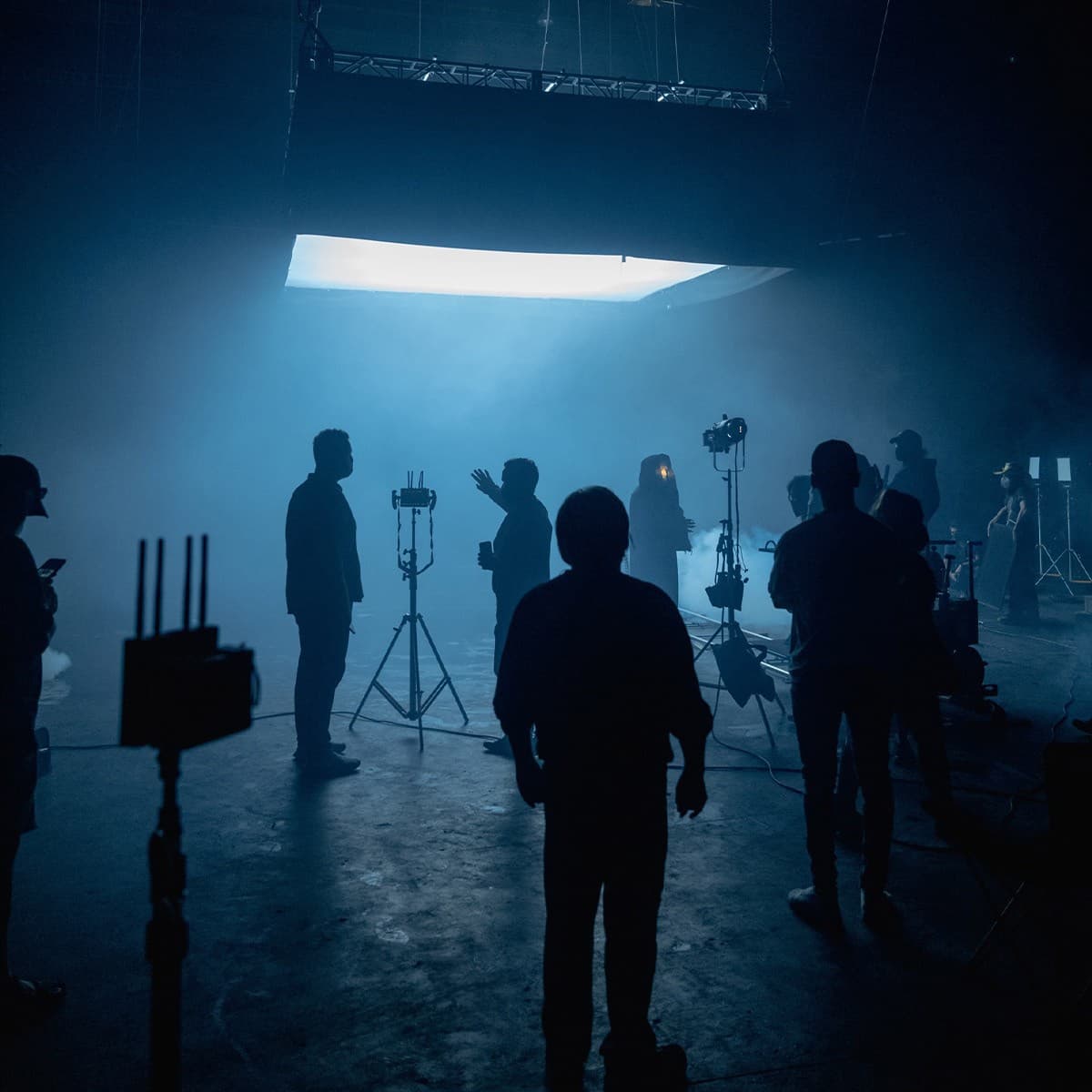
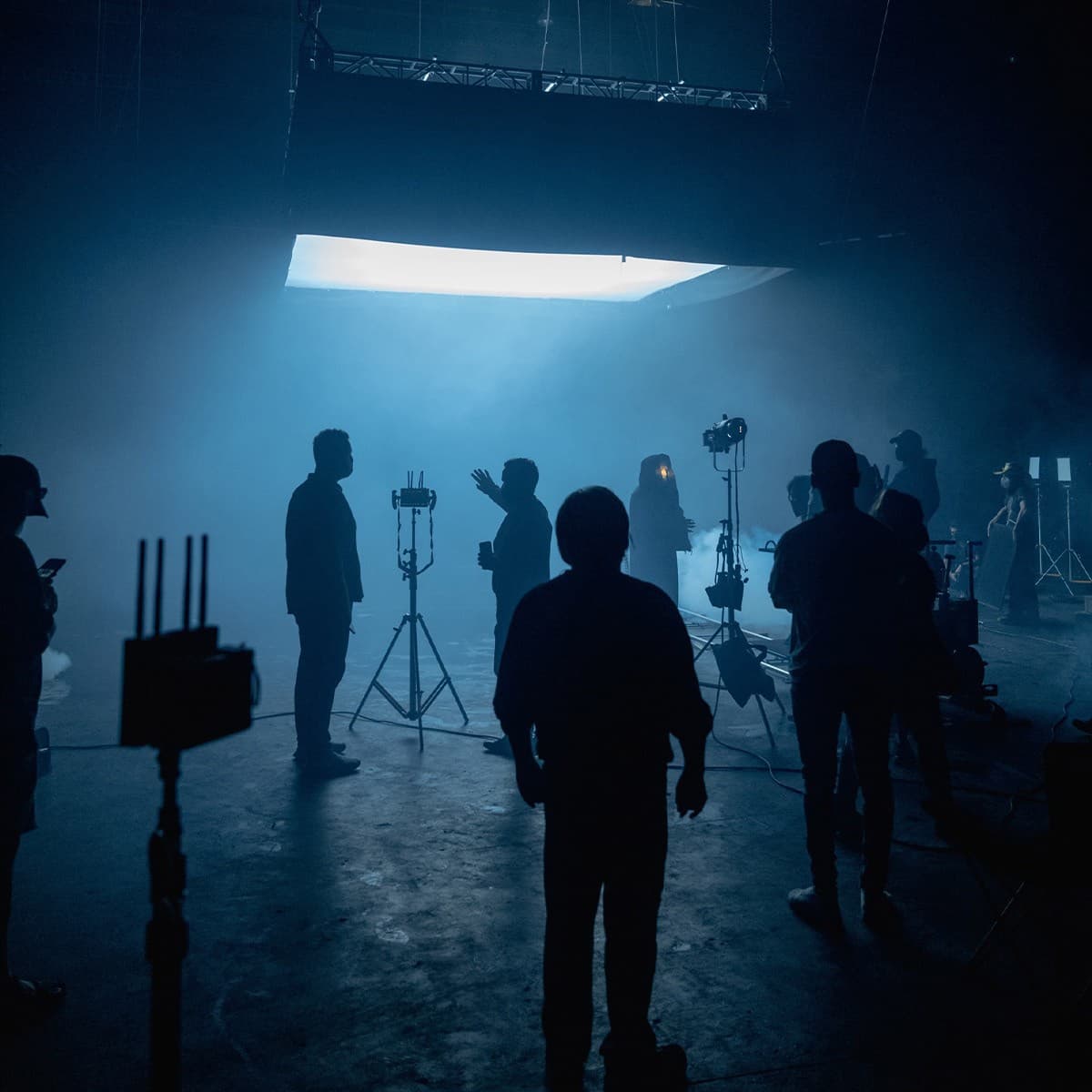
On a shooting day, the 1st AD is the loudest, most visible person on set. Their job is to run the floor so that the director can focus entirely on performance and camera.
Opening the set. The 1st AD calls the set to order at the start of each day. They walk every department head through the day's plan: the scene to be shot first, the setup, the cast on set, any special requirements, and the target wrap time. This daily kickoff sets the tone for the entire crew.
Calling the roll. Every shot begins with the 1st AD calling the sequence that signals picture is about to happen: "Quiet on set," "Roll camera," "Roll sound," "Background action" (when applicable), and finally "Action" on the director's behalf or by direct cue from the director. Between takes, the 1st AD announces the next setup and drives the crew to the next camera position.
Managing background performers. On any scene with extras or background performers, the 1st AD (or the 2nd AD with the background cast) positions and directs non-speaking performers. On a crowd scene, this can involve managing hundreds of people in precise choreography, all while the director focuses on the principal actors.
Protecting the schedule. If a scene is running long, the 1st AD is responsible for calling it. They work with the director to identify what shots are truly essential versus which can be dropped or simplified. At the end of each day, they update the one-liner schedule and communicate the projected day's end to all departments so crew can prepare for the next morning.
Safety. The 1st AD leads all safety briefings before stunts, effects, or any potentially hazardous situation. They are the first line of accountability for crew and cast safety on set. If a stunt coordinator raises a concern, the 1st AD has the authority to pause production until it is resolved. This responsibility has grown significantly following high-profile on-set incidents in the industry.
Call sheets. In collaboration with the 2nd AD, the 1st AD approves the daily call sheet distributed to the entire cast and crew the night before each shooting day. The call sheet contains crew call times, the day's scenes, cast information, location details, and department-specific notes. It is the single most important document the crew reads each day.
What Does a 1st Assistant Director Do After the Shoot?
The 1st AD's primary responsibilities end when the production wraps, but they contribute to the post-production handoff by ensuring the production report accurately reflects all days shot, scenes completed, and pages turned. On long-running television series, the 1st AD may move immediately from one episode's wrap into pre-production on the next episode, sometimes within the same week.
How Does the Role Differ Across Film, TV, and Commercials?
On a feature film, the 1st AD typically spends four to ten weeks in prep and then shoots for sixty to one hundred and twenty days. The depth of preparation and scale of crew management is the greatest in features.
On a television series, the 1st AD often rotates between episodes, working primarily in production while a separate prep AD handles pre-production. Episodic television moves faster: a one-hour drama episode is typically shot in eight to ten days. The pace is relentless.
On commercials, a 1st AD might prep for two weeks and shoot for one to three days, managing a technically sophisticated crew on an extremely compressed timeline. Commercial budgets can be generous but the margin for error is minimal. Every second of screen time is accounted for in pre-production storyboards.
Who Does the 1st AD Report To?
The 1st AD reports operationally to the director on all creative and set matters, and administratively to the unit production manager (UPM) or line producer on scheduling and budget matters. The producer is the boss from a contract perspective: the 1st AD serves the production as a whole, not just the director's creative preferences. This sometimes means the 1st AD must advocate for schedule reality even when it conflicts with what the director wants to attempt on a given day.
Skills Required
Time Management and Schedule Discipline
Time is the most valuable and most perishable resource on any production. A 1st AD who cannot manage time costs productions tens of thousands of dollars per hour in crew overtime, facility fees, and equipment costs. Effective time management for a 1st AD means not only knowing the schedule intimately but also making real-time decisions about when to push harder, when to call lunch, when to move on, and when to call a problem to the producer's attention before it becomes a crisis.
This skill extends to pre-production: building a shooting schedule that is ambitious but achievable requires a calibrated understanding of how long camera setups actually take, how long it takes to dress a location, and how long certain types of scenes realistically run at different crew sizes and budget levels.
Leadership and Command Presence
The 1st AD must be heard. On a large set with dozens or hundreds of crew members, the ability to project authority calmly and clearly is non-negotiable. This does not mean being aggressive: the best 1st ADs are respected because they are prepared, decisive, and consistent, not because they are loud or intimidating. The set follows the energy of the 1st AD. If the AD is calm and focused, the crew tends to mirror that. If the AD is chaotic, the set becomes chaotic.
Leadership also means protecting the crew. A 1st AD who pushes past safe working conditions to protect a schedule earns short-term results and long-term distrust. The most effective ADs are known for advocating for their crew's basic needs: reasonable meal breaks, turnaround compliance, and a working environment free from harassment.
Communication Across All Departments
The 1st AD is the communications hub of the production. Every department needs to hear from the AD, and every department needs to feel that the AD understands what they need. This requires the ability to speak the language of each department: understanding the difference between a dolly and a Steadicam setup, knowing roughly how long a 50-person wardrobe change takes, and being able to read the body language of a department head who is falling behind but does not want to say so in front of the whole set.
Walkie-talkie communication protocol is a practical skill that every working AD must master. Clear, concise radio communication on a busy set keeps departments informed and prevents the kind of information gaps that slow production.
Script Breakdown and Scheduling Software
Proficiency with Movie Magic Scheduling is the core technical skill of the AD role. A 1st AD must be able to build a complete, realistic shooting schedule from a cold script, including stripping the script into breakdown sheets, organizing scene elements by category, building stripboards, and generating one-liner schedules for distribution. The ability to do this quickly and accurately is what separates a professional 1st AD from someone who is still learning the craft.
Supplementary tools include scheduling export formats compatible with production management platforms, digital stripboard apps (such as Gorilla Schedule or StudioBinder Scheduling for smaller productions), and spreadsheet-based tools for specific planning tasks like cast availability calendars or location move logistics.
Problem-Solving Under Pressure
Every shooting day involves at least one thing that does not go as planned. Equipment malfunctions, weather changes, actors who are not available, locations that fall through at the last minute: the 1st AD must solve these problems in real time without shutting down the production. The ability to stay calm, generate solutions quickly, and communicate those solutions to the right people is what separates a competent AD from an exceptional one.
Problem-solving in this context is also about anticipation. A good 1st AD looks three setups ahead, identifies potential issues before they arrive on the floor, and takes preventive action during a camera move rather than after a problem has already stopped the set.
Physical Stamina and Endurance
A 1st AD on a studio feature may be on their feet for twelve to fourteen hours a day, often six days a week. Physical endurance is genuinely part of the job. This means comfortable footwear, appropriate clothing for exterior conditions, and the mental resilience to maintain clarity and good decision-making through a long day on a night shoot or a complex VFX-heavy production day.
Knowledge of Union Rules and Industry Protocols
On union productions, the 1st AD must know DGA minimums, SAG-AFTRA turnaround requirements, IATSE contract terms for the relevant craft locals, and any applicable state or local labor regulations. Violating a turnaround, missing a meal penalty, or scheduling a cast member in violation of their contract creates real legal and financial liability for the production. A 1st AD who knows these rules intimately protects the production from avoidable penalty charges and grievances.
Safety Management
The 1st AD is responsible for safety on set. This includes conducting safety meetings before stunts and effects work, ensuring that proper safety protocols are followed for driving sequences, weapons handling (including prop weapons), fire gags, and physical stunt work. Following the Rust set tragedy in 2021 and subsequent industry-wide review of safety practices, the 1st AD's safety role has become more formal and more closely scrutinized on both union and non-union productions.
Salary Guide
How Much Does a 1st Assistant Director Make?
1st AD compensation varies widely depending on union status, market, production budget, and medium (feature film vs. television vs. commercial vs. music video). The range across all of these variables runs from nothing (short films and student productions sometimes offer no pay or deferred pay) to well over $200,000 per year for an experienced, in-demand 1st AD working consistently on studio features in Los Angeles.
DGA Minimum Rates for 1st Assistant Directors
The Directors Guild of America sets minimum compensation for 1st ADs working on covered productions. DGA rates are negotiated by contract type (Theatrical, Television, Commercial) and are updated periodically. As of the 2023-2026 DGA Basic Agreement, representative minimums for 1st ADs on studio theatrical features include weekly minimums in the range of approximately $8,000 to $9,500 per week for "Class A" productions, with higher-budget productions often negotiating rates above minimums. Television rates are structured differently based on network type and episode length.
For the most current DGA minimum rates, the authoritative source is the DGA official rate schedule, updated following each contract negotiation cycle.
Entry-Level 1st AD Salary (0-3 Years)
An AD entering their first 1st AD credits, typically on non-union independent films, short films, or lower-budget commercial work, can expect rates ranging from $0 (deferred or no-pay on passion projects) to $300-$600 per day on non-union productions in mid-tier markets. Annual income at this career stage is highly inconsistent because 1st AD work at the entry level is project-based and not continuous. An entry-level 1st AD might work forty to eighty days per year at first, which at $400/day translates to $16,000-$32,000 annually from 1st AD credits, often supplemented by work as a 2nd AD or PA between projects.
Mid-Career 1st AD Salary (3-8 Years)
A 1st AD with a growing credit list, union membership (if in an active DGA market), and a reputation for running tight sets begins to command significantly higher rates. In Los Angeles and New York, mid-career DGA 1st ADs working on television series can earn $6,000-$8,000 per week, and episodic television often keeps 1st ADs working continuously for months at a time across a season. On mid-budget features ($5M-$30M), a mid-career 1st AD might negotiate $7,000-$10,000 per week.
According to ZipRecruiter data as of February 2026, the majority of First Assistant Director salaries in the United States fall between $48,000 (25th percentile) and $93,500 (75th percentile) annually, with top earners (90th percentile) making $136,500. The national average is approximately $77,000 per year across all experience levels and markets.
Senior 1st AD Salary (8+ Years)
An experienced, in-demand 1st AD working primarily on studio features or streaming platform originals in Los Angeles can earn $10,000-$15,000 per week or more on major productions. Consistently booked ADs who work 40+ weeks per year at these rates can earn $400,000-$600,000 annually, though this represents the top tier of the profession. Glassdoor data places DGA 1st ADs at companies like the Directors Guild of America itself at an average of approximately $106,000 per year, reflecting both top and bottom of the union pay scale.
Salary by Market
Los Angeles. The highest-volume and highest-paying market for 1st ADs. ZipRecruiter data shows the average 1st AD salary in Los Angeles at approximately $138,460 annually, with top earners exceeding $158,000. The concentration of studio productions, streaming originals, and commercial work keeps experienced ADs working consistently.
New York. The second major market, with strong union density driven by episodic television, commercial production, and a growing base of streaming content. DGA rates in New York are comparable to Los Angeles. Mid-career ADs working New York-based television series can expect annual earnings in the $100,000-$180,000 range for busy years.
Atlanta. Georgia has become one of the largest production markets in the country, driven by generous state tax incentives. DGA 1st ADs working Atlanta-based studio productions earn DGA minimums equivalent to those in Los Angeles, though the local non-union market pays less. Atlanta ADs working on Marvel and Netflix productions report rates in the $7,000-$10,000 per week range.
Other markets (Chicago, New Mexico, Louisiana, Vancouver). Secondary markets offer steady work at somewhat lower non-union day rates and, for union productions, DGA minimums. Chicago is known for commercial production; New Mexico and Louisiana have been growing as studio production destinations due to tax incentives. Annual earnings for ADs based in these markets typically range from $50,000-$120,000 depending on activity level and budget tier.
Commercial vs. Feature vs. Television Pay Comparison
Commercial work often pays the highest day rates relative to shooting days: a 1st AD on a major national commercial spot might earn $1,200-$2,500 per day, but shoot only one to three days per project. Features pay weekly rates over a longer period. Television offers the most consistent income because episodic series keep an AD employed for an entire season.
Non-Union vs. Union Pay
The gap between union and non-union pay for 1st ADs is substantial. A non-union 1st AD on a lower-budget independent film might earn $500-$800 per day flat, with no overtime, no kit fee, and no pension and health contributions. A DGA 1st AD on a comparable budget production covered by the DGA Basic Agreement earns a negotiated weekly rate plus pension and health contributions that add significant value above the quoted rate. For 1st ADs building their careers, the path to DGA membership typically results in a substantial and immediate compensation increase.
FAQ
What exactly does a 1st assistant director do?
The 1st assistant director runs the logistics of a film or television production. In pre-production, they break down the script, build the shooting schedule, and coordinate departments. On set, they call action, manage crew communication, direct background performers, enforce the schedule, and lead safety briefings. They also collaborate with the 2nd AD to approve daily call sheets distributed to all cast and crew.
Is a 1st AD the same as a director?
No. The director makes creative decisions: casting choices, performance direction, camera angles, visual storytelling. The 1st AD makes logistical decisions: how many setups to attempt today, when to break for lunch, how to position fifty background performers, and when to tell the director they need to move on to protect the schedule. The 1st AD serves the director's vision but is not responsible for the creative content of the film.
How much does a 1st assistant director make?
Compensation ranges from no pay on student short films to $10,000-$15,000 per week for senior 1st ADs on major studio productions. The ZipRecruiter national average as of February 2026 is approximately $77,000 per year, with most salaries falling between $48,000 and $93,500. In Los Angeles, the average is closer to $138,000. DGA union members working on studio features earn negotiated minimums that typically start above $8,000 per week.
Do you need to join the DGA to work as a 1st AD?
DGA membership is required to work as a 1st AD on productions covered by the DGA Basic Agreement, which includes most studio features and major network and streaming television. However, non-union 1st ADs can work on productions not covered by the DGA, including many independent films, commercials, music videos, and smaller television productions. Many ADs build their careers on non-union productions before pursuing DGA membership.
How do you become a 1st assistant director?
Most 1st ADs follow one of two paths. The union path involves applying to the DGA Training Program in Los Angeles or New York, completing the required day count as a trainee, and then working up from 2nd AD to 1st AD over several years. The non-union path begins as a production assistant on film sets, advancing to 2nd AD roles, and ultimately being hired as a 1st AD on smaller independent productions that build a credit history. Both paths typically take five to fifteen years before consistent 1st AD work is available.
Is the 1st AD job stressful?
Yes, by most accounts, it is one of the most demanding jobs on a film set. The 1st AD carries the weight of the entire day's outcome on their shoulders: if the production falls behind schedule, misses a shot, violates a safety protocol, or has a crew conflict, the 1st AD is accountable. The hours are long, the physical demands are real, and the decision-making is constant. James Gunn, director of Guardians of the Galaxy, has publicly called the 1st AD role one of the most difficult jobs to get and to do well in the film industry.
What is the difference between a 1st AD and a 2nd AD?
The 1st AD runs the set and protects the schedule. The 2nd AD handles administrative coordination: they prepare the daily call sheet from the 1st AD's schedule, manage talent logistics (transportation, holding areas, set PA deployment), coordinate background performers, and act as the communications link between the production office and the set. On a large production, the 2nd AD oversees additional 2nd ADs who each handle specific groups of background performers or administrative tasks.
Can you be a 1st AD without going to film school?
Absolutely. Many working 1st ADs did not attend film school. The skills most critical to the role (organization, leadership, scheduling, communication, knowledge of production workflows) are developed through set experience rather than academic training. Film school can accelerate the early part of the learning curve and provide a network of peers, but it is not a prerequisite for a successful AD career.
Education
Do You Need a Film Degree to Become a 1st AD?
No formal degree is required to work as a 1st AD. Many working 1st ADs do not have film school backgrounds. What matters is experience, competence, and the trust of the producers and directors who hire you. That said, a film production degree from an accredited program can accelerate your early career by teaching script breakdown, scheduling fundamentals, and on-set protocol in a structured environment before you face the pressures of a real production.
Schools with strong production programs include NYU Tisch School of the Arts, USC School of Cinematic Arts, UCLA Film School, AFI Conservatory, Chapman University Dodge College, Columbia College Chicago, and Emerson College. Most of these programs include hands-on production courses where students work as 1st ADs on student films, building real-world reps before graduation.
The DGA Training Program: The Most Structured Path
For those targeting union work in Los Angeles or New York, the Directors Guild of America (DGA) Training Program is one of the most recognized entry points into the AD career track. The program is highly competitive: hundreds apply for a small number of slots each cycle.
Accepted trainees complete a work-based training program across the three DGA AD categories: production assistant, 2nd AD, and ultimately 1st AD. The program requires trainees to accumulate a specified number of days worked on qualifying DGA productions. During training, participants learn the administrative and on-set functions of each AD tier under working professionals.
Upon completion of the DGA Training Program and fulfillment of the required day count (currently 400 days in the Commercial category or equivalent), participants become eligible for DGA membership as a 2nd AD. From there, the path to 1st AD depends on accumulated days and demonstrated competence. The DGA sets minimum day thresholds that must be met before a member can move up to 1st AD on a covered production. Details and current application windows are available at the DGA Training Program official page.
The Non-Union Path: PA to 2nd AD to 1st AD
Many working 1st ADs, especially those based outside Los Angeles and New York, built their careers through the non-union production assistant route. The progression typically looks like this:
Production assistant (PA). The PA is the entry-level position in almost all departments, but the set PA is the role most directly under the AD department. Set PAs lock up locations, wrangle extras, run messages between departments, and observe the 1st AD at work. This is the essential observation phase where aspiring ADs learn the language and rhythm of a working set.
2nd AD / 2nd 2nd AD. After gaining set PA experience and demonstrating organizational reliability, some PAs are offered the chance to assist the 2nd AD, or in some cases are hired directly as a 2nd 2nd AD (also called an additional 2nd AD) on smaller productions. In this role, the candidate takes on administrative AD functions: preparing call sheets, managing extras paperwork, coordinating talent transportation, and maintaining continuity between the 1st AD and the production office.
1st AD on smaller productions. The step from 2nd AD to 1st AD typically happens on a small independent feature, a short film, or a music video where the 1st AD role is available and the candidate's network connects them to the opportunity. This first credit as a 1st AD is critical: it becomes the proof of concept for every future hire.
Relevant Certifications and Training
Several industry organizations offer production management training that complements the AD path. Production Hub, the Producers Guild, and various state film commissions run workshops on scheduling, budgeting, and production management. While not equivalent to the DGA Training Program, these can strengthen foundational skills for aspiring ADs earlier in their careers.
Proficiency with Movie Magic Scheduling and Movie Magic Budgeting is expected at the professional level. These are the industry-standard tools for breaking down scripts and building shooting schedules. Familiarity with Final Draft for reading and annotating scripts is also useful, as is basic proficiency with production management software like Saturation.io for tracking budgets and crew expenses on smaller productions.
How Long Does It Take to Become a 1st AD?
The honest answer: five to fifteen years, depending on your market, your network, and how aggressively you pursue set experience. In a major market like Los Angeles with union production, the DGA Training Program can take two to four years to complete, followed by additional years working as a 2nd AD before qualifying and being hired as a 1st. In smaller markets, the timeline can be shorter because competition is lower, but so is the volume of qualifying work available.





























Budget Templates
Budget crew costs with confidence
Use Saturation to build budgets with accurate crew rates, fringes, and union scales.
Try Free Budget Tool