What is a 2nd Assistant Director?
Overview
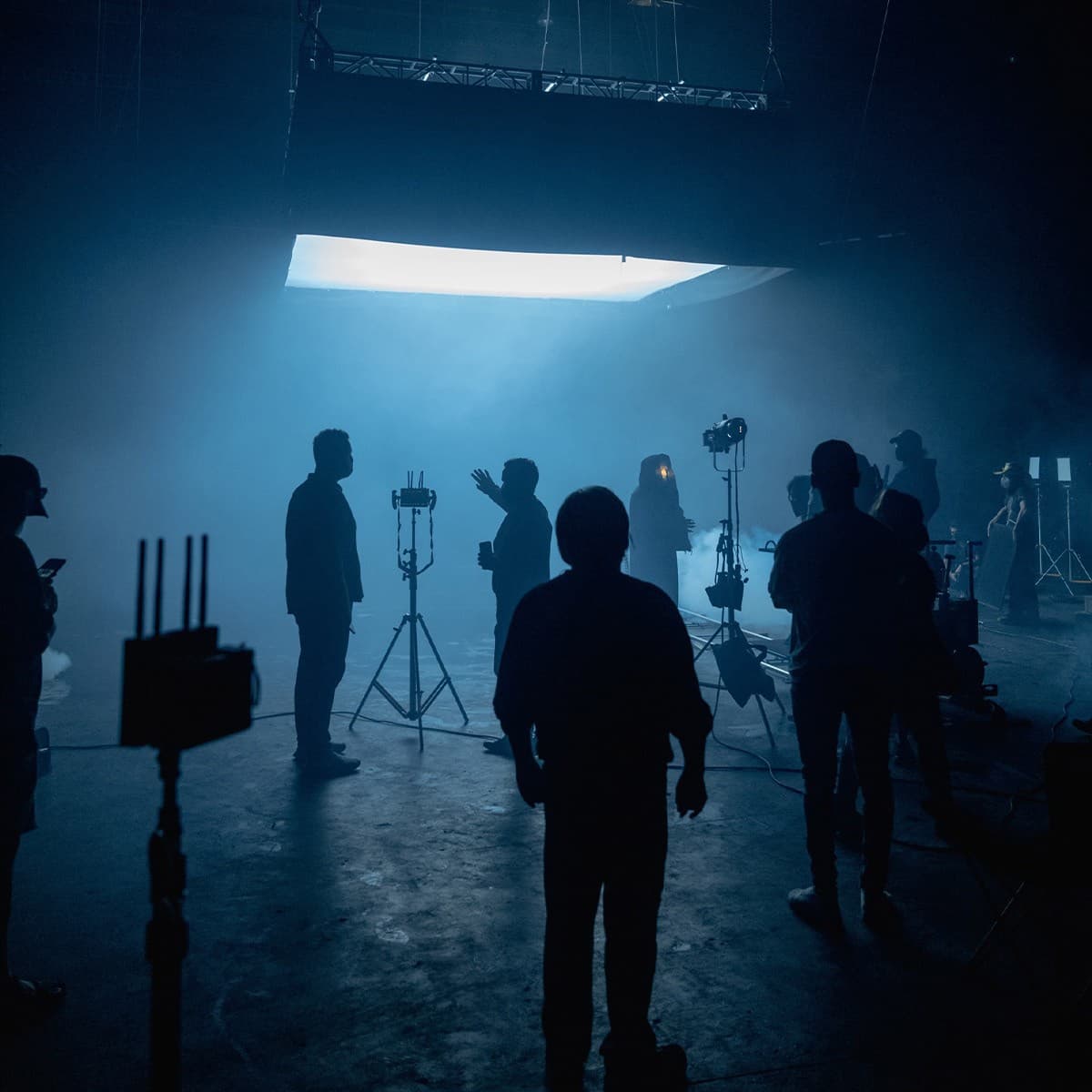
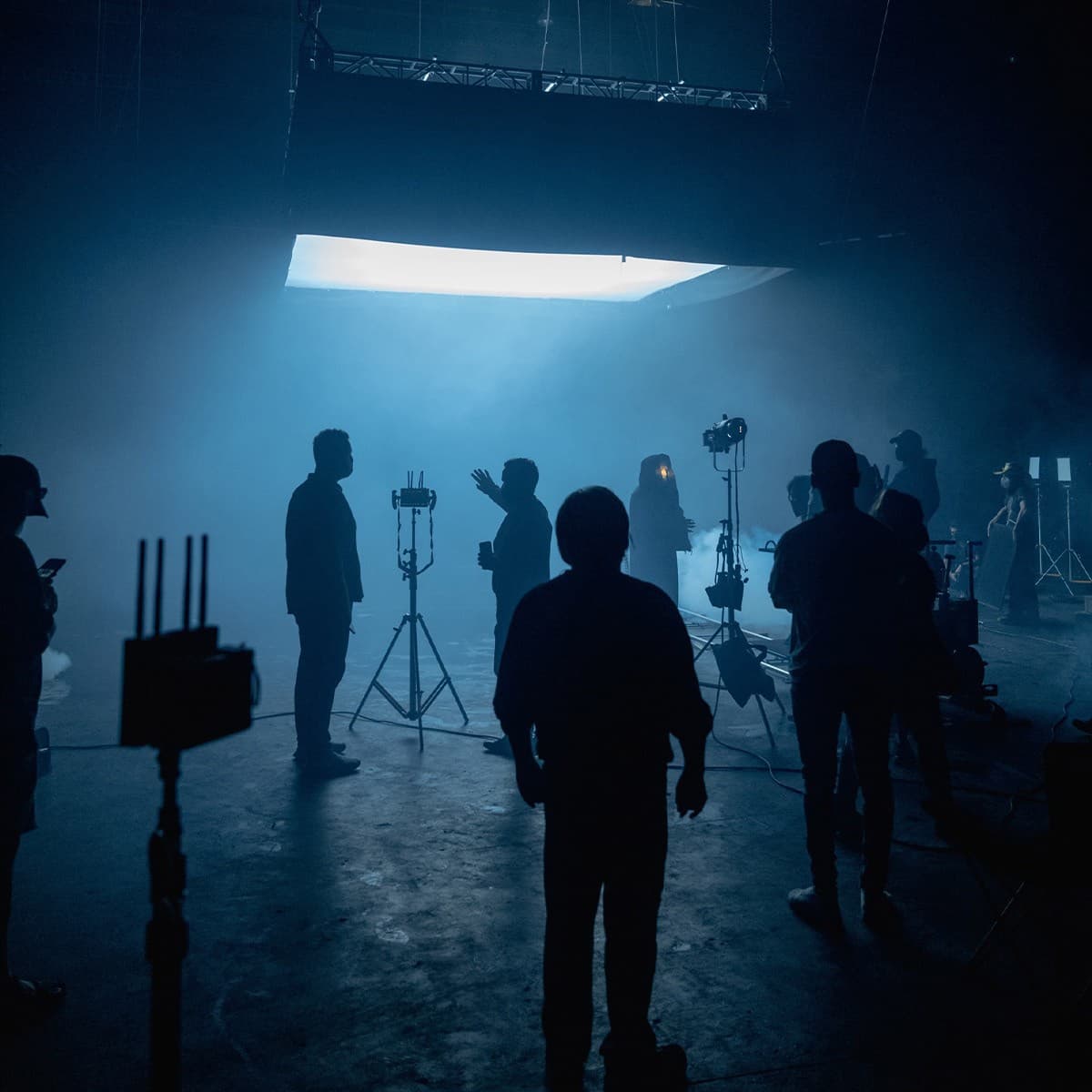
The 2nd Assistant Director (2nd AD) is the primary logistics hub on any film or television production. While the 1st AD commands the set floor, the 2nd AD controls everything that happens off it: who is on set and when, whether actors are through hair and makeup on schedule, whether call sheets go out the night before, and whether the 150 background performers for tomorrow's crowd scene are booked, briefed, and ready to work.
Sitting directly under the 1st Assistant Director in the department hierarchy, the 2nd AD is the person who translates the 1st AD's schedule into a living, breathing production day. Every department head's call time, every actor's pickup time, every location change and lunch break flows through the 2nd AD's daily call sheet. If the call sheet is wrong, the day falls apart. That single document, produced every evening and distributed before crew goes to sleep, is the signature deliverable of the 2nd AD role.
On union productions covered by a Directors Guild of America (DGA) agreement, the 2nd AD is a DGA-covered position with negotiated weekly minimum rates. On non-union independent productions, the 2nd AD often fulfills the same duties at day or weekly rates negotiated directly with production. Either way, the role demands extraordinary organizational skill, calm under pressure, and the ability to move people and information across a chaotic set without dropping anything. Production teams that use Saturation.io for cloud-based budgeting and production financial management give their 2nd ADs one less logistical headache: budget data, department costs, and expense tracking live in one place rather than scattered across spreadsheets.
Role & Responsibilities
The Call Sheet: Primary Daily Deliverable
The call sheet is the 2nd AD's most critical product. Produced every evening for the following day's shoot, it is distributed digitally to the entire cast and crew and contains every piece of information a person needs to show up at the right place, at the right time, ready to work. A well-built call sheet includes the shooting schedule for the day (scenes in order, estimated page count and screen time), the general crew call, each department's specific call time, individual actor call times with their scene lists, location address and parking instructions, advance schedule for the next day, weather forecast, hospital and emergency contact information, and any special notes from the director or 1st AD. The 2nd AD builds the call sheet from the 1st AD's one-liner or stripboard, pulling actor call times by working backward from their first scene and accounting for the time each actor needs in hair, makeup, and wardrobe. Getting those turnaround calculations wrong can cascade through the entire morning and push the production behind before the first shot is called.
Pre-Production Responsibilities
The 2nd AD's job begins well before the first day of principal photography. During prep, the 2nd AD attends production meetings alongside the 1st AD, taking notes, flagging scheduling conflicts, and building the preliminary contact list that will become the daily call sheet header. The 2nd AD works directly with the casting department to confirm actor availabilities, receives deal memos from the production coordinator, and establishes communication protocols with the hair, makeup, and wardrobe departments. On larger productions, the 2nd AD may assist with coordinating background casting agencies, establishing background holding areas at each location, and preparing crowd scene logistics weeks in advance. The 2nd AD also liaises with the locations department to understand base camp layout, trailer assignments, and the travel time between base camp and set, all of which affect call times.
On-Set Daily Duties
During principal photography, the 2nd AD divides their time between base camp and the set itself. At base camp, they are the traffic manager: ensuring actors move from their trailers to makeup, from makeup to wardrobe, from wardrobe to set, and back again with zero wasted time. The 2nd AD is on the radio with the 1st AD on set, receiving updates about scene progress and adjusting the movement of talent accordingly. If the 1st AD radios that they are running ahead of schedule and need the lead actor five minutes earlier, the 2nd AD coordinates the switch instantly, notifying makeup and wardrobe. If lunch is pushed by twenty minutes because the director wants to complete a difficult shot, the 2nd AD radios the caterer, informs the actors, and updates the afternoon schedule. The 2nd AD also manages the production assistants (PAs) on set, assigning them to door locking, crowd control, shuttle runs, and communication chains.
Background and Extras Management
On productions with significant background talent, the 2nd AD or the 2nd 2nd AD is responsible for wrangling extras. This means checking in background performers at the holding area, distributing vouchers, directing them through costume fittings, briefing them on set behavior, and moving them onto set in coordination with the 1st AD's direction. On large crowd scenes, the 2nd AD may communicate specific blocking instructions to background performers. Managing background is one of the most logistically demanding parts of the role: large crowd days can involve 200 or more background performers who all need costumes, meals, vouchers, and clear direction about where to stand and when to move.
Paperwork, Reports, and End-of-Day Duties
At the end of each shooting day, the 2nd AD begins building the following day's call sheet. They collect the production report from the script supervisor, confirm the next day's scene count with the 1st AD, verify actor availability and any conflicts that emerged during the day, and check in with all department heads for any special equipment or timing needs. The 2nd AD also prepares the daily exhibit G (for DGA productions), which documents the hours worked by AD department members. Before distributing the call sheet, the 2nd AD submits it to the 1st AD and the line producer for approval. Once approved, it goes out to the full cast and crew, typically by 9 or 10 PM the evening before.
Interdepartmental Communication
The 2nd AD sits at the intersection of virtually every department on a production. They receive information from casting, the production office, the director, the 1st AD, hair and makeup, wardrobe, transportation, and locations, and synthesize it into a coherent daily plan. This constant information processing is one of the role's greatest cognitive demands. A missed communication between the 2nd AD and the transportation coordinator can mean an actor's driver arrives an hour late. A missed communication with wardrobe can mean a costume is not ready when the actor finishes makeup. The 2nd AD prevents these failures by maintaining meticulous notes, confirming every departmental need in advance, and following up on anything that is not confirmed.
Skills Required
Call Sheet and Scheduling Software
Proficiency with call sheet and scheduling software is the 2nd AD's most essential technical skill. Movie Magic Scheduling is the industry standard for building stripboards and one-liners on feature films and major television productions. The 2nd AD must be able to read and work from a Movie Magic schedule, understanding how scene strips are organized, how to pull shooting order information for call sheet construction, and how to communicate schedule changes back to the 1st AD. StudioBinder offers call sheet and scheduling tools that are popular on smaller productions and commercials, providing a streamlined interface for distributing call sheets digitally. Google Sheets and Microsoft Excel remain common tools for 2nd ADs on independent productions who build call sheets from scratch. Regardless of the platform, the 2nd AD must be able to produce a professional, accurate, fully populated call sheet quickly and without errors.
Production Management Software
Beyond call sheet tools, the 2nd AD benefits from familiarity with production management platforms that their production coordinator and line producer use for budgeting and expense tracking. When the 2nd AD understands how the budget is structured and how department costs are tracked, they can coordinate with department heads more effectively and anticipate cost pressures that affect scheduling decisions. Platforms like Saturation.io give the entire production team, from line producer to coordinator to AD department, a shared view of the production's financial state, reducing the information gaps that slow down decision-making on set.
Communication and Radio Protocol
The 2nd AD communicates constantly across multiple channels simultaneously: radio (walkie-talkie), phone, text, and in-person. Mastery of set radio protocol is non-negotiable. The AD department uses a dedicated radio channel, and the 2nd AD must be able to deliver clear, concise instructions on the radio without clogging the channel with unnecessary chatter. "Base to set, 10-1 for [Actor Name], copy?" is the kind of communication that happens dozens of times per day. The 2nd AD must also be diplomatically skilled in person, managing the emotions and egos of talent at base camp while maintaining a calm, professional demeanor that keeps the morning running smoothly.
Organization and Documentation
The 2nd AD manages an enormous volume of information across a production day: actor schedules, background counts, department requests, meal counts, transportation logistics, and end-of-day reports. Staying organized is not optional. Most experienced 2nd ADs develop personal systems for tracking this information, whether through digital note-taking apps, physical binders, or production-specific tracking sheets. The ability to retrieve any piece of information instantly, answer a 1st AD's question about an actor's turnaround without hesitation, and simultaneously track five different moving pieces is what separates a competent 2nd AD from an excellent one.
Knowledge of Union Rules and Turnaround Times
On union productions, the 2nd AD must have working knowledge of DGA, SAG-AFTRA, and IATSE rules that govern call times, turnaround periods, meal breaks, and overtime triggers. SAG-AFTRA minimum turnaround for actors is twelve hours between dismissal and the following day's call. Violating turnaround incurs a penalty payment. Meal periods must be provided within six hours of general crew call. Knowing these rules is not just about compliance: it affects how the 2nd AD calculates actor call times and how they advise the 1st AD when a proposed schedule change would create a union violation. The 2nd AD who catches a potential turnaround violation the night before saves production from a penalty the following day.
People Management and Leadership
The 2nd AD is a direct supervisor to the production assistants, 2nd 2nd AD (on larger productions), and often the background holding team. Managing people across a high-pressure, fast-paced environment requires clear delegation, firm but respectful authority, and the ability to give quick, accurate direction when situations change. The 2nd AD who earns the trust of their PAs by being organized, fair, and communicative builds a team that can execute independently without constant oversight, which is exactly what a busy production day demands.
Salary Guide
2nd Assistant Director Salary Overview
2nd AD compensation varies significantly based on union status, production type, production budget, and geographic market. According to ZipRecruiter (February 2026), the majority of 2nd Assistant Director annual salaries in the United States range between $48,000 (25th percentile) and $93,500 (75th percentile), with top earners at the 90th percentile making approximately $136,500 annually. The median falls around $77,634 per year. These figures blend union and non-union compensation across all production types and budget levels, so the actual range for any individual 2nd AD depends heavily on their market, union affiliation, and the production slate they work on in a given year.
DGA Minimum Weekly Rates (Union Productions)
On productions covered by the Directors Guild of America Basic Agreement, 2nd ADs are DGA-covered employees with negotiated minimum weekly rates. The DGA distinguishes between studio rates (for productions shooting primarily on studio lots in Los Angeles) and distant location rates (for productions shooting on location). Based on current DGA agreements and publicly reported figures:
- Entry-level / newer 2nd AD (studio): approximately $3,056 per week minimum
- Entry-level / newer 2nd AD (distant location): approximately $4,268 per week minimum
- Experienced 2nd AD (studio): rates typically negotiated above minimum, ranging from $4,000 to $4,500 per week on mid-budget features
- Senior 2nd AD on major studio films or high-budget TV: $4,500 to $6,000+ per week
- 2nd 2nd AD (studio): approximately $2,835 to $3,500 per week minimum
DGA members also receive contributions to the DGA health and pension plan, paid by the employer on top of the weekly rate. This benefit package adds meaningful value beyond the nominal weekly rate. For current DGA minimum rates, visit dga.org/Contracts.
Non-Union Day Rates and Weekly Rates
Non-union 2nd ADs negotiate rates directly with production. On independent features, music videos, and low-budget commercials, compensation is typically structured as either a flat daily rate or a flat weekly rate.
- Entry-level (first 2nd AD credits): $200 to $300 per day, or $1,000 to $1,500 per week flat
- Mid-level (3 to 6 years of experience): $300 to $500 per day, or $1,500 to $2,500 per week flat
- Experienced non-union 2nd AD: $500 to $700+ per day on well-funded independent productions
Non-union rates for commercials and branded content tend to run higher than independent film rates because the budgets are larger and production days shorter. A 2nd AD with a strong commercial reel and proven call sheet skills can command $600 to $900 per day on commercial productions in major markets.
Salary by Production Type
Feature films: Major studio features pay DGA rates with significant above-minimum negotiations for experienced 2nd ADs. Mid-budget independent features (budgets of $5M to $30M) typically pay DGA minimums or slightly above. Low-budget independent features operate on non-union rates that can range from $1,200 to $2,500 per week depending on budget.
Television: Episodic television, particularly ongoing network and streaming series, is among the most consistent income sources for 2nd ADs. DGA-covered TV series pay weekly rates on a per-episode or per-block shooting schedule, with prep days included. A 2nd AD working a full season of a major streaming series can earn $150,000 to $200,000+ annually from that project alone.
Commercials: Commercial production offers some of the highest non-union day rates relative to shoot days. A 2nd AD working primarily in commercials in Los Angeles or New York, with consistent bookings, can achieve annual earnings comparable to union film rates.
Music videos: Music video rates vary widely. High-budget label productions pay competitive rates; independent music videos often pay minimal or deferred. Most 2nd ADs use music videos early in their career for experience rather than income.
Geographic Market Differences
Los Angeles and New York are the highest-paying markets for 2nd ADs, driven by the density of studio and streaming production, union contracts, and overall cost of living. Atlanta, New Mexico, and Georgia have emerged as significant production hubs with growing AD markets, though rates in these markets tend to run 10 to 20 percent below LA equivalents. Smaller regional markets pay substantially less, and consistent work can be harder to maintain outside of the major production centers.
Career Earnings Trajectory
A 2nd AD who starts as a non-union PA at age 22 to 24, transitions to 2nd 2nd AD credits in years three to five, and earns their first significant 2nd AD credits in years five to seven, can expect to see their annual earnings climb from roughly $25,000 to $40,000 in the early PA years to $60,000 to $90,000 as a working 2nd AD. Experienced 2nd ADs with consistent bookings on DGA productions, particularly in television, can earn $120,000 to $180,000 annually. 2nd ADs who later advance to 1st AD positions see further income growth, with experienced 1st ADs on major productions earning $250,000 or more per year.
FAQ
What does a 2nd AD do on set?
The 2nd AD manages the off-set logistics that keep a production day running on schedule. Their primary responsibilities include producing and distributing the daily call sheet, coordinating the movement of principal actors through hair, makeup, and wardrobe before their scenes, managing background performers, supervising production assistants, and maintaining constant radio communication with the 1st AD on the set floor. The 2nd AD acts as the backstage manager while the 1st AD commands the shooting floor.
What is the difference between a 1st AD and a 2nd AD?
The 1st AD runs the set, calling shots, managing the director's time, and ensuring the crew moves from setup to setup on schedule. The 2nd AD manages everything that happens off the set floor: actor movement, call sheet production, background management, PA supervision, and communication between the production office and the set. The two roles work as a team, with the 2nd AD feeding the 1st AD a continuous stream of ready-to-work talent so the 1st AD never has to wait for the department to catch up.
How much does a 2nd AD make?
According to ZipRecruiter (February 2026), most 2nd Assistant Directors earn between $48,000 and $93,500 per year in the United States, with a median around $77,634. On DGA union productions, weekly minimum rates range from approximately $3,056 (studio) to $4,268 (location) for entry-level 2nd ADs. Senior 2nd ADs on major studio or streaming productions can earn $120,000 to $180,000+ annually with consistent bookings.
How do you become a 2nd AD?
Most 2nd ADs start as production assistants, working three to seven years across multiple productions before earning their first 2nd AD credit. The path involves progressing from set PA to key PA to 2nd 2nd AD (on larger productions) before stepping up to 2nd AD. On union productions, the DGA Assistant Director Training Program offers a structured pathway to union membership. Strong call sheet skills, deep familiarity with production scheduling software, and a reputation for reliability are the primary hiring criteria.
Does a 2nd AD need to be in the DGA?
Not necessarily. Non-union productions, including many independent features, commercials, and music videos, hire non-union 2nd ADs. DGA membership is required to work on productions covered by the DGA Basic Agreement, which includes most major studio films and network or streaming television series. The DGA Training Program is one formal pathway to membership; another is becoming a DGA member through the Qualification List after accumulating enough days on union productions.
Is the 2nd AD an entry-level position?
No. The 2nd AD role is typically reached after several years of experience as a production assistant and, on larger productions, as a 2nd 2nd AD. The true entry-level position in the AD department is the production assistant or set PA. The 2nd AD is a mid-level position with significant responsibility, and most productions require demonstrated experience before hiring someone as a 2nd AD.
Who is responsible for creating call sheets?
The 2nd AD is primarily responsible for building and distributing the daily call sheet. The 2nd AD creates it each evening using information from the 1st AD's shooting schedule, actor turnaround requirements, department head call time requests, and location logistics. Before distribution, the call sheet is reviewed and approved by the 1st AD and often the line producer or production coordinator. On large productions, a 2nd 2nd AD may assist with populating sections of the call sheet.
What is the career path from 2nd AD to 1st AD?
The typical progression is: production assistant, 2nd 2nd AD (on larger productions), 2nd AD, and then 1st AD. The transition from 2nd to 1st AD can take anywhere from three to ten years, depending on the market, the types of productions available, and individual opportunity. Some 2nd ADs advance by taking 1st AD credits on smaller or non-union productions, building a 1st AD reel, and gradually moving up to larger projects. Others lateral to unit production manager roles before returning to the AD path as a 1st AD.
Education
Is a Film Degree Required?
No specific degree is required to become a 2nd AD. The position is overwhelmingly experience-driven: what matters is how many productions you have worked, how well you understand set hierarchy, and whether you can produce a flawless call sheet under pressure. That said, formal education in film production can accelerate your early career by giving you structured exposure to set protocol, production management software, and the full workflow of a shoot before you step onto a professional set for the first time.
Relevant Degree Programs
Film production programs at four-year universities are the most common educational background among ADs. Programs at schools like NYU Tisch School of the Arts, USC School of Cinematic Arts, Chapman University Dodge College, AFI Conservatory, and Emerson College offer courses in production management, scheduling, and on-set workflow. Many programs include practicum or thesis film requirements where students take on AD roles, providing real-world reps in building schedules and call sheets in a lower-stakes environment. A bachelor of fine arts or bachelor of science in film production is the typical degree, though a general arts degree combined with strong practical experience is equally respected in the industry.
Community college and trade school programs in film and video production can also provide a foundation, particularly for students who intend to enter the industry quickly and climb through the PA ranks rather than completing a four-year program. Some working 2nd ADs have no college degree at all and built their career entirely through on-set experience starting as production assistants.
The DGA Training Program
For those targeting union productions covered by the Directors Guild of America, the DGA Assistant Director Training Program is the most structured and prestigious pathway. The program accepts a small cohort of trainees annually and places them on union film and television productions in Los Angeles or New York. Trainees accumulate a required number of days on set before qualifying to become DGA members and work as 2nd ADs on covered productions. The program is highly competitive, accepting only a fraction of applicants, and requires a college degree and demonstrated interest in production management for admission. Graduates of the DGA training program gain immediate union membership eligibility and access to DGA minimum rates, which represent a substantial income floor compared to non-union rates.
The PA-to-2nd-AD Career Path (No DGA Program)
The majority of working 2nd ADs did not enter through the DGA training program. Instead, they climbed through the production assistant ranks on non-union and lower-budget productions, accumulating experience across many shoots over three to seven years before advancing to the 2nd AD role. This path typically looks like: starting as a set PA, becoming a key PA (responsible for managing other PAs), transitioning to 2nd 2nd AD on productions that warrant the position, and eventually taking on 2nd AD credits on independent features, music videos, commercials, and television. Each step builds familiarity with the call sheet, set hierarchy, department communication, and the specific pace and pressure of production days. Many 2nd ADs working in non-union markets today built their careers entirely through this route.
Workshops, Mentorship, and Industry Organizations
Short-format workshops on call sheet building, production scheduling software, and set protocol are available through organizations like the Independent Feature Project (IFP), Women in Film, and various film commission training programs. Mentorship from working 1st ADs is one of the fastest accelerators for aspiring 2nd ADs: a 1st AD who trusts you enough to let you shadow their process, review their call sheets, and gradually take over call sheet production is worth more than most classroom instruction. Networking through local film communities, PA Facebook groups, and production-focused professional organizations is how most aspiring 2nd ADs find their first credited opportunities.






























Budget Templates
Budget crew costs with confidence
Use Saturation to build budgets with accurate crew rates, fringes, and union scales.
Try Free Budget Tool