What is a Data Handler?
Overview
What Is a Data Handler in Film Production?
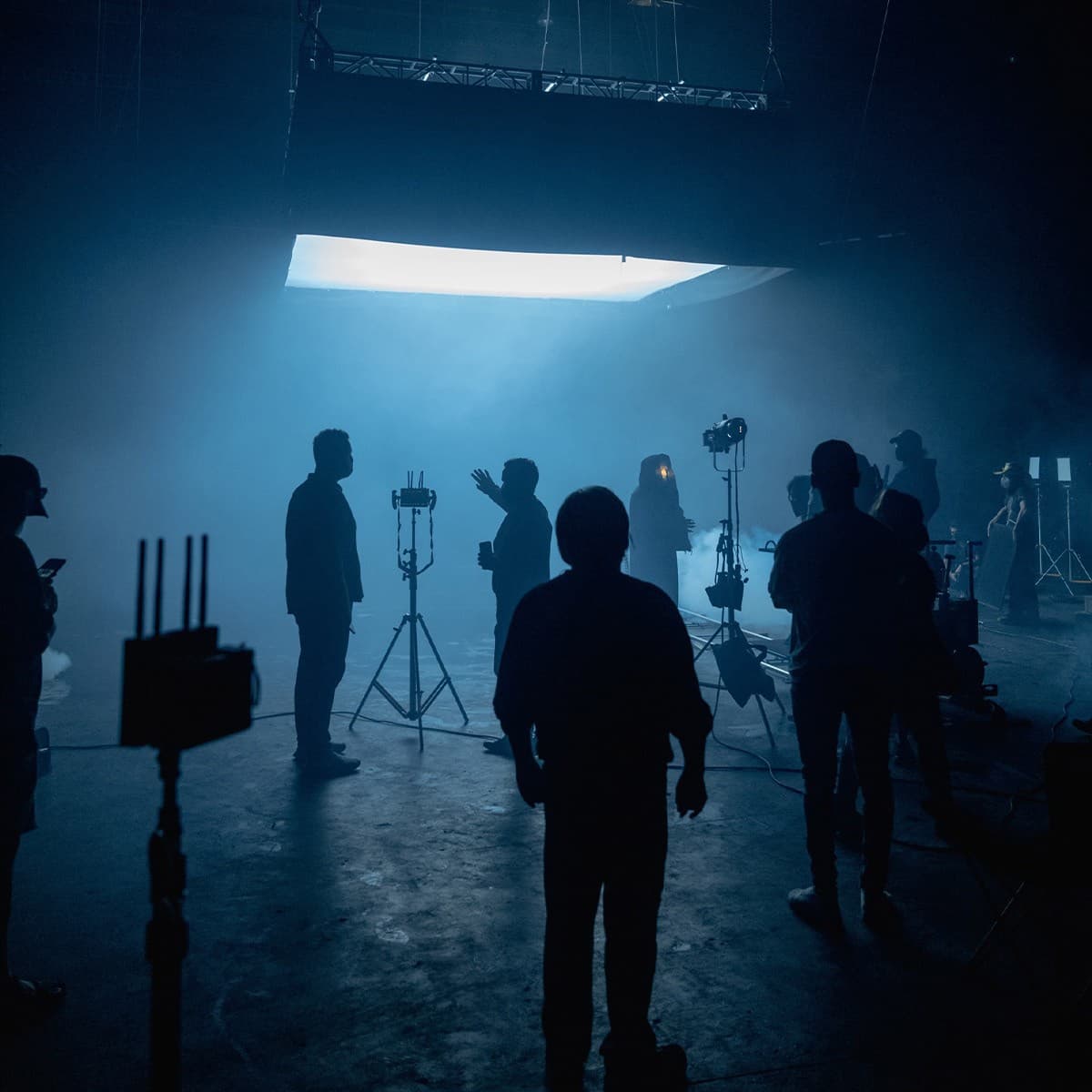
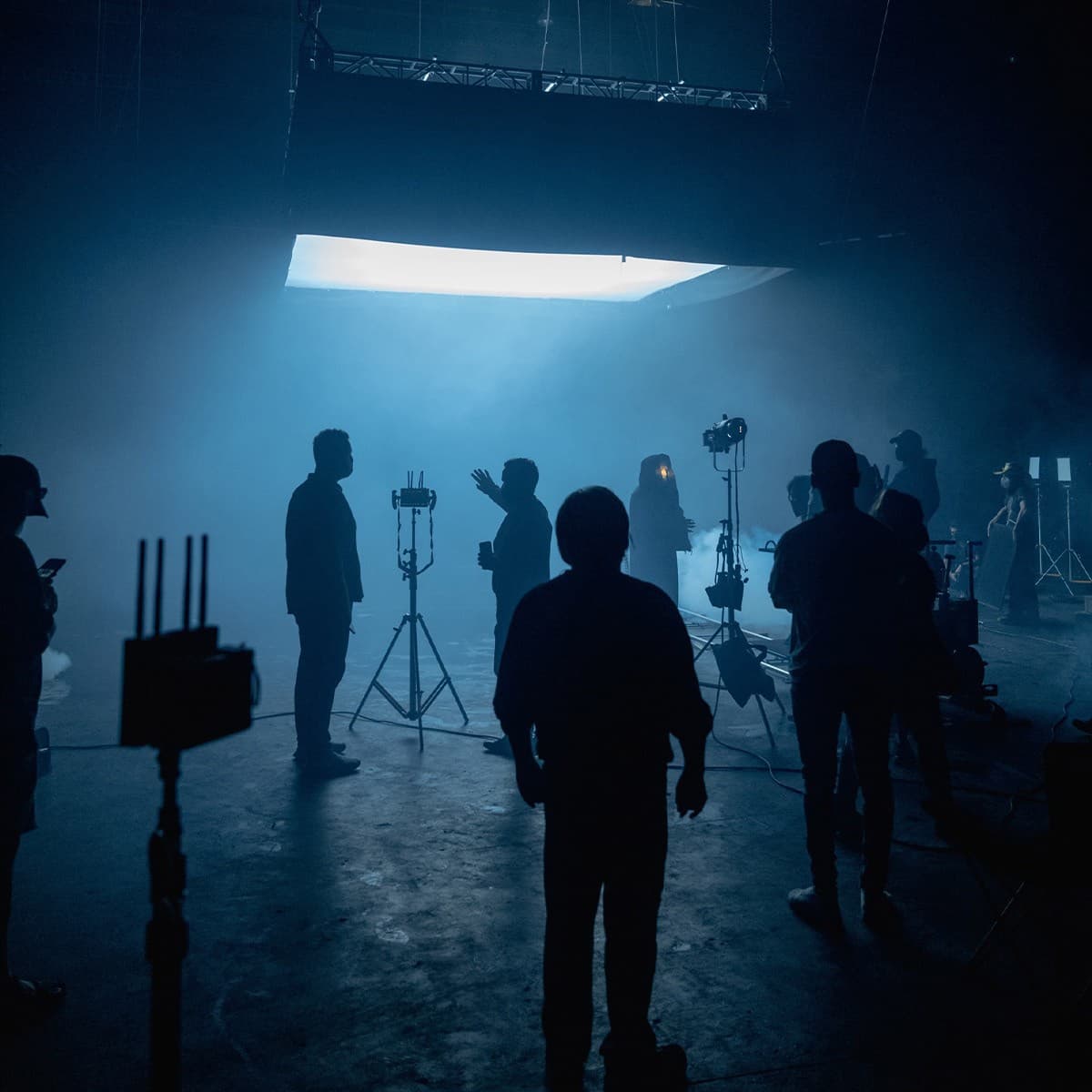
A data handler is the crew member responsible for safely offloading, backing up, and managing all digital camera media during a film or television production. Every time a camera card fills up on set, the data handler takes custody of it, transfers the footage to multiple hard drives, verifies data integrity with checksum software, and returns the blank card to the camera team — all in real time, while the shoot continues around them.
The role goes by several names depending on the production, region, and union: data wrangler, digital loader, media manager, or DIT assistant. On smaller productions, a single person handles the entire digital media workflow. On larger studio features, the data handler operates under a Digital Imaging Technician (DIT) and focuses exclusively on card offloading and backup — leaving color management and live image monitoring to the DIT.
Data Handler vs. DIT vs. Media Manager
These three titles are often confused, and their responsibilities do overlap — but there are meaningful distinctions:
- Data Handler / Data Wrangler: Primary responsibility is card offloading, checksum-verified backup, and media logging. Works on set during the shoot. On smaller productions, may also handle proxies and basic metadata.
- Digital Imaging Technician (DIT): Broader technical role encompassing data handling plus live color grading, LUT management, image monitoring, and advanced post-production communication. DITs use calibrated monitors and color software like Pomfort LiveGrade or DaVinci Resolve on set. On large productions, the DIT may supervise a data handler or digital loader.
- Media Manager: Typically a post-production role responsible for organizing, transcoding, archiving, and delivering media after the shoot. The media manager picks up where the data handler leaves off.
In practical terms: the data handler is the first line of defense for your footage. If they make a mistake, no amount of post-production work can recover what was lost.
Why the Data Handler Role Exists
Digital cinematography produces massive amounts of data. A single day of shooting on ARRI ALEXA LF in RAW can generate 2-4 TB of footage. RED cameras shooting at 8K can fill a 512 GB card in 45 minutes. The volume, value, and fragility of this data requires a dedicated crew member whose sole focus is protecting it.
Before digital production, this was not an issue — exposed film negative was a physical object that could be handled, stored, and shipped. Digital files can be corrupted silently, accidentally deleted, or lost to drive failure without any visible sign. The data handler's workflows — multiple copies, checksum verification, chain-of-custody logs — exist to ensure that every frame that was recorded is intact and accounted for.
Where the Data Handler Fits in the Crew
The data handler works within the Camera Department, reporting to the DIT or directly to the Director of Photography (DP) on productions without a DIT. They coordinate closely with:
- 1st and 2nd Assistant Camera (1st AC / 2nd AC): Receive camera cards and return blanks on a card rotation system.
- Sound Department: May also handle audio media cards from the production sound mixer.
- Post-Production Supervisor: Deliver daily drives and digital camera reports, confirm clip counts and naming conventions match post-production's ingest requirements.
- VFX Supervisor (if applicable): Flag VFX plates and ensure on-set VFX data notes are embedded in metadata.
Managing the full cost of a production — from camera rentals to data storage vendors — is where Saturation.io helps producers track every expense in real time, giving the data handler's department head the financial visibility needed to keep the production on budget.
On-Set Environment
Data handlers typically work from a dedicated data station — a laptop or desktop workstation, often mounted in a DIT cart or set up on a folding table near video village. The station includes multiple hard drives or RAID enclosures, a card reader hub, and the software needed to run offloads. During shooting, the data handler must be available whenever a card is full, which means staying alert and anticipating card changes rather than waiting to be called.
Role & Responsibilities
Core Duties of a Data Handler
A data handler's responsibilities begin when the first camera rolls and do not end until verified backup copies of every clip have been confirmed, labeled, logged, and handed off. The following breakdown covers the full scope of day-to-day duties on a working production.
Card Offloading and Chain of Custody
When an assistant camera flags a card as full, the data handler takes physical custody of it. Best practice is a strict chain-of-custody system: the data handler logs every card received — card number, camera, take range, time received — in a physical or digital media log. This log is the official record of what footage exists and where it is at all times.
Cards are offloaded one by one (or in batches if using a multi-card reader hub) into the offload software. A full-frame 512 GB card may take 25-40 minutes to copy, depending on the reader and drive speeds. During this time, the data handler monitors the transfer for errors and does not return the card until the copy is complete and verified.
Checksum Verification
Checksum verification is the most critical step in data wrangling. Before and after every transfer, the offload software generates a cryptographic hash (MD5 or SHA-1) of each file. If a single byte changes during transfer — due to a faulty cable, failing drive, or power interruption — the hash will not match and the transfer is flagged as corrupt. The data handler must re-run the transfer before returning the card or delivering the drive.
Professional offload tools like Hedge, Silverstack, and ShotPut Pro all perform checksum verification automatically. Data handlers should never manually drag-and-drop files without checksum confirmation, regardless of time pressure on set.
The 3-2-1 Backup Rule
Industry standard for media backup is the 3-2-1 rule: three copies of the data, on two different storage types, with one copy offsite. On most productions this means:
- Primary (A drive): Main on-set hard drive or RAID, stays with the data handler during the shoot day.
- Secondary (B drive): Duplicate copy, often kept in a different physical location such as the production vehicle or a locked safe.
- Tertiary (C drive or LTO): Second duplicate sent to post-production facility or archived to LTO tape on longer productions.
The camera card itself does not count as a backup — it is source media and is cleared for reuse only after all copies are verified. On small productions without LTO, some data handlers use cloud backup services as the third copy, though upload speed on location often makes this impractical for RAW footage.
Metadata Embedding and File Organization
Raw camera files contain embedded metadata from the camera: clip name, timecode, camera ID, reel number, ISO, frame rate, lens data (if supported). The data handler's job is to verify this metadata is intact, add production-level metadata (date, scene, shooting unit), and organize files into a folder structure that the post-production team has pre-agreed on.
Consistency is essential. If folder naming does not match what the editor or assistant editor expects, it creates costly ingest problems in post-production. A typical folder structure separates footage by shooting day, camera unit, and card number.
Digital Camera Reports (DCR)
At the end of each shooting day, the data handler prepares a Digital Camera Report (DCR) — a document listing every clip recorded, with clip name, scene number, take, duration, file size, card number, and backup status. The DCR is delivered to the post-production supervisor and kept on file by the production team.
Some offload software (Silverstack, Pomfort Offload Manager) generates DCRs automatically from the offload session data. Others require manual entry in a spreadsheet template. Either way, the DCR is the legal and operational record of what was shot and where it lives.
LTO Archiving
On longer productions — features, episodic TV — data handlers may be required to archive footage to LTO (Linear Tape-Open) tape. LTO is the industry standard for long-term archival storage because tapes are stable for 30+ years and have extremely low per-GB cost. LTO requires a dedicated tape drive and software (YoYotta, LTFS, BRU Producer Edition). Data handlers working on studio productions should have at least a working knowledge of LTO workflows.
Communication with Post-Production
The data handler is the bridge between on-set acquisition and post-production ingest. Before principal photography begins, they should meet with the post-production supervisor or DIT to confirm:
- File naming conventions and folder structure
- Proxy codec and resolution requirements (if on-set proxies are needed)
- Metadata fields required by the edit system
- Drive format (exFAT, HFS+, NTFS) and delivery schedule
- LTO requirements (if applicable)
This pre-production alignment prevents costly ingest problems and ensures the editor can begin working on dailies the same night the footage is delivered.
On-Set Problem Solving
Camera cards do fail. Drives do fail. Software crashes. The data handler must be able to diagnose and respond to these situations calmly and methodically under the pressure of an active shooting day. Common troubleshooting scenarios include:
- Card not recognized by reader — try alternative reader, check card contacts, use camera playback to verify footage exists
- Checksum failure — rerun transfer, swap cable, test with alternate drive
- Drive running full mid-day — monitor free space throughout the day, have spare drives on hand
- Software crash mid-offload — verify partial transfer checksums, restart from last verified point
Skills Required
Technical Skills for Data Handlers
Success as a data handler depends on a combination of software proficiency, hardware knowledge, procedural discipline, and on-set communication skills. Below is a comprehensive breakdown of the technical and soft skills that define a competent data handler.
Offload Software
Proficiency in at least one — ideally two — professional offload applications is non-negotiable for a working data handler:
- Hedge: The most widely used offload tool on independent productions and mid-budget films. Hedge's core strengths are speed (utilizes all available USB/Thunderbolt bandwidth in parallel), checksum verification (MD5 and SHA-1), and clear job reporting. Available on Mac and Windows. Also integrates with Kyno and other media asset management tools.
- Silverstack / Silverstack Lab (Pomfort): The professional standard on larger productions and studio work. Silverstack offers everything Hedge does, plus metadata management, clip logging, color QC (in Lab edition), and integration with Pomfort LiveGrade for DIT workflows. More complex to learn but significantly more powerful. Widely used on IATSE-covered productions.
- ShotPut Pro (Imagine Products): A long-standing workhorse in the industry. Reliable and widely understood. Common on documentary and reality TV shoots where simplicity is valued over advanced features.
- Kyno: Used primarily for media logging, review, and metadata editing rather than backup. Often used alongside Hedge for clip-level management and creating EDLs for the editorial team.
- YoYotta / BRU Producer Edition: LTO archival software used on productions requiring tape-based long-term storage. More specialized — not required for all data handler positions but valuable for studio features and TV episodics.
RAID and Storage Systems
A data handler must understand the fundamentals of RAID (Redundant Array of Independent Disks) storage, which is used on most professional productions for primary media storage:
- RAID 1 (Mirroring): Two drives write identical data simultaneously. If one fails, all data is preserved on the second. Simplest protection, most common on field productions.
- RAID 5: Three or more drives with parity data distributed across all drives. Can survive one drive failure. Better performance than RAID 1, more complex to set up. Common on larger DIT stations.
- RAID 0 (Striping): Data split across two drives for maximum read/write speed. No redundancy — if one drive fails, all data is lost. Used only as a scratch drive, never for primary media backup.
- Common enclosures: G-Technology G-RAID, LaCie 2big RAID, OWC Thunderbay. Know how to connect, configure, and verify these systems.
Beyond RAID, data handlers also work with individual high-speed SSDs (Samsung T7, SanDisk Extreme Pro) for portable backups and shuttle drives.
Checksum and Data Integrity
Checksum verification is the technical foundation of all data handling work:
- MD5 (Message Digest 5): The most common checksum algorithm used in offload software. Generates a 128-bit hash of each file. If source and destination hashes match, the copy is bit-for-bit identical.
- SHA-1 / SHA-256: More secure hash algorithms used when higher verification confidence is required (VFX, archival workflows). Slightly slower than MD5.
- xxHash: Extremely fast hashing algorithm used by Hedge for near-real-time verification. Data handlers using Hedge should understand that xxHash differs from MD5 — some post-production pipelines require MD5 checksums specifically.
Camera Card Formats
A data handler works with every card format in use on their production. Common formats include:
- CFexpress Type B: Current high-performance standard used by ARRI ALEXA 35, Sony VENICE 2, Canon EOS C70, and others. High capacity (up to 1 TB), fast write speeds (up to 1,700 MB/s). Requires CFexpress-compatible readers.
- CFast 2.0: Previous generation high-speed format used by ARRI ALEXA Mini LF, Canon C300 III, and others. Still common on active productions. Requires a CFast-specific reader — incompatible with CFexpress readers.
- SxS: Sony's proprietary Express Card-based format, used by Sony F5, F55, and XDCAM cameras. Requires Sony SxS card reader.
- REDMAG (MINI-MAG): RED Digital Cinema's proprietary memory module format. Requires a RED Station or RED Mini-Mag reader. Common on RED KOMODO, MONSTRO, and DSMC2 systems.
- BRAW (Blackmagic RAW): Blackmagic cameras record to CFast, SD UHS-II, or USB-C SSDs depending on the model. BRAW files require Blackmagic RAW Player or DaVinci Resolve for playback and metadata access.
- SD / CompactFlash: Common on DSLR and mirrorless cameras used for B-cam, crash cams, or documentary situations.
- Codex Vault / Codex Media: Proprietary Codex format used primarily with ARRI systems when shooting ARRIRAW. Requires Codex transfer station.
Data handlers must have the correct card reader for every format in use on their production, plus spare readers in case of failure. Running out of a card reader on shoot day is an avoidable crisis.
File Formats and Codecs
Understanding the files you are handling prevents errors and supports post-production communication:
- ARRIRAW (.ari): Uncompressed RAW from ARRI cameras. Very large files — 4K ARRIRAW generates approximately 150 MB per frame.
- ProRes (Apple ProRes 4444, ProRes RAW): Compressed but high-quality codec from Apple. Common delivery format for editorial.
- R3D (.r3d): RED's proprietary RAW format. Must copy the entire clip directory structure, not just the .R3D wrapper — missing sidecar files will break the clip in post.
- BRAW (.braw): Blackmagic's RAW format. Same rule as R3D — copy entire clip folders.
- MXF (Material Exchange Format): Container format used by ARRI ProRes, Sony XAVC, and many broadcast cameras. Widely supported by professional NLEs.
- MOV / MP4: Common container formats for compressed codecs on lower-budget and consumer camera shoots.
Metadata Standards
Professional productions use standardized metadata schemas to ensure consistency across camera, sound, and post-production workflows:
- ALE (Avid Log Exchange): Metadata format used to import clip information into Avid Media Composer. Data handlers on Avid productions should understand how to generate and verify ALEs from Silverstack or similar tools.
- CSV / Spreadsheet Logs: Most productions maintain spreadsheet logs as a backup record of all media handled, even when offload software generates automated reports.
Attention to Detail and Systematic Workflow
The most important non-technical skill for a data handler is systematic discipline. A technically proficient data handler who shortcuts the verification step — returns a card before the checksum completes, skips the backup drive because of time pressure — creates catastrophic risk. Checklists and standard operating procedures are not optional on professional productions; they are the mechanism that prevents expensive mistakes when the set is chaotic.
Communication and Collaboration
Data handlers work at the intersection of the camera department, sound department, and post-production. Clear communication prevents errors:
- Proactively update the DIT and DP on drive capacity throughout the day — never let the backup drive reach full unexpectedly
- Communicate immediately with the production supervisor if a card error or data integrity issue is detected
- Confirm receipt of drives and DCRs with the post-production team at wrap
- Maintain a calm, methodical presence even when camera operators are stressed about card changes
Salary Guide
Data Handler Salary and Day Rate Guide
Compensation for data handlers and data wranglers in film and television production varies significantly based on production scale, union status, market, and experience level. Below is a comprehensive breakdown of current rates across union and non-union work, primary markets, and long-term career earnings.
Day Rate Ranges (2025-2026)
Most data handlers in the film and television industry are hired on a daily basis rather than as salaried employees. Day rates are the industry standard for on-set camera department crew. Current typical ranges:
- Entry Level / Student Productions / Low-Budget Indie: $150-$300/day
- Mid-Level Non-Union (Commercials, Corporate, Indie Features): $300-$500/day
- Experienced Non-Union (Mid-Budget Features, Music Videos, Higher-End Commercial): $500-$750/day
- Union IATSE-covered productions: $600-$900+/day depending on the specific agreement and local, with overtime kicking in after 8 hours and double-time after 14 hours
On a typical 12-hour shooting day, union overtime adds 25-40% to the base day rate, meaningfully increasing total daily compensation.
IATSE Local 600 (International Cinematographers Guild)
In the United States, data handlers working on IATSE-covered productions fall under the International Cinematographers Guild (IATSE Local 600), which also represents DITs and camera operators. The collective bargaining agreements (CBAs) negotiated between IATSE and the AMPTP set minimum rates for covered productions.
- Feature Films (AMPTP Basic Agreement): Daily rate minimums typically $500-$700/day for data handler / digital loader classifications, with scale escalating based on budget tiers.
- Television (Network, Basic Cable, Streaming): Similar minimum structures to features, with different rate schedules by platform and budget level.
- Commercial (AICP Agreement): Commercial productions covered by the IATSE-AICP commercial agreement have separate rate structures, often slightly higher per day due to compressed shooting schedules.
For current IATSE Local 600 rate cards and CBA terms, visit the International Cinematographers Guild website.
Annual Income Estimates
Because data handlers typically work project to project rather than year-round, annual income depends on how consistently they are booked:
- Part-Time / Building Career (80-100 days/year at $350/day avg): $28,000-$35,000/year
- Active Mid-Level Non-Union (150-180 days/year at $450/day avg): $67,500-$81,000/year
- Established IATSE-Covered (150-200 days/year at $650/day avg): $97,500-$130,000/year
- Senior / High-Demand Markets (continuous work at $750-$900/day): $112,500-$180,000+/year
Note: these figures are gross estimates. Freelance data handlers are independent contractors responsible for self-employment taxes, health insurance, equipment costs, and business expenses. After business expenses and taxes, take-home is typically 55-65% of gross day rate income.
Market Breakdown
Geographic market significantly affects compensation:
- Los Angeles, CA: Highest rates in the U.S. Union work is most accessible here. Mid-level non-union: $400-$600/day. IATSE-scale: $600-$900/day. LA dominates studio feature and network TV production.
- New York, NY: Comparable to LA for union work. Strong commercial market with AICP rates. Active documentary and independent film scene.
- Atlanta, GA: Georgia's production tax incentive program has made Atlanta one of the top production markets in the U.S. Rates are lower than LA/NY ($300-$500/day non-union) but volume of work is high, making annual income competitive for well-connected local crew.
- Chicago, IL: Active commercial and mid-budget film market. Rates generally 15-20% below LA. Strong local IATSE presence (Local 600 covers Chicago).
- New Mexico, Louisiana, North Carolina: Tax incentive-driven production markets. Rates are lower than primary markets ($250-$450/day non-union) but work volume has increased significantly.
Union vs. Non-Union Considerations
Working on IATSE-covered productions offers guaranteed minimum rates, overtime protections, and access to the union's health and pension plans. However, joining IATSE requires qualifying experience and initiation fees. Most data handlers begin their careers on non-union productions and transition to union work as they build credits and are sponsored by a union member.
The Taft-Hartley Act allows non-union crew members to work on union productions for up to 30 days before being required to join the union.
Kit Rental
Many data handlers negotiate a kit rental in addition to their day rate — a separate daily payment for use of their personal equipment (laptop, card readers, drives, software licenses). Kit rentals typically range from $100-$300/day on professional productions, meaningfully increasing total compensation. A data handler earning $500/day with a $150/day kit rental earns $650/day in total.
For related Bureau of Labor Statistics data on camera and media occupations, see the BLS Film and Video Editors and Camera Operators page.
FAQ
Frequently Asked Questions About Data Handlers
What does a data handler do on a film set?
A data handler (also called a data wrangler or digital loader) is responsible for offloading camera cards, creating verified backup copies of all digital footage, organizing files in the agreed folder structure, and maintaining a log of all media handled. They work on set throughout the shooting day, taking custody of full camera cards, running them through offload software with checksum verification to confirm data integrity, and returning formatted cards to the camera team for reuse. At day's end, they deliver backup drives and a Digital Camera Report (DCR) to the post-production supervisor.
What is the difference between a data handler and a DIT?
A data handler (data wrangler) focuses exclusively on media offloading, backup, and file management. A Digital Imaging Technician (DIT) does all of that plus live color grading, LUT management, image quality monitoring on a calibrated display, and advanced communication with the post-production colorist. On larger productions, the DIT supervises the data handler and focuses on the creative/technical imaging side while the data handler runs the offload station. On smaller productions, one person often covers both roles — they may be called a DIT, data wrangler, or digital loader depending on which duties dominate.
How much does a data handler earn?
Day rates for data handlers range from $150-$300/day on entry-level indie and student productions to $600-$900+/day on IATSE-covered studio features and network television. Experienced non-union data handlers working in primary markets typically earn $400-$700/day. Many also negotiate a kit rental ($100-$300/day) for use of personal equipment. Annual income for a consistently working mid-level data handler in a major market ranges from approximately $67,500 to $130,000, depending on days worked and union status.
What software does a data handler use?
The primary tools are professional offload applications: Hedge (most common on indie productions), Silverstack or Silverstack Lab by Pomfort (standard on larger productions), and ShotPut Pro (common on documentary and reality TV). These tools handle checksum-verified backup, file organization, and report generation. Data handlers may also use Kyno for media management, DaVinci Resolve's media management module, and YoYotta or BRU for LTO archival work.
How do I become a data handler in film production?
The most direct path is to: (1) Learn the software — download Hedge (free trial) and practice offloads at home with your own media. (2) Build a basic kit — laptop, card readers, two external drives, and a Hedge or ShotPut Pro license. A starter kit can be assembled for under $1,500. (3) Get experience — volunteer on student films, indie shorts, and music videos. (4) Network with DITs — the data handler community is small and connecting with working DITs is the fastest way to get hired. (5) Progress to paid work — start with corporate video and indie projects, build credits, and eventually transition to larger productions. No degree is required.
What camera card formats does a data handler work with?
Data handlers work with every card format in use on their production, which can include: CFexpress Type B (ARRI ALEXA 35, Sony VENICE 2), CFast 2.0 (ARRI ALEXA Mini LF, Canon C300 III), SxS (Sony F5/F55/XDCAM), REDMAG / MINI-MAG (RED cameras), Blackmagic RAW to CFast or USB-C SSD (Blackmagic URSA/BMPCC), and standard SD/CF cards on DSLRs and mirrorless cameras. Having the correct reader for every format on the production — plus backup readers — is a fundamental preparation step before every shoot day.
How is data secured on a film set?
Data security on set follows the 3-2-1 backup rule: three copies of all footage, on two different storage media, with one copy stored in a separate physical location. Camera cards are never formatted and released for reuse until all copies are verified by checksum. Chain-of-custody logs track every card received and every drive delivered. Physical drive security — locked vehicles, locked production safes for overnight storage — is the responsibility of the data handler and production team together. On productions with sensitive material, encrypted drives may also be required.
Do data handlers need to join a union?
Data handlers are not required to join a union to work in film production, but IATSE membership opens access to union-scale productions (studio features, network TV, major streaming) that pay significantly higher rates and provide health and pension benefits. Most data handlers begin their careers on non-union productions and qualify for union membership after working on union productions under the Taft-Hartley Act, which allows a non-union crew member to work on a union production for up to 30 days before being required to join. IATSE Local 600 (International Cinematographers Guild) is the relevant union for camera department crew in the U.S.
Education
Education and Training for Data Handlers
No college degree is required to work as a data handler in film and television production. The role is highly technical and workflow-driven, but the skills are primarily learned through hands-on training, self-study, and on-set experience rather than formal academic programs.
Relevant Academic Programs
While not required, certain degree and certificate programs provide useful foundational knowledge:
- Film Production (BFA/BA): Programs at USC, NYU Tisch, Chapman University, and similar schools cover digital production workflows, camera systems, and post-production pipelines. Students often take on data wrangling duties on student productions, providing good practical experience.
- Digital Media / Digital Cinema: Programs focused on digital acquisition and post-production technology. More technically oriented than general film production degrees.
- Computer Science or IT (partial relevance): Understanding storage architecture, RAID systems, file systems, and networking is valuable background — though most DIT and data wrangling training covers what you need without a CS degree.
Many working data handlers have no degree at all. The resume matters far less than demonstrable ability to run a clean offload, use the right tools, and deliver organized media without errors.
DIT and Data Wrangling Training Courses
Specialized short courses and workshops are the most efficient way to develop the technical skills needed for professional data handling:
- Post-Pro.io DIT Course: Online training covering DIT workflows, data management, color science basics, and on-set communication. One of the most comprehensive structured programs available online for this discipline.
- Pomfort Training Resources: Pomfort (maker of Silverstack and LiveGrade) offers documentation, tutorials, and periodic workshops focused on their software suite — directly applicable to data wrangling workflows.
- Hedge Academy: Hedge software's educational resources cover best practices for media offloading and backup verification.
- IATSE Local 600 (International Cinematographers Guild) Resources: The union representing DITs and camera operators offers training resources for members and pathways into the industry.
- FilmConnection / New York Film Academy: Offer hands-on programs with real production experience, which is where data wrangling skills are built in practice.
Software Certification and Self-Study
Proficiency in the major offload software platforms is more valuable than any formal credential. Employers and coordinators hiring data handlers want to know which tools you can operate. Focus your self-study on:
- Hedge: Download the free version and practice offloads with your own hard drives. Learn the checksum verification workflow, the folder structure builder, and the backup job reports.
- Silverstack / Silverstack Lab (Pomfort): More advanced than Hedge. Silverstack Lab adds color QC and clip management features. Pomfort offers a free trial — use it to get familiar with the interface before set.
- ShotPut Pro: Older but still widely used on smaller productions and documentary shoots. Easy to learn, good introduction to offload workflows.
- DaVinci Resolve (Media Management module): Useful secondary knowledge, particularly if you plan to progress toward DIT work or editorial assistance.
Career Progression Path
Data handling is a clearly defined entry point into several career tracks within the camera and post-production departments:
- Entry Level: Production Assistant (PA) to Data Handler / Digital Loader
- Camera Track: Data Handler to 2nd Assistant Camera to 1st Assistant Camera to Camera Operator to Director of Photography
- DIT Track: Data Handler to DIT (Digital Imaging Technician) to Senior DIT to Workflow Consultant / Colorist
- Post-Production Track: Data Handler to Media Manager to Assistant Editor to Editor
The data handler role is particularly valued as a stepping stone because it gives you exposure to camera department operations, post-production workflows, and the technical demands of both — making you a more informed and capable crew member at any subsequent level.
Getting Your First Data Handling Job
Breaking in requires a combination of technical preparation and network building:
- Build a kit: A data handler who brings their own offload station — laptop, card readers, drives, software — is more hirable than one who expects the production to supply everything. A basic kit (laptop plus 2 drives plus Hedge license plus card readers) can be assembled for under $1,500.
- Practice at home: Use your own camera, memory cards, and offload software to rehearse the full workflow. Time yourself. Know your read/write speeds. Understand how long a full card takes to copy and verify.
- Student and indie productions: Volunteer or work for minimal pay on student films, indie shorts, and corporate productions to build experience and references.
- Network with DITs: DITs hire and recommend data handlers. Attend industry meetups, join online communities (r/FilmDIT on Reddit, Cinematographers Guild forums), and offer to assist experienced DITs on smaller jobs.
- Production apps and job boards: ProductionHUB, Staff Me Up, and regional production Facebook groups frequently post data wrangler calls for indie and commercial shoots.


























Budget Templates
Budget crew costs with confidence
Use Saturation to build budgets with accurate crew rates, fringes, and union scales.
Try Free Budget Tool