What is a Focus Puller (1st AC)?
Overview
What Is a Focus Puller?
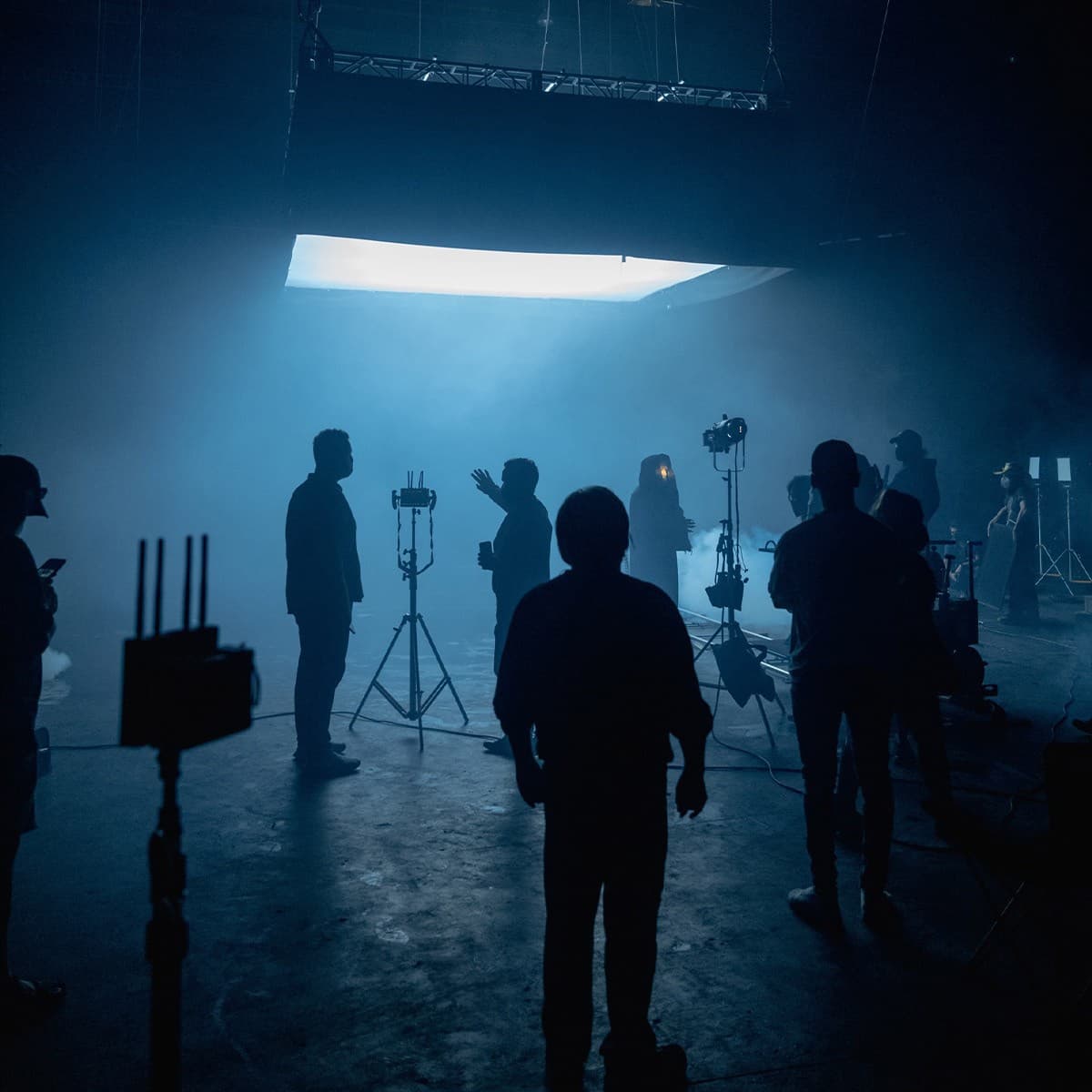
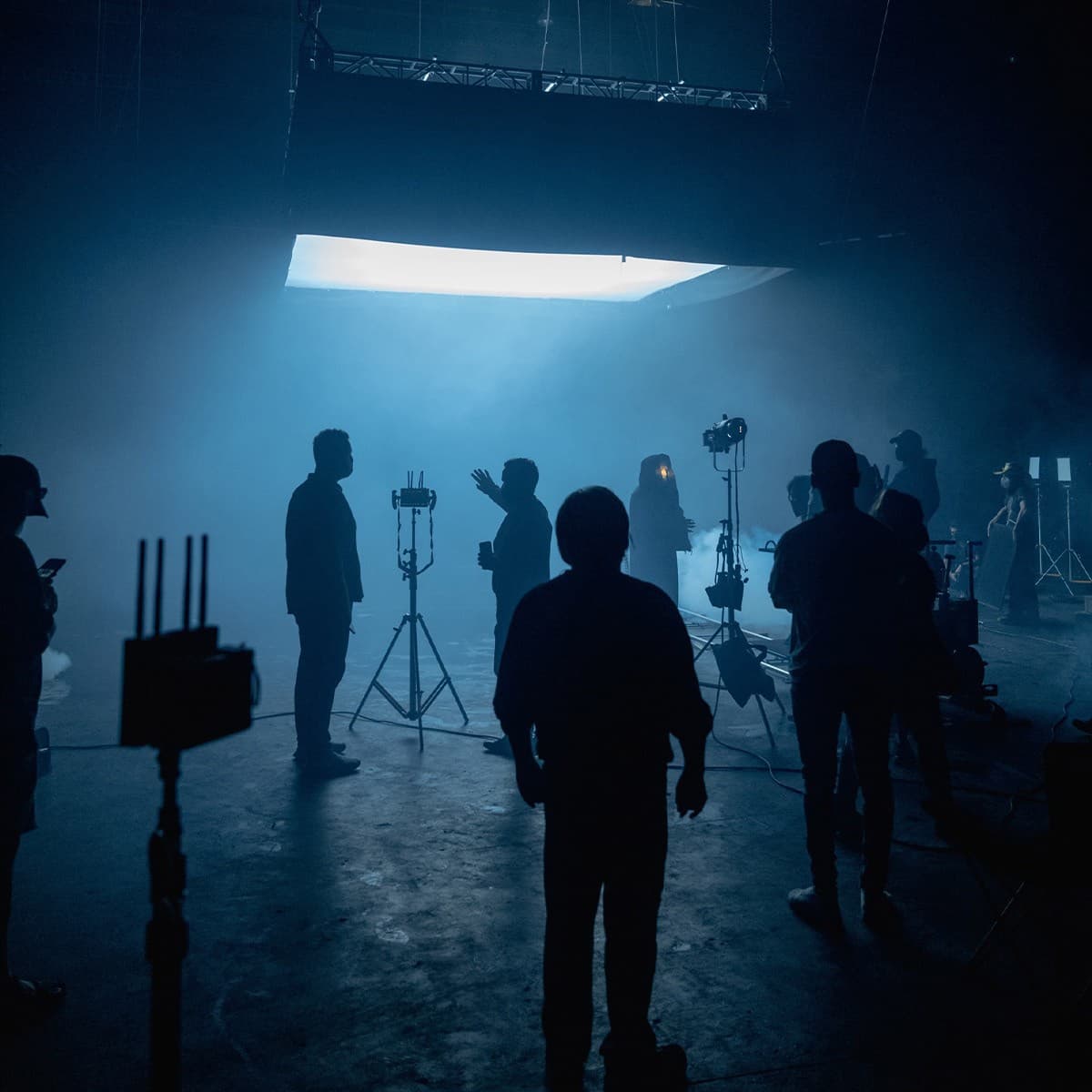
A focus puller -- also called the 1st Assistant Camera (1st AC) -- is the camera department crew member responsible for keeping every shot in sharp focus throughout production. On professional film and television sets, "focus puller" and "1st AC" are interchangeable titles. The focus puller works directly under the Director of Photography (DP) and camera operator, executing the precise lens adjustments that make the difference between a cinematic image and an unusable take.
The role demands a rare combination of technical mastery, spatial intuition, and nerves of steel. While the camera operator frames the shot and the DP manages overall image design, the focus puller is responsible for the most unforgiving variable in cinematography: critical focus on a moving subject, often captured in a single take with no room for error.
Focus pullers work across every format and genre -- from studio features shot on ARRI ALEXA 35 to indie films shot on Sony Venice 2, commercial productions, episodic television, and music videos. Managing this variety requires deep familiarity with cinema lenses, wireless remote follow focus systems, and the production workflow tracked and coordinated through modern film production management software.
On union productions, focus pullers are members of IATSE Local 600 -- the International Cinematographers Guild -- which represents camera assistants alongside DPs and operators. The guild sets minimum wages, establishes working conditions, and provides health and pension benefits for members working on covered productions.
The Director of Photography relies on the focus puller as the technical backbone of the camera department -- the person who translates the DP's visual intent into perfectly executed focus pulls, take after take.
Role & Responsibilities
Pre-Production: Building the Camera Package
The focus puller's work begins long before cameras roll. During prep, the 1st AC coordinates directly with the DP and the camera rental house to spec out, order, and test the entire camera package. This involves selecting cinema lenses -- typically prime sets such as ARRI Master Primes, Leica Summilux-Cs, or Zeiss Supreme Primes -- and verifying that every lens is properly calibrated and parfocal across its full focus range.
Prep week at the rental house is critical. The 1st AC runs lens tests on a lens projector or resolution chart, checks for focus breathing (changes in framing as focus shifts), inspects lens mounts and filter threads, and confirms the wireless follow focus system communicates correctly with each lens. On a feature film, this process can take two to three full prep days.
The 1st AC also assembles the wireless follow focus system -- most commonly a Preston Cinema Systems FIZ (Focus, Iris, Zoom) or the ARRI WCU-4 -- attaching lens motors to each lens, programming handset parameters, and verifying signal integrity. A failed wireless system on day one of principal photography is a career-defining moment for the wrong reasons.
Camera Build and Daily Prep
Each shooting day begins with the 1st AC building out the camera from scratch. This means mounting lenses, attaching matte boxes and follow focus units, configuring on-board power, setting up media magazines, and ensuring the camera body, sensor, and all accessories are functioning correctly before the DP and operator arrive on set.
The 1st AC is also responsible for protecting lenses during transport, managing lens changes at speed (sometimes in under 30 seconds between setups), and tracking the entire camera inventory on a daily basis. Every piece of equipment the DP touches passes through the 1st AC's hands.
On-Set Focus Pulling: The Core Skill
During production, the focus puller's primary task is maintaining critical focus on the subject throughout every take. This requires measuring distances from the film plane (marked on the camera body) to actors and moving subjects using a tape measure or laser range finder, marking corresponding focus points on the lens barrel or follow focus unit, and executing smooth, accurate focus transitions in real time as actors move through the scene.
For a simple static shot with a stationary subject, the 1st AC measures once, confirms the mark, and holds focus. For complex moving shots -- a handheld scene with improvising actors, a dolly push on two characters splitting apart, or a Steadicam sequence through a crowded space -- the focus puller must judge distances continuously, sometimes using the Preston Light Ranger 2 infrared depth measurement system to map the scene in real time.
Pulling focus is as much art as science. Experienced 1st ACs develop spatial intuition that allows them to anticipate an actor's movement before it happens, reading body language, rehearsal patterns, and blocking cues to stay ahead of the action. A good focus pull is invisible to the audience. A bad one stops the story dead.
Managing the 2nd AC and Camera Trainee
The 1st AC leads the camera department floor team, directing the 2nd AC (clapper loader) and any camera trainees on set. The 2nd AC is responsible for slating (operating the clapperboard), loading and unloading film magazines or digital media cards, maintaining camera reports, and supporting the 1st AC's work. The 1st AC delegates tasks, maintains workflow pace across setups, and ensures the entire department operates as a coordinated unit.
Effective communication and leadership are essential. When the AD calls "last looks" before a take, the 1st AC must have already confirmed lens choice, measured the distance, set the focus mark, and communicated the plan to the operator -- all in 60 seconds or less.
Post-Take Responsibilities and Media Management
After each take, the 1st AC tracks lens and camera settings in camera reports. On digital productions, the 2nd AC pulls media cards and delivers them to the DIT (Digital Imaging Technician), but the 1st AC maintains overall accountability for the media chain. The 1st AC also flags any focus or technical issues to the DP immediately rather than discovering problems in dailies.
At the end of each shooting day, the 1st AC supervises camera breakdown and wrap, ensures all lenses are cleaned and stored correctly, and confirms that no equipment is missing. Any damaged or malfunctioning gear is flagged to the rental house overnight so replacements arrive before call time the following morning.
Specialty Work: Steadicam, Crane, Underwater, and VFX Shoots
Specialty camera configurations require specialized focus pulling approaches. On Steadicam shots, the 1st AC typically uses a wireless follow focus system and operates from a remote handset, watching a monitor to judge focus without touching the camera rig. Crane shots require pre-marking focus positions for scripted actor blocking and executing pulls remotely as the camera moves.
Underwater productions require configuring focus marks for housing port optics, which alter the effective focal length and focus throw. VFX-heavy shoots with LED volume stages or complex motion control rigs demand close coordination with the VFX team to ensure focus is pulled to the correct depth of the virtual environment rather than the physical LED wall.
Skills Required
Focus Pulling Technique and Spatial Awareness
The defining skill of a 1st AC is the ability to pull focus accurately and invisibly in real time. This requires exceptional spatial awareness -- the ability to continuously judge the three-dimensional distance between the camera's film plane and a moving subject without looking away from a follow focus handset or monitor. Experienced focus pullers develop this as near-unconscious sense memory built through thousands of hours of on-set practice.
The technical foundation is measuring and marking: the 1st AC uses a tape measure or laser range finder to establish precise distances to actor positions, translates those distances to focus ring marks on the lens barrel, and then executes transitions between marks with the timing and smoothness the shot demands. A rack focus between two characters in conversation requires a different speed and feel than a slow push-in on a single subject.
Spatial awareness also means reading the blocking before it happens. Elite focus pullers watch rehearsals with the same intensity the DP uses to light the scene, tracking exactly where actors will be at every moment of a take, then programming that spatial knowledge into their hands.
Optics Knowledge: Focal Length, Depth of Field, T-Stop
Deep understanding of optics is non-negotiable for a professional focus puller. The 1st AC must understand how focal length affects depth of field and focus throw -- a 25mm lens at T2.8 provides a very different focus challenge than a 100mm lens at T1.4. Longer focal lengths compress depth of field dramatically, requiring more precision on focus marks. Wide lenses are more forgiving but can still fall short if the operator moves or the subject shifts unexpectedly.
T-stop versus f-stop knowledge matters because cinema lenses are rated in T-stops (transmission stops), which account for actual light transmission rather than theoretical aperture. The 1st AC must understand how the DP's stop choice affects the depth of field range and plan focus approach accordingly. Shooting wide open at T1.3 on an anamorphic 50mm lens demands entirely different precision than the same shot at T4.
Focus breathing -- the change in framing that occurs as some lenses shift focus -- must be managed on shots where framing integrity is critical. The 1st AC identifies breathing lenses during prep and communicates their behavior to the DP and operator before the shot list locks.
Wireless Follow Focus Systems
Professional focus pullers must be proficient with the industry-standard wireless follow focus systems used on feature films and high-end television. The dominant systems are:
Preston Cinema Systems FIZ (Focus, Iris, Zoom): The Preston is the most widely used wireless follow focus system in Hollywood feature film production. The Preston HU4 hand unit communicates with lens motors attached to the focus, iris, and zoom rings, allowing the 1st AC to operate from a separate position while watching a monitor. The Preston Light Ranger 2 integrates with the system to provide infrared depth mapping, displaying a real-time visualization of scene depth across 16 measurement zones. Preston rental rates typically run $300 to $500 per day.
ARRI WCU-4 Wireless Compact Unit: The ARRI WCU-4 is a lightweight 3-axis handheld controller with integrated lens data display, used widely on ARRI camera systems. The unit provides focus, iris, and zoom control via lens motors and is favored for its ergonomics and ARRI system integration. It is compatible with a wide range of lenses through the cmotion motor system.
Tilta Nucleus-M and Nucleus-N: The Tilta Nucleus systems are lower-cost wireless follow focus options widely used on indie productions and commercial shoots. While not as prevalent on major studio features, Nucleus proficiency is valuable for working across budget ranges.
Camera Systems: ARRI, Sony Venice, RED
Focus pullers must be fluent with the major professional cinema camera platforms, as each has different accessories, menu systems, and follow focus configurations. The dominant systems in 2025 are:
ARRI ALEXA 35 and LF: ARRI cameras dominate studio feature film production and prestige television. The 1st AC must know ARRI's LDS (Lens Data System) integration, which allows compatible lenses to transmit distance and iris data to the camera and wireless system automatically. ARRI cameras are compatible with both Preston and ARRI's own cmotion/WCU systems.
Sony VENICE 2 and BURANO: Sony's cinema cameras are increasingly prevalent on studio features and streaming productions. The VENICE 2's full-frame and anamorphic modes affect depth of field calculations, and the 1st AC must adjust their focus approach accordingly. Sony cameras integrate with Preston and Tilta wireless systems via standard motor connections.
RED MONSTRO and RAPTOR: RED cameras remain common in independent features, commercials, and music videos. The modular nature of RED systems means the 1st AC must be familiar with multiple build configurations and accessory ecosystems.
Lens Knowledge and Calibration
Focus pullers must know professional cinema lens systems at a deep level -- not just how to mount and operate them, but how each set behaves under real shooting conditions. Standard prime sets used on professional productions include ARRI Master Primes, Leica Summilux-Cs, Zeiss Supreme Primes, Cooke S4s and S7s, and Panavision Primos. Each set has different focus breathing characteristics, minimum focus distances, and focus throw ranges (the physical rotation from minimum focus to infinity).
Anamorphic lenses introduce additional complexity: anamorphic focus scales are calibrated differently than spherical lenses, and the combined effect of horizontal squeeze and focus throw requires extra precision. Focus pullers working on anamorphic productions with sets like Cooke Anamorphics, Panavision G-Series, or Leica M0.8 must recalibrate their spatial intuition for the compressed depth of field characteristics these lenses produce.
Calibration is a core 1st AC skill. Lens motors must be mapped to each individual lens during prep, with zero and full positions set precisely so the wireless handset's range corresponds exactly to the lens's physical focus range. Miscalibrated motors cause missed focus marks mid-take with no warning.
Distance Measurement and Marking
Measuring and marking is the mechanical foundation of focus pulling. The 1st AC measures from the film plane symbol on the camera body (a circle with a horizontal line through it) to the subject using a tape measure -- a chrome-steel measuring tape, typically 50 feet, is a standard kit item for every 1st AC. Laser range finders like the Bosch PLR 40c or Leica DISTO series are used for quick measurements at distance or in situations where taping to the subject is impractical.
Follow focus units use internal gearing and external marking disks (sometimes called "donut" rings) or direct lens barrel marks to indicate specific focus positions. The 1st AC marks positions in pencil, paint marker, or white camera tape and assigns each mark a letter or color code communicated to the camera operator before the take.
On complex shots with multiple marks, the 1st AC may walk through the blocking physically during rehearsal, pulling to each mark in sequence to confirm timing and feel before committing to a take. This physical rehearsal is critical on dolly shots, cranes, and Steadicam sequences where timing mismatches cannot be corrected in post.
Communication, Composure, and Leadership
The 1st AC operates at the intersection of the creative and technical worlds on set. Effective communication with the DP, camera operator, and AD is essential -- the 1st AC must be able to flag a focus concern, request an additional rehearsal, or flag a technical issue without disrupting the creative flow of the set. The ability to solve problems quietly and quickly, without drawing attention or slowing the shoot, is a mark of an experienced 1st AC.
Leadership is also part of the role. The 1st AC manages the 2nd AC and any camera trainees, maintaining the pace and organization of the camera department floor. A disorganized camera department creates ripple effects across every other department that depends on camera position and readiness.
Salary Guide
Focus Puller Salary Overview
Focus puller (1st AC) compensation varies significantly based on production type, budget, union status, experience level, and geographic market. In the United States, working 1st ACs can earn anywhere from $40,000 per year at the entry level on low-budget indie projects to $250,000 or more annually on high-budget studio features and episodic television.
Because most focus pullers work as freelancers rather than full-time employees, annual income depends heavily on the number of production days worked and the day rates charged for each project. A busy 1st AC in Los Angeles or New York working 200+ days per year on union productions can realistically earn $120,000 to $175,000. An entry-level 2nd AC transitioning to their first 1st AC credits on non-union indie films may earn $40,000 to $60,000 in their first year in the role.
IATSE Local 600 Rates (2025)
For focus pullers working on productions covered by IATSE Local 600 agreements, minimum wages are set by contract. As of 2025, the following rates apply to 1st Assistant Cameraperson (the official Local 600 classification for focus pullers) under the major studio theatrical agreement:
- Hourly rate: $58.49
- Daily rate (8-hour guarantee): $577.13
- Weekly rate: $2,349.31
These are minimum rates. Experienced 1st ACs on major studio features regularly negotiate rates 20 to 50 percent above the union floor, with daily rates of $700 to $900 or more common for established focus pullers. Production companies also pay pension and health contributions on top of wages -- typically 6% for pension -- which represents additional compensation not reflected in the headline rate.
Local 600 rates vary by region and production type. The Western Region (Hollywood) rates listed above apply to most major studio features and streaming productions. Eastern Region (New York and surrounding states) rates are set separately. Low-budget theatrical agreement rates, music video agreements, and commercial agreements all carry different scales.
Non-Union Day Rates
On non-union productions -- independent films, commercials, corporate video, and content -- 1st AC rates are fully negotiable. Industry benchmarks as of 2025:
- Entry-level (1-3 years experience): $325 to $450 per day
- Mid-level (4-8 years experience): $450 to $600 per day
- Senior non-union 1st AC: $600 to $800 per day
- Commercial production (non-union): $500 to $750 per day, with senior operators at $750 to $1,000+
Commercial productions generally pay more than narrative film at comparable experience levels, reflecting the compressed schedule and high-stakes deliverables typical of advertising work. A 1st AC with strong commercial credits in a major market can command $700 to $900 per day on non-union commercial jobs.
Kit Rental Fees
In addition to their day rate, most professional 1st ACs charge a kit rental fee for their personal equipment -- primarily the wireless follow focus system. A Preston Cinema FIZ system (handset, motors, cables) represents a capital investment of $15,000 to $25,000 or more. Kit rental fees compensate the 1st AC for depreciation, maintenance, and insurance on this equipment.
Typical kit rental rates for a professional wireless follow focus package:
- Preston FIZ full kit: $150 to $350 per day
- ARRI WCU-4 kit: $100 to $200 per day
- Tilta Nucleus kit (indie range): $50 to $100 per day
Kit fees are negotiated separately from the day rate and are listed as equipment rental on the production's budget. On union productions, kit rental minimums are sometimes established by the collective bargaining agreement.
Income by Production Type
Production type has a significant impact on 1st AC income beyond the raw day rate, as schedules and number of shoot days vary dramatically:
Studio theatrical features: Major studio films typically shoot 60 to 100+ days. A union 1st AC at $700 per day working a 75-day shoot earns $52,500 before kit fees from a single project. Add kit rental at $200/day and total earnings from one feature exceed $67,000.
Streaming episodic television: Major streaming series (Netflix, Amazon, Apple TV+) shoot 8 to 12 episodes with 8 to 10 shooting days each, yielding 64 to 120+ production days per season. Series work is highly valued because it provides steady income over a multi-month period, and rates often exceed feature minimum scales.
Independent features: Indie films typically pay below union scale, with shooting schedules of 20 to 40 days. The 1st AC may earn $10,000 to $20,000 for an entire indie feature -- significantly less than a comparable studio project -- but these credits build the resume needed to move into higher-budget work.
Commercials: Commercial shoots typically run one to five days but pay premium rates. A three-day commercial at $750/day plus kit rental at $250/day yields $3,000 -- the same as five days on an indie feature. Commercial clients also typically pay turnaround overtime, golden time, and other premium rates more readily than narrative productions.
Geographic Market Differences
Los Angeles and New York remain the primary markets for high-budget union focus puller work. Day rates in these markets reflect the concentration of major studio features, streaming series, and premium commercial work. Atlanta, New Orleans, Vancouver (for US-facing productions), and Chicago have grown substantially as production markets, with rates trailing LA and NY by 10 to 25 percent but offering more consistent local work than smaller markets.
Markets with active state film incentive programs -- Georgia, Louisiana, New Mexico, New York, California -- generate higher production volume and more consistent work for local crew, including focus pullers. Production budgeting decisions in these states are tracked and managed through tools like Saturation.io, which handles collaborative budgeting, expense management, and crew payment coordination for productions of all budget sizes.
Career Earnings Trajectory
- Entry-level (years 1-3, non-union indie): $40,000 to $65,000/year
- Mid-level (years 4-7, mix of union and non-union): $65,000 to $110,000/year
- Established union 1st AC (years 8+, consistent studio/streaming work): $110,000 to $175,000/year
- Top-tier LA/NY 1st AC (major studio features, recurring series): $175,000 to $250,000+/year
These figures include kit rental income. Focus pullers who invest in their equipment early and charge competitive kit rates can add $20,000 to $40,000 per year to their base income from kit fees alone.
FAQ
What does a focus puller do?
A focus puller (1st AC) is responsible for maintaining sharp focus on subjects throughout every shot during film or television production. They measure the physical distance from the camera to actors or subjects, mark corresponding positions on the lens or follow focus unit, and execute precise focus adjustments -- sometimes called "pulls" or "racks" -- in real time as the scene is filmed. The focus puller also manages the entire camera equipment package, supervises the 2nd AC and camera trainees, and prepares the camera for each new setup.
How much does a focus puller earn?
Focus puller salaries depend on experience, union status, production type, and market. IATSE Local 600 minimum rates for a 1st Assistant Cameraperson are $58.49/hour and $577.13/day as of 2025. Non-union indie rates typically run $325 to $550 per day. Experienced focus pullers on major studio features and streaming series can earn $700 to $900 per day or more, plus kit rental fees. Annual income for working 1st ACs in Los Angeles or New York ranges from $65,000 for newer freelancers to $175,000+ for established union members with consistent studio credits.
Is being a focus puller hard?
Focus pulling is widely regarded as one of the most technically demanding and high-pressure jobs on a film set. The role requires extreme precision under real-time conditions with no margin for error -- a missed focus pull on a key take can mean an unusable shot, wasted production time, and serious professional consequences. Beyond the technical demands, focus pullers must develop spatial intuition, read actor movement before it happens, operate complex wireless systems while watching a monitor, and maintain calm composure on chaotic sets. The learning curve is steep, and most 1st ACs spend three to seven years as a 2nd AC before making the jump.
What is the difference between a focus puller and a 2nd AC?
The focus puller (1st AC) is responsible for maintaining focus during every take and managing the entire camera package. The 2nd AC (clapper loader) supports the 1st AC by operating the slate (clapperboard), loading and unloading digital media cards or film magazines, maintaining camera reports, and assisting with equipment management. The 1st AC leads the camera department floor team and reports directly to the DP and camera operator. The 2nd AC reports to the 1st AC. On most productions, the 1st AC operates the wireless follow focus handset while the 2nd AC handles slating and media.
How do you become a focus puller?
The standard path is: (1) Start as a camera PA or production assistant on film sets to learn the workflow. (2) Work as a Camera Trainee or 2nd AC, loading media, slating, and supporting the 1st AC. (3) Build technical knowledge through camera rental house work, which provides hands-on access to professional cinema camera packages. (4) Shadow experienced 1st ACs and take on focus pulling opportunities on low-budget productions. (5) Build credits and join IATSE Local 600 once you qualify through your work history. The process typically takes five to eight years. Film school is helpful but not required -- on-set experience and technical proficiency matter most.
What is IATSE Local 600 and how does it affect focus pullers?
IATSE Local 600 -- the International Cinematographers Guild -- is the union representing camera department crew on professional film and television productions in the United States, including focus pullers (1st ACs), 2nd ACs, DPs, and camera operators. Local 600 membership is required to work on major studio features, network television, and most streaming productions. The union sets minimum wages (currently $58.49/hr for 1st ACs), establishes working conditions and turnaround minimums, and provides health and pension benefits through the Motion Picture Industry Pension and Health Plans. To qualify, applicants need 100 days of non-union work over three years plus 30 days of union work within one year, verified via payroll records.
Do focus pullers get kit rental fees?
Yes. Most professional 1st ACs charge a kit rental fee for their personal wireless follow focus equipment -- typically a Preston Cinema FIZ system, ARRI WCU-4, or similar professional wireless unit. These systems cost $15,000 to $25,000+ to purchase, and kit rental fees compensate the 1st AC for depreciation, maintenance, and insurance. Daily kit rental rates typically range from $100 to $350 per day depending on the system. Kit fees are negotiated separately from the day rate and are listed as equipment rental on the production budget.
What is entry-level work for a focus puller?
There is no direct entry-level 1st AC path -- focus pullers earn their position by first working as a 2nd AC (clapper loader) or Camera Trainee. Entry-level camera department positions include: Camera Production Assistant (PA), responsible for general camera department support; Camera Trainee, which involves shadowing the 2nd AC and learning equipment management; and 2nd AC, which is the direct step below 1st AC. New camera department members build experience by working on student films, low-budget shorts, music videos, and corporate video productions, then progressing to indie features and eventually union productions as their credit list and relationships grow.
Education
Film School and University Programs
Most professional focus pullers enter the industry through a combination of formal education and on-set experience. Film production programs at universities and dedicated film schools provide foundational knowledge in cinematography, camera systems, and production workflow -- the technical literacy that allows a new camera assistant to speak the same language as experienced DPs and operators from day one.
Strong undergraduate programs for aspiring 1st ACs include the USC School of Cinematic Arts, NYU Tisch School of the Arts, AFI Conservatory, Chapman University Dodge College, and Emerson College. These programs offer hands-on access to professional camera packages, structured coursework in cinematography and camera technology, and industry networking connections. For international students, the National Film and Television School (NFTS) in the UK offers a dedicated Assistant Camera (Focus Pulling and Loading) professional diploma course.
That said, film school is not a requirement. Many working 1st ACs built their careers entirely through on-set experience, starting as camera PAs, moving to 2nd AC, and earning their way into 1st AC positions through demonstrated competence. Film school accelerates the learning curve and builds connections, but on-set time is the irreplaceable foundation of the role.
Camera Rental House Experience
Working at a camera rental house is widely regarded as one of the best ways to develop the technical knowledge required of a 1st AC. Rental technicians handle, test, and prep professional camera packages daily -- ARRI, RED, Sony, Blackmagic, Panavision -- and develop intimate familiarity with lens systems, follow focus configurations, wireless systems, and accessories that would take years to accumulate organically on set.
Many successful 1st ACs credit rental house stints early in their careers as a critical accelerator. Rental techs also build relationships with DPs and 1st ACs who bring their packages in for prep, creating natural pathways to set work. Leading rental houses include ARRI Rental, Panavision, Abel Cine, Keslow Camera, and Cinelease.
The 2nd AC to 1st AC Career Path
The traditional camera department progression is: Camera PA or Production Assistant → Camera Trainee → 2nd AC (Clapper Loader) → 1st AC (Focus Puller) → Camera Operator → DP. Each step builds technical knowledge and on-set experience, with the jump from 2nd AC to 1st AC being the most skill-intensive transition in the chain.
As a 2nd AC, the primary job is loading magazines, operating the slate, generating camera reports, and supporting the 1st AC. Strong 2nd ACs who demonstrate spatial awareness, technical aptitude, and calm under pressure are invited to shadow and eventually assist with focus work. The transition to 1st AC typically takes three to seven years depending on market, project volume, and networking.
Moving markets is a common career accelerator. Camera assistants who build initial credits in smaller markets (Atlanta, New Orleans, Austin, Chicago) and then relocate to Los Angeles or New York arrive with real-world credits and a foundation for breaking into higher-budget productions.
IATSE Local 600 Membership
IATSE Local 600 -- the International Cinematographers Guild -- represents approximately 8,400 members working in the camera department across film and television. For focus pullers working on studio features, network television, and streaming productions, Local 600 membership is effectively a requirement.
To qualify for membership in the West (Hollywood), applicants must demonstrate 30 days of union work within a one-year period and 100 days of non-union work over a three-year period in their camera classification. Days must be verified via W2 payroll records or an Employment Verification Letter from the production company, and the project must have a theatrical or television release. The initiation fee is substantial -- typically in the range of $5,000 or more -- reflecting the earning potential and benefits that come with union membership.
For the East region (New York and surrounding states), applicants submit a resume and cover letter to Member Services listing their classification, upcoming projects, and professional references. Requirements and initiation fees vary by region and classification.
Union membership provides access to minimum wage scales (significantly higher than non-union rates), pension contributions, health benefits through the Motion Picture Industry Pension and Health Plans (MPIPHP), and labor protections including turnaround minimums, overtime rules, and meal penalty provisions.
Manufacturer Training and Certification
Camera and lens manufacturers offer technical training programs that provide valuable credentials for working 1st ACs. ARRI offers camera system training through authorized dealers and its own training centers, covering ALEXA 35, LF, and Mini series bodies. RED offers a certified technician program. Sony runs Venice and BURANO training sessions through rental partners.
Preston Cinema Systems -- the manufacturer of the industry-standard Preston FIZ wireless follow focus system -- provides technical documentation and support resources that serious 1st ACs study in depth. Familiarity with Preston HU4, FIZ3, and Light Ranger 2 integration is expected on professional features.
Online training resources have also expanded substantially. Filmmakers Academy, MZed, and No Film School all publish technical content specifically for camera assistants, covering follow focus systems, lens management, camera reports, and on-set workflow.
Networking and Industry Organizations
Breaking into the focus puller career path depends heavily on relationships. The camera department is a small, interconnected community where reputation and word-of-mouth determine who gets called for jobs. Building relationships with DPs early -- as a camera PA, rental tech, or 2nd AC -- is the most reliable pathway to 1st AC opportunities.
Industry organizations including the Society of Camera Operators (SOC) and International Cinematographers Guild events provide networking access to working professionals. Film festivals, especially those with industry programming, are also valuable for meeting cinematographers and camera operators who hire 1st ACs.




























Budget Templates
Budget crew costs with confidence
Use Saturation to build budgets with accurate crew rates, fringes, and union scales.
Try Free Budget Tool