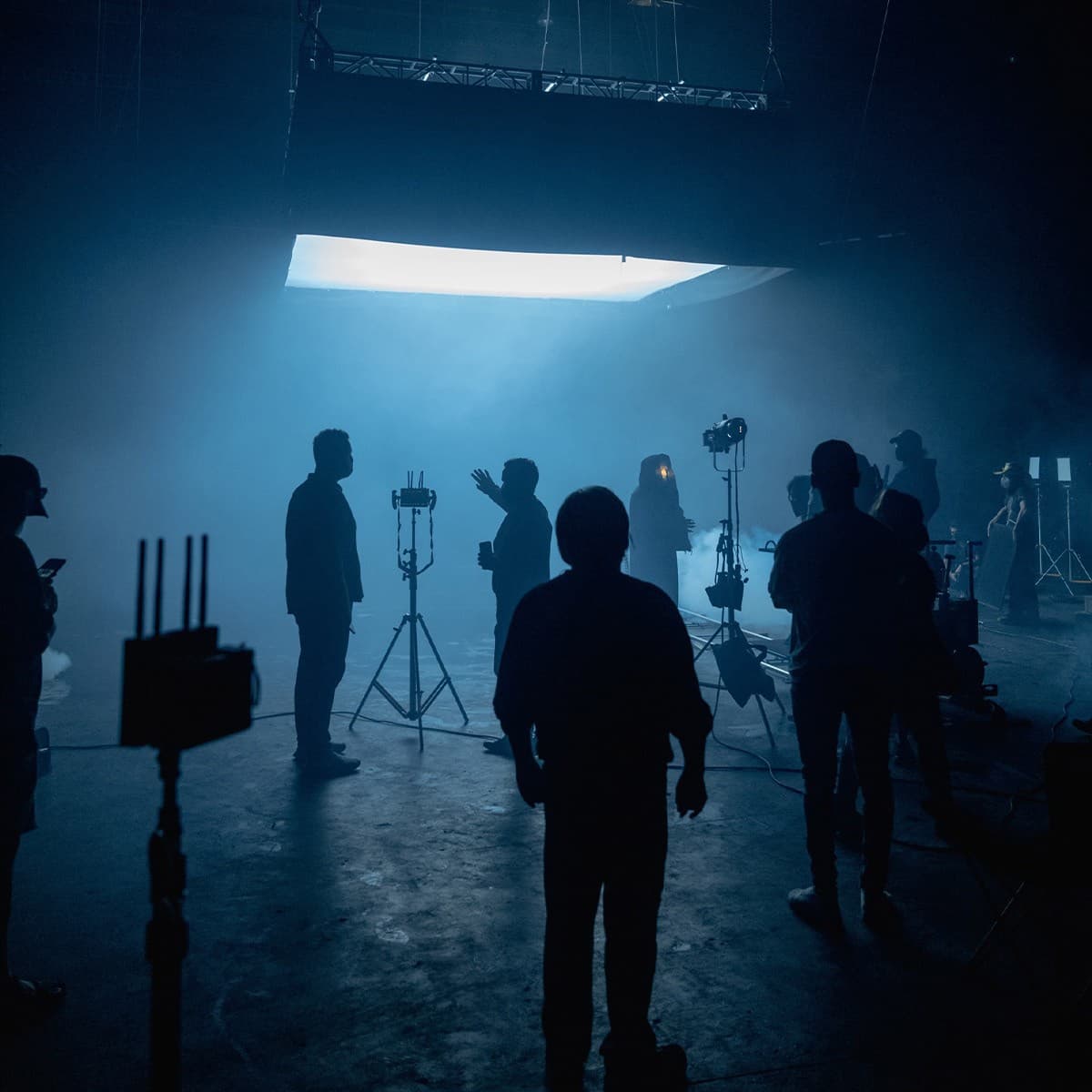
What is a High-Speed Camera Operator?
Overview
What Is a High-Speed Camera Operator?
A high-speed camera operator is a specialized member of the camera department responsible for capturing footage at frame rates far above the standard 24 or 30 frames per second (fps) used in conventional filmmaking. By recording at 120 fps, 1,000 fps, or even higher, high-speed operators create the raw material for cinematic slow-motion sequences — effects that reveal motion invisible to the naked eye, from a water balloon bursting to a stunt performer landing a punch.
On a film or commercial set, the high-speed camera operator works under the Director of Photography (DP) and alongside the regular camera crew. Unlike a standard camera operator whose primary skill is framing and movement, the high-speed specialist brings deep technical knowledge of sensor physics, lighting science, and the specific systems — primarily Vision Research Phantom, Photron, and Weisscam — that make ultra-slow-motion possible.
High-speed work appears across nearly every genre. Feature action films use it for stunt sequences. Sports broadcasters rely on it for instant replay. Automotive commercials depend on it for wheel-spin and spray shots. Nature documentaries deploy it to capture animal movement undetectable at normal speed. Across all these contexts, the operator's role is the same: translate the director's creative vision into technically correct high-speed footage that will cut seamlessly with the rest of the production.
Because high-speed cameras are expensive rental items — a single Phantom Flex4K costs $2,500–$5,000 per day — and require significant additional lighting to achieve proper exposure at high frame rates, high-speed operators are typically brought in as day players or specialty hires rather than permanent crew members. Their expertise makes them uniquely valuable and commands a premium day rate in both union and non-union markets.
Role & Responsibilities
Core Responsibilities on Set
The high-speed camera operator's job begins in pre-production and continues through the wrap of principal photography. Their responsibilities span technical preparation, on-set execution, and post-production handoff.
Pre-Production Planning
Before a single frame is shot, the high-speed operator meets with the DP and director to understand the creative intent of every slow-motion sequence. Key questions include: What frame rate is needed for the desired playback speed? What is the minimum acceptable shutter speed given motion blur requirements? What is the available lighting budget? These conversations determine the camera system to be rented, the lens package, and the lighting plan.
The operator prepares a technical document — sometimes called a "slow-mo breakdown" — listing every intended high-speed shot with frame rate, lens, and light level requirements. This document goes to the gaffer and key grip so they can plan the additional fixtures required. A scene shot at 1,000 fps may require ten to twenty times more light than the same scene at 24 fps, which has significant grip and electric budget implications.
Camera Preparation and Systems Check
On shoot days, the high-speed operator arrives early to complete a full systems check. This includes powering up the camera, confirming firmware versions, calibrating the sensor for the temperature of the shooting environment (high-speed sensors are temperature-sensitive), and running test recordings to verify data throughput. They configure the camera's buffer — high-speed cameras record to an onboard RAM buffer before offloading to storage — and verify that the download pipeline is staffed appropriately.
The operator also works with the 1st Assistant Camera (1st AC) and DIT to establish the data workflow. Because high-speed cameras generate enormous amounts of data in short bursts (a Phantom Flex4K at 1,000 fps fills its 128GB buffer in seconds), managing that data is a critical part of the job.
On-Set Camera Operation
When the shot is called, the high-speed operator frames and operates the camera, often working alongside the regular A-camera and B-camera operators. They communicate closely with the DP on framing choices, since the composition that looks correct at normal speed may need adjustment when the footage will be played back at 4% of its original speed — revealing camera movement, background action, and optical distortions that are invisible at normal frame rates.
The operator triggers the camera at the correct moment relative to the action — a critical skill when the camera buffer fills in two to four seconds. Missing the trigger means missing the shot and waiting for the buffer to download before going again. Expert timing, communication with the 1st AD, and familiarity with the action being filmed are all essential.
Coordination with the Gaffer and Grip Department
Because high-speed work is light-intensive, the camera operator spends significant time collaborating with the gaffer to verify exposure. They take incident light meter readings, reference a monitor calibrated for the specific camera's color science, and frequently run short test bursts to confirm the image before committing to a full take. They communicate light level requirements in foot-candles or lux rather than T-stops alone, helping the gaffer understand exactly what the sensor needs.
Post-Production Handoff
At the end of the shoot day, the high-speed operator works with the DIT and data manager to confirm all footage has been properly ingested, labeled with the correct frame rate metadata, and backed up. Incorrect frame rate metadata is a common and costly error that causes problems in editorial. The operator may also provide a "slow-mo log" — a shot-by-shot record of achieved frame rates, shutter angles, and ISO values — for the editorial team and colorist.
Specialty Applications
Many high-speed operators develop sub-specialties: automotive work (which requires rig and chase vehicle coordination), sports production (live events with multiple camera positions), scientific and industrial imaging (collaboration with engineers rather than creative directors), or virtual production (integrating high-speed capture with LED volume environments). Each sub-specialty comes with its own body of knowledge, equipment set, and professional network.
Skills Required
Technical Skills
High-Speed Camera Systems Expertise
Proficiency with professional high-speed camera platforms is the foundation of this role. The dominant systems in the North American film and commercial industry include:
- Vision Research Phantom: The industry standard for ultra-high-speed work. Models include the Phantom Flex4K (up to 938 fps at 4K), Phantom T1340 (up to 13,500 fps at 1MP resolution), and the more accessible Phantom VEO series. Most high-speed camera operators prioritize Phantom proficiency above all other systems.
- Photron Fastcam: Popular in scientific, industrial, and sports broadcast contexts. Models like the Fastcam Nova and Fastcam Mini AX are common in sports production and automotive testing.
- Weisscam HS-2: A German-manufactured system known for its cinema-grade color science and compatibility with standard cinema lens mounts. Popular in European co-productions and premium commercial work.
- Sony RX0 II and Sony FX6/FX9: Entry-level options for 120–240 fps work, commonly used when full Phantom-level frame rates are not required. Operators working in the broadcast and documentary space frequently need experience with these consumer-adjacent systems.
Frame Rate and Exposure Mathematics
A high-speed camera operator must be fluent in the relationship between frame rate, shutter angle/shutter speed, ISO, and aperture — and how each changes as frame rates increase. Key principles include:
- Every time the frame rate doubles, the light requirement doubles (one stop of additional exposure).
- The 180-degree shutter rule — shutter speed equal to double the frame rate — becomes increasingly impractical at high frame rates, and operators must understand when and how to deviate.
- High-speed sensors generally require lower ISO settings at high frame rates, which further increases the light demand.
- Lens selection must account for the fact that many cinema lenses are not designed for the extreme light throughput required by high-speed work at wide apertures.
Buffer Management and Data Workflow
Unlike conventional cinema cameras, which record to continuous media, most high-speed cameras write to an onboard RAM buffer. Operators must understand buffer depth (how many seconds of footage the camera can hold at a given frame rate and resolution), triggering modes (pre-trigger, post-trigger, center), and the time required to download the buffer before the next take. Managing this workflow efficiently on a busy set is a critical practical skill that separates experienced operators from novices.
Lighting Knowledge for High-Speed Work
High-speed camera operators need a working understanding of lighting sufficient to communicate effectively with the gaffer and specify light levels. Continuous-output lighting — LED fixtures, HMIs, and tungsten — is required for high-speed work. Strobe or pulsed lighting is generally not usable at high frame rates due to the risk of flicker. Operators must also understand color temperature consistency across multiple fixtures, as mismatched color temperatures become pronounced when footage is reviewed frame by frame.
Artistic and Collaborative Skills
Beyond technical competency, the best high-speed operators bring strong compositional instincts. Because slow-motion footage reveals every micro-movement, framing decisions that look fine at 24 fps may need refinement for high-speed work. Operators must anticipate where action will travel across the frame, account for the physics of the specific subject being filmed, and communicate effectively with the director and DP about what the camera will and won't capture at the target frame rate.
Patience and calm under pressure are essential. High-speed setups take longer than standard camera setups, and the pressure to turn around quickly between takes — while waiting for buffer downloads — can create tension on tight schedules. Operators who communicate confidently, manage time expectations clearly, and keep the crew informed earn repeat bookings.
Software and Post-Production Literacy
Familiarity with DaVinci Resolve (for reviewing and grading high-speed footage), Vision Research's Phantom Camera Control (PCC) software, and basic digital asset management is increasingly expected. Operators who understand how their footage will be handled in post — what metadata must be preserved, what color space the colorist expects, what the editorial team needs to work efficiently — add significant value to a production.
Salary Guide
High-Speed Camera Operator Salary and Day Rates
High-speed camera operators are among the highest-paid specialty camera department positions in the industry, reflecting both their technical expertise and the relatively small pool of experienced practitioners. Compensation varies significantly by market, union status, production type, and camera system expertise.
Day Rates by Experience Level
Day rates in the film and commercial industry are the standard compensation unit for camera crew. High-speed operators typically negotiate rates above standard camera operator scales due to their specialized knowledge:
- Entry-level / junior (0–3 years specialty experience): $600–$900/day. Operators at this level typically have camera department backgrounds and can operate the cameras competently but lack the deep troubleshooting and lighting math expertise of seasoned specialists.
- Mid-level (3–7 years specialty experience): $1,000–$1,500/day. Operators at this tier have a track record of credits, strong vendor relationships, and the ability to operate across multiple high-speed platforms.
- Senior / A-list (7+ years, established credits): $1,500–$2,500+/day. Top-tier operators who are sought by name by commercial directors and DPs working on premium automotive, sports, and feature film productions.
These figures reflect base day rates. High-speed operators frequently negotiate additional fees for extended prep days, travel, equipment advisory services, and kit rental if they own accessories that supplement the production's rental package.
Union vs. Non-Union Markets
In union markets, high-speed camera operators working on IATSE-signatory productions are covered under IATSE Local 600 (the International Cinematographers Guild). The Local 600 area standard agreements set minimum rates for camera operators in major markets:
- Los Angeles (Studio Zone): IATSE Local 600 minimum camera operator rate is approximately $63–$75/hour, or roughly $630–$750 for a 10-hour day, as of 2025–2026 agreements. High-speed specialists routinely negotiate above minimums.
- New York: Rates are comparable to Los Angeles, with some variation based on specific agreement type (theatrical film, commercial, television).
- Regional markets (Atlanta, New Mexico, Vancouver-adjacent): IATSE rates exist but are generally lower than LA/NY minimums. Right-to-work states like Georgia have weaker union density, meaning more non-union work at negotiated personal rates.
Non-union productions, including many independent films, branded content, and lower-budget commercials, negotiate directly with the operator. Non-union rates can be higher or lower than union minimums depending on the operator's leverage and the budget of the production.
Annual Income Estimates
Because high-speed camera operators typically work as freelancers rather than salaried employees, annual income depends heavily on bookings, market, and reputation. According to the U.S. Bureau of Labor Statistics (BLS), the median annual wage for camera operators in film and video was approximately $68,810 as of May 2024. High-speed specialists in active markets typically exceed this median due to their premium day rates, though inconsistent bookings can lower annual totals in slower periods.
A well-booked high-speed operator in a major market working 150–200 days per year at $1,000–$1,500/day can earn $150,000–$300,000 annually, placing this specialty among the higher-earning camera department positions.
Market Demand and Career Outlook
Demand for high-speed camera operators is driven primarily by the commercial advertising sector (automotive, sports, fashion, beverage), sports production (broadcast, streaming), and feature film action sequences. The expanding streaming ecosystem — Netflix, Apple TV+, Amazon, Max — has increased total production volume and, with it, demand for specialty camera positions. Operators who develop strong relationships with specific commercial directors and DP teams tend to have the most consistent work.
The introduction of high-speed capabilities into lower-cost mirrorless cameras (Sony FX6 at 120fps, Sony FX9 at 120fps, Canon R5 at 120fps) has reduced demand for Phantom-level operators on lower-budget productions. However, for premium commercial and feature film work requiring 500 fps or above, dedicated high-speed camera systems and their specialist operators remain irreplaceable.
FAQ
Frequently Asked Questions
What is the difference between a high-speed camera operator and a regular camera operator?
A regular camera operator focuses on framing, movement, and storytelling through composition, working at standard frame rates (24–60 fps). A high-speed camera operator specializes in operating cameras at 120–10,000+ fps to create slow-motion footage. The key differences are technical: high-speed operators must understand buffer management, lighting math for high frame rates, and the specific software and hardware of dedicated high-speed camera systems like the Vision Research Phantom. Many camera operators can handle basic high-speed work at 120–240 fps using cinema cameras like the Sony FX9, but extreme high-speed work (500 fps and above) requires a dedicated specialist.
What cameras do high-speed camera operators use most often?
The Vision Research Phantom is the industry standard for professional high-speed work in North America. The Phantom Flex4K reaches 938 fps at 4K resolution and higher frame rates at lower resolutions. The Phantom T1340 achieves 13,500 fps at 1-megapixel resolution. For sports broadcast and scientific applications, the Photron Fastcam Nova is widely used. European productions frequently deploy the Weisscam HS-2. For lower frame rate work (120–240 fps), many operators use Sony, Canon, and Blackmagic cinema cameras with built-in high-speed modes. Camera selection depends on the required frame rate, resolution, and production budget.
How much more light does high-speed filming require?
Significantly more. Every time the frame rate doubles, the camera needs approximately double the light (one additional stop of exposure) to maintain the same image quality. A scene lit for 24 fps at T2.8 would require approximately T2.8 at 10 times the light output to shoot at 240 fps — or the operator must open the aperture or raise ISO, both of which have image quality tradeoffs. At 1,000 fps, the light requirement is roughly 40 times what a 24 fps shot needs at equivalent settings. This is why high-speed days have substantially larger grip and electric budgets than standard shoot days.
Do high-speed camera operators need to be members of IATSE?
Union membership through IATSE Local 600 (the International Cinematographers Guild) is required for work on IATSE-signatory productions, including most major studio films and many high-budget commercials. However, a significant portion of high-speed work — particularly in advertising, branded content, and independent film — occurs on non-union productions where IATSE membership is not required. Many experienced operators maintain their union membership while also taking non-union work between union bookings. Joining Local 600 typically requires accumulating a qualifying number of days worked on signatory productions and paying initiation fees.
What is the career path to becoming a high-speed camera operator?
Most high-speed camera operators follow the traditional camera department ladder: 2nd AC (clapper loader) → 1st AC (focus puller) → camera operator → high-speed specialist. This progression typically takes five to ten years and provides the technical foundation — lens knowledge, camera systems, set protocol — that makes high-speed operation possible. Aspiring specialists should seek out 1st AC or operator roles on productions that use high-speed cameras, ask questions of experienced operators, pursue manufacturer training on Phantom and Photron systems, and build relationships with camera rental vendors who can flag high-speed projects looking for crew.
How do high-speed camera operators manage the camera buffer on set?
High-speed cameras record to an onboard RAM buffer rather than continuous storage media. The operator must know the buffer depth at their target frame rate — for example, a Phantom Flex4K might hold 8 seconds of footage at 500 fps in its standard configuration. They select a trigger mode (post-trigger captures footage after the trigger; pre-trigger captures footage before; center splits the buffer) based on where the key action occurs. After each take, the buffer must be downloaded before the next take, which takes anywhere from 30 seconds to several minutes depending on buffer size and download method. Coordinating this download time with the 1st AD's shot schedule is a critical logistics skill.
Education
Education Pathways for High-Speed Camera Operators
There is no single required degree or certification to become a high-speed camera operator. However, most working operators share a common foundation in cinematography and camera department experience before transitioning into high-speed specialty work.
Film School and Formal Degree Programs
Many high-speed operators begin with a Bachelor of Fine Arts (BFA) or Bachelor of Arts (BA) in Film Production, Cinematography, or a related field. Programs at the American Film Institute (AFI), USC School of Cinematic Arts, NYU Tisch School of the Arts, Chapman University Dodge College, and SCAD consistently produce camera department professionals. These programs provide hands-on training with professional camera systems, lighting theory, and the collaborative workflows of a working set.
Within film school, the most relevant coursework includes:
- Cinematography and camera operations
- Lighting design and exposure theory
- Post-production workflow and editorial
- Color science and digital imaging
- Optics and lens physics
Some programs now offer specific coursework in high-speed and slow-motion cinematography, though this remains rare. More commonly, aspiring high-speed operators develop this specialty through hands-on work after graduation.
Community College and Vocational Programs
For those who pursue a more affordable educational path, community college programs in Film Production or Digital Media provide foundational camera skills at lower cost. These programs are often two-year associate degree pathways that can be combined with industry internships and freelance work to build a professional portfolio.
Vocational programs at schools like Los Angeles City College (LACC) and Santa Monica College have strong industry connections and offer pathways into IATSE membership and union camera departments — the most common entry point for Los Angeles-based high-speed operators.
The Camera Assistant Ladder
The most common path to becoming a high-speed camera operator is through the traditional camera department hierarchy. Most operators begin as a 2nd Assistant Camera (2nd AC), also called a clapper loader, where they learn set protocol, equipment care, and data management. They advance to 1st AC (focus puller), developing deep lens and optics knowledge, then step up to camera operator roles before specializing in high-speed work.
This ladder typically takes five to ten years, though exceptional individuals can accelerate the timeline through high-volume commercial and music video production, where crews are smaller and departments move faster. Working on high-speed-intensive productions — automotive commercials, sports content, action films — is the most direct way to develop high-speed expertise organically.
Manufacturer Training and Certification
Vision Research (makers of the Phantom line), Photron, and Weisscam offer technical training on their camera systems, either through authorized dealers or directly through company representatives. These sessions typically last one to two days and cover camera setup, firmware operation, data management, and troubleshooting. While not required, this training is highly recommended before operating rental systems on professional productions.
Many rental houses — including Keslow Camera, AbelCine, Camtec Motion Picture Cameras, and BorrowLenses — offer demo sessions and introductory training for crew members who rent high-speed systems regularly. Building relationships with these vendors is a practical way to access training and stay current with new camera releases.
On-the-Job Training and Mentorship
The most direct education in high-speed camera operation comes from shadowing or assisting experienced operators on actual productions. Many high-speed operators began by assisting a DP or camera operator who specialized in slow-motion work, learning the technical nuances — buffer management, temperature calibration, lighting math — by watching and doing. Networking through IATSE Local 600 (the International Cinematographers Guild) is one of the best ways to find mentorship opportunities in union markets.

































Budget Templates
Budget crew costs with confidence
Use Saturation to build budgets with accurate crew rates, fringes, and union scales.
Try Free Budget Tool