What is a Media Manager?
Overview
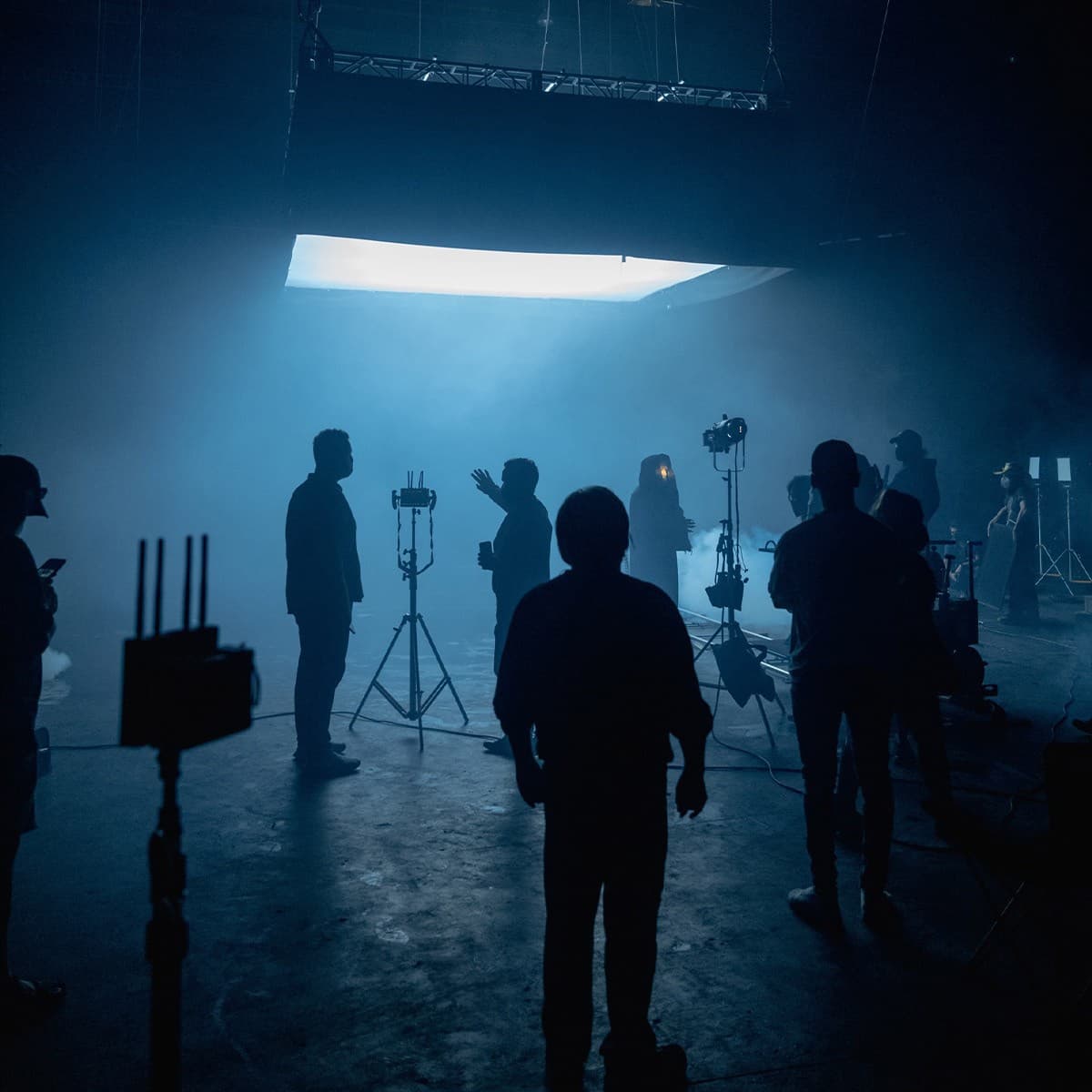
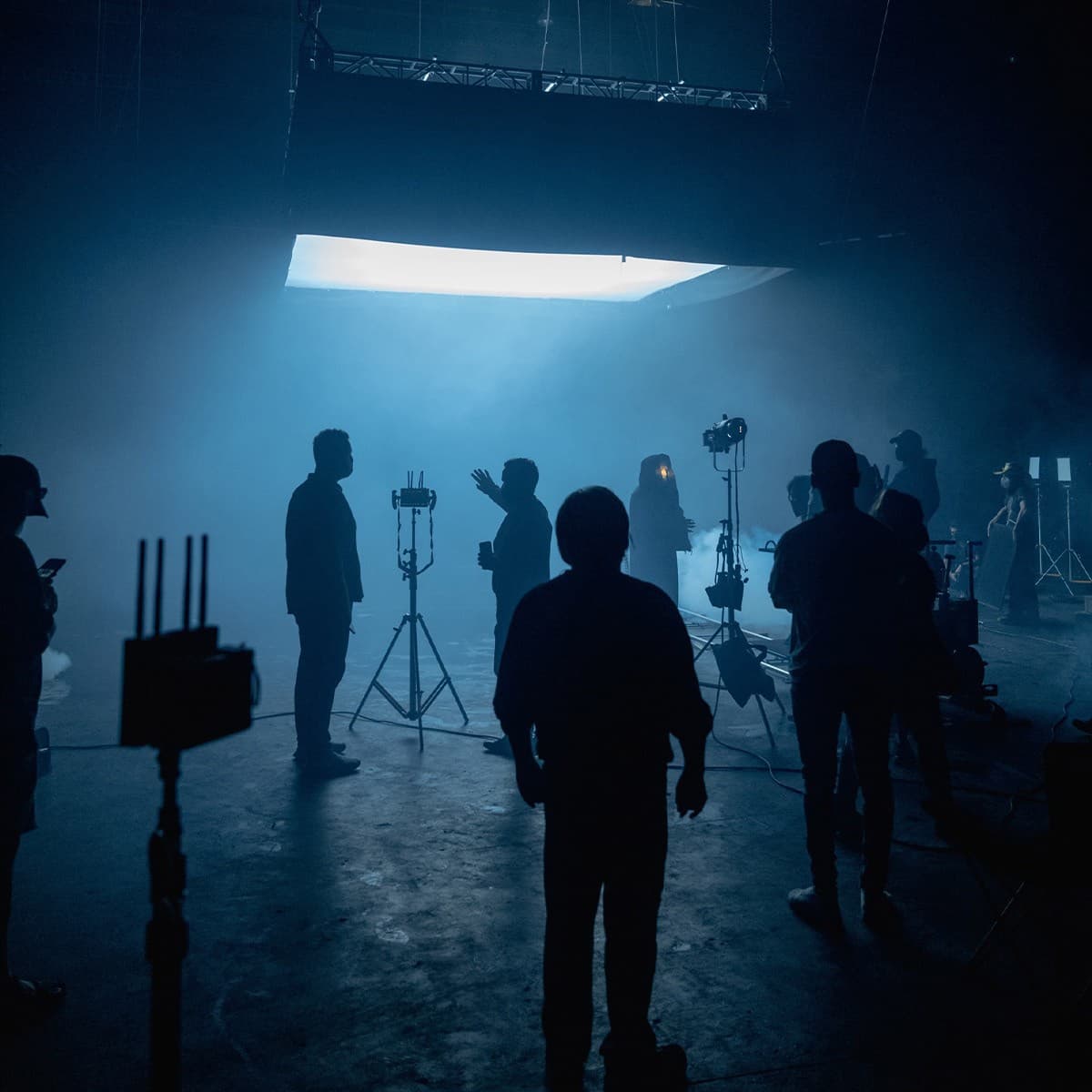
A media manager is a member of the camera department responsible for offloading, backing up, verifying, and organizing all digital camera footage during a film or television production. Every card that leaves a camera body passes through the media manager's hands before it is returned to set. Their work happens between takes and at the end of each shooting day, quietly protecting the footage that every other department spent hours creating.
The role emerged as digital cinematography replaced film stock. When productions moved away from physical reels, the duties of the film loader — the person who handled unexposed and exposed film — evolved into something far more technically demanding. Today's media manager deals with proprietary camera codecs, RAID drive systems, LTO tape archives, proxy generation, and metadata standards that span the entire post-production pipeline.
Where the Media Manager Fits in the Camera Department
The camera department is led by the director of photography (DP), who controls the visual language of the film. Below the DP sits the camera operator, who physically operates the camera, and the first assistant camera (1st AC), who manages focus and camera rigging. The second assistant camera (2nd AC) handles slating, magazines, and camera reports. The media manager sits alongside or just below the 2nd AC, focused entirely on digital media rather than optics or mechanics.
On smaller productions the media manager's duties may be absorbed by the 2nd AC or by a dedicated data wrangler. On larger productions — feature films, episodic television, high-end commercials — the role is its own position with dedicated equipment and a defined chain of command reporting to the 1st AC and ultimately to the DP.
Media Manager vs. DIT vs. Data Wrangler
Three titles are frequently confused: media manager, DIT (Digital Imaging Technician), and data wrangler. They share some tools and workflows but carry distinct responsibilities.
The DIT focuses on image quality — live color management, on-set LUTs, exposure verification, and the technical bridge between set and the colorist in post. The DIT works closely with the DP to ensure the captured image matches the creative intent. A DIT uses tools like Pomfort LiveGrade Pro and communicates directly with the finishing colorist.
The data wrangler is often used interchangeably with media manager, but on some productions the term refers specifically to managing data on larger multi-camera shoots or handling on-the-fly transcoding and proxy delivery. The data wrangler may report to the DIT or directly to production.
The media manager is the custodian of the original camera files (OCF). Their primary concern is data integrity: every byte that comes off a camera card must be verified, duplicated, and logged before that card goes back into a camera. They are the last line of defense against irreversible data loss.
The Digital Media Management Plan
Before cameras roll, the media manager works with the DP, 1st AC, and post supervisor to establish a data management plan (DMP). This document defines how many backup copies are made, where each copy is stored, which drive format is used, how proxies are named and sized, and what metadata accompanies every file. A well-constructed DMP removes ambiguity on set and ensures that the editor, colorist, and VFX department receive organized, clean media from day one.
Managing production workflows digitally is one area where modern software like Saturation.io can help production teams track costs and coordinate departments — keeping the media manager's equipment budget, drive purchases, and overtime clearly visible to the line producer and UPM throughout the shoot.
Why the Role Matters
A single data management error — a failed checksum, an unverified copy, a drive formatted before backup was confirmed — can cost a production hundreds of thousands of dollars in reshoot costs. The media manager's meticulous workflow is the difference between a production that delivers on schedule and one that faces catastrophic loss. They may be invisible in the credits, but their contribution is irreplaceable.
Role & Responsibilities
The media manager's day is structured around the rhythm of the shooting day. Their workflow begins before the first take and ends only after every card has been verified and every drive has been safely stored. Below is a detailed breakdown of each core responsibility.
Camera Card Offloading
When a camera magazine, CF Express card, SxS card, or cFast card is handed over by the 2nd AC, the media manager immediately ingests it into their offload workstation. Speed and sequence matter — cards are logged in the order they are received, matching the camera reports prepared by the 2nd AC. Each card is assigned a unique identifier tied to the roll number, camera designation (A-cam, B-cam, C-cam), reel number, and shooting date.
The offload station is typically a dedicated laptop — often a MacBook Pro or a purpose-built Windows workstation — running Pomfort Silverstack XT or Hedge as the primary ingestion software. The software performs a byte-for-byte transfer from the card to the primary drive while simultaneously generating a checksum (typically MD5 or xxHash). This checksum is the fingerprint that proves the copied file is an exact match to the original.
RAID Backup and Redundancy
After the primary copy is complete and verified, the media manager immediately initiates a second copy to a separate drive system. Professional productions maintain at least three copies of all camera files: a primary working drive, an on-set backup drive, and a vault copy that is geographically separated from the other two — often couriered to the production office or post house at the end of each day.
Drive selection is critical. Media managers typically use high-capacity G-Technology G-RAID, OWC Thunderbay, or Angelbird SSDs for working drives, and LTO tape (Linear Tape-Open) for long-term archival. LTO cartridges offer massive capacity (12-18 TB per tape in LTO-8 and LTO-9 formats), low cost per terabyte, and a verified 30+ year shelf life. Setting up an LTO archive requires an LTO tape drive — commonly an HP StoreEver or Quantum LTO unit — connected via SAS or Thunderbolt, and archival software such as LTFS (Linear Tape File System) or Imagine Products ShotPut Pro.
Checksum Verification
Every transfer must be verified before the original card is formatted and returned to the camera department. The media manager runs a verification pass that compares the checksum of the source file against the checksum of the destination copy. If they match, the transfer is logged as verified. If they do not match, the transfer is flagged, the card is retained, and the offload is repeated. No card is ever reformatted until at least two verified copies exist.
This principle — verify before deleting — is the single most important rule in media management. It is a non-negotiable workflow standard on professional productions regardless of budget level.
Proxy Generation
High-resolution original camera files — ARRIRAW at 4K or 6K, BRAW (Blackmagic RAW), Sony X-OCN, RED REDCODE RAW — are too large for editors to work with in real time without dedicated high-end workstations. The media manager generates proxy files: lower-resolution, compressed versions of the original footage that editors can cut with on standard hardware. Common proxy formats include Apple ProRes Proxy, H.264 at 1080p or 720p, and DNxHD 36.
Proxy generation is done in parallel with the backup workflow using software like Silverstack, Hedge, or DaVinci Resolve. Proxies are named using the same convention as the originals so that re-linking in the editorial application (Avid Media Composer, Adobe Premiere Pro, DaVinci Resolve) is automatic.
Metadata Embedding and Camera Reports
The media manager is responsible for ensuring that every clip carries accurate, consistent metadata: timecode, scene and take numbers, camera designation, lens information, ASC-CDL color values (if coming from the DIT), and any production-specific identifiers required by post. They cross-reference this metadata against the 2nd AC's camera reports and the script supervisor's notes to catch any discrepancies before they reach the editor.
SMPTE metadata standards (particularly SMPTE ST 2067 and MXF interop specifications) define how this information is structured across formats. The media manager must understand these standards well enough to catch and correct metadata errors before files leave set.
Dailies Preparation
On productions using traditional dailies workflows, the media manager prepares a drive or file package that is sent overnight to a dailies facility or post house. This package includes the proxy files, camera reports, sound reports, and any LUT or CDL information provided by the DIT. On productions using cloud-based dailies platforms (Frame.io Camera to Cloud, Hedge Arc, Pomfort Arc), the media manager manages the upload pipeline directly from the media truck.
Multi-Camera Management
On episodic television sets, action sequences, or productions with three or more simultaneous camera units, the media manager must orchestrate the offload of multiple camera bodies running simultaneously. This requires a clear priority system — typically A-cam cards first — and tight communication with each 2nd AC to prevent cards from queuing up faster than the offload station can process them. On very large productions, two media managers may work in tandem.
Chain of Custody Documentation
Every card handoff is documented. The media manager maintains a log — either on paper or in software — that records which cards were received, when they were ingested, when backup was completed, when verification passed, and when the card was returned to the camera department. This chain of custody documentation is essential for resolving disputes about whether a take was ever captured and for insurance purposes in the event of a loss or damage claim.
End-of-Day Drive Management
At the end of each shooting day, the media manager labels, catalogs, and securely stores all drives. Drives heading to post are inventoried, wrapped in static-protective packaging, and handed to a production assistant or production coordinator for transport. Vault copies are stored in a temperature-controlled, impact-resistant case. The media manager's documentation for the day is shared with the post supervisor and the line producer.
Skills Required
Technical Software Skills
Media managers must be proficient with a specific set of software tools that professional productions expect to see in daily use. Competence with these applications is not optional — production companies assume that anyone hired as a media manager can operate them from day one.
Pomfort Silverstack XT: The industry-standard software for on-set media management on high-end productions. Silverstack handles ingestion, checksum verification, metadata management, LUT application, proxy generation, and archive management in a single application. Silverstack XT (the advanced version) adds support for ARRI lookahead metadata, BRAW color science, and advanced CDL workflow. Most feature films and premium television productions specify Silverstack in their DMP.
Hedge: A fast, reliable offload tool that prioritizes simplicity and speed. Hedge is widely used on commercial productions and smaller features where the full Silverstack feature set is not required. It supports xxHash and MD5 verification, simultaneous multi-destination copying, and integration with several camera formats. Hedge's Transfer Monitor provides real-time progress tracking across multiple simultaneous transfers.
Kyno (by Lesspain Software): A media asset management and transcoding tool that many media managers use for proxy generation and metadata editing. Kyno supports a wide range of camera-native formats and integrates with NLEs including Premiere Pro and Avid.
DaVinci Resolve: While primarily known as a color grading application, Resolve is widely used by media managers for proxy generation using the Deliver page, on-the-fly transcoding, and clip organization. Familiarity with Resolve's media management workflows is expected on productions using Blackmagic cameras and increasingly on productions that integrate with the Blackmagic Cloud ecosystem.
ShotPut Pro (Imagine Products): A long-established offload and verification tool that predates both Silverstack and Hedge. ShotPut Pro is still common on lower-budget productions and in markets outside the major film centers. It supports MD5 verification and basic report generation.
YoYotta: A combined offload, archive, and restore application that is particularly strong in LTO tape management. YoYotta is popular with UK-based productions and internationally distributed television series.
Camera Codec Literacy
Understanding the native recording format of every camera on set is fundamental. Media managers must know the file structure, bit depth, color space, and storage requirements of each codec they encounter:
ARRIRAW: ARRI's proprietary raw format. ARRIRAW files (recorded on ALEXA 35, ALEXA LF, ALEXA Mini LF) are large (up to 6K resolution), uncompressed or minimally compressed, and require ARRI-licensed tools to decode. The media manager must understand ARRIRAW's OpenEXR file structure and its relationship to ARRI's LogC3 and LogC4 color science.
BRAW (Blackmagic RAW): Blackmagic's compressed raw format used by URSA Mini Pro, Pocket Cinema Camera, and PYXIS cameras. BRAW is codec-efficient and well-supported in DaVinci Resolve. Media managers should understand BRAW's Constant Quality vs. Constant Bitrate recording modes and their impact on file sizes and storage planning.
ProRes RAW: Apple's raw format, recorded natively by Sony VENICE and FX9 cameras via the Atomos Sumo recorder and on certain Nikon and Panasonic systems. ProRes RAW files require macOS for full decode support, which is a platform consideration the media manager must factor into their workstation setup.
Sony X-OCN (eXtended tonal range Original Camera Negative): Sony's raw acquisition format for VENICE and BURANO cameras. X-OCN offers multiple quality levels (XT, ST, LT) and requires Sony's RAW Viewer or compatible applications for full color science access.
RED REDCODE RAW (R3D): RED's proprietary compressed raw format. R3D files use a wavelet-based compression algorithm and are stored in a specific folder and file structure. REDCODE clips have accompanying .rmd sidecar files — media managers must understand how to copy complete R3D packages without inadvertently separating associated files.
Apple ProRes (4444, 4444 XQ, 422 HQ, 422, LT, Proxy): Many cameras record directly to ProRes variants, which are editorial-ready without transcoding. Understanding the quality hierarchy and appropriate use case for each ProRes flavor is foundational knowledge for any media manager.
Cinema DNG: An open raw format used by Blackmagic and some Sigma cameras. Cinema DNG records individual DNG frames organized into folders rather than single container files, which has implications for how the media manager structures backups and verifies completeness.
RAID and Storage Management
Media managers must understand RAID (Redundant Array of Independent Disks) configurations and be able to configure and troubleshoot them under time pressure:
RAID 0 (Striping): Combines multiple drives for maximum speed but offers no redundancy. Failure of any one drive loses all data. Appropriate only for scratch or working drives, never for backup.
RAID 1 (Mirroring): Writes identical data to two drives simultaneously. Provides redundancy; failure of one drive is survivable. Appropriate for backup destinations.
RAID 5 / RAID 6: Distributes data with parity information across multiple drives. RAID 5 survives one drive failure; RAID 6 survives two. Common configurations for on-set vault drives and post-production storage servers.
The media manager must be able to configure a RAID array using hardware RAID controllers (common in G-RAID enclosures) or software RAID (available in macOS Disk Utility). They must also understand the performance implications of each RAID level relative to the data rate of the cameras they are offloading.
LTO Tape Archiving
Long-term archival on LTO tape is the industry standard for preserving original camera files beyond the production period. The media manager must understand LTFS (Linear Tape File System) — the open file system that makes LTO tapes readable across platforms without proprietary software. Writing an LTFS-formatted tape means any computer with an LTO drive and LTFS drivers can read the archive, which is critical for long-term accessibility.
LTO generation compatibility: LTO drives can read tapes from two previous generations. An LTO-9 drive reads LTO-7 and LTO-8 tapes, but not LTO-6 or older. When planning archival, the media manager must document what generation of drive and media is being used to ensure future readability.
Checksum and Data Integrity
Checksum algorithms — MD5, SHA-256, xxHash — are the verification tools that confirm data integrity. The media manager must understand the difference in speed and collision resistance between these algorithms, why xxHash is faster than MD5 (but MD5 is more universally recognized), and how to interpret and resolve a checksum mismatch. Every professional offload tool uses checksums; understanding them is non-negotiable.
Metadata Standards
SMPTE (Society of Motion Picture and Television Engineers) standards define how production metadata is structured and transported. Relevant standards include SMPTE ST 2067 (Interoperable Master Format), the MXF (Material eXchange Format) container specification, and the ASC-CDL (American Society of Cinematographers Color Decision List) used to transfer color information between set and post. Familiarity with these standards allows the media manager to catch metadata errors before they cause problems downstream.
Color Management Fundamentals
While the DIT owns the color pipeline, the media manager must understand enough color science to handle LUT files, CDL values, and camera-native color spaces correctly. Transferring the wrong LUT with a dailies package — or losing a CDL sidecar — can derail the colorist's workflow and cost the production time. Understanding the difference between a show LUT and a technical conversion LUT, and knowing how to attach them to clips in Silverstack, is a baseline expectation for media managers on high-end productions.
Networking and Cloud Workflows
Modern productions increasingly use cloud-based media workflows. Frame.io Camera to Cloud allows cameras to upload proxies in real time via cellular or WiFi, enabling editors and directors to review footage remotely. Pomfort Arc and Hedge Arc provide cloud-connected archive and proxy delivery pipelines. The media manager must be comfortable configuring and monitoring these systems, managing upload bandwidth on location, and troubleshooting connectivity issues that can interrupt critical dailies pipelines.
Salary Guide
Media Manager Salary Overview
Media managers in film and television production are almost universally paid on a day-rate or weekly-rate basis rather than as annual salaried employees. Compensation varies significantly by production budget, market, union status, and the media manager's experience level. The following figures represent market conditions as of 2025-2026.
Day Rates by Experience Level
Entry Level / Data Wrangler (0-2 years experience): $250-$400 per day on non-union productions. Work at this level typically comes from student films, music videos, low-budget indie features, and regional commercial productions. Hours are long (12-14 hours is standard), and the rate rarely comes with overtime protections outside of union contracts.
Mid-Level Media Manager (2-5 years experience): $400-$650 per day on non-union features and mid-budget television. At this level, the media manager has multiple production credits, software certifications (Pomfort Silverstack, Hedge), and a track record of working with professional camera systems including ARRI, RED, and Sony VENICE.
Senior Media Manager (5+ years, major productions): $650-$900+ per day on high-budget feature films and premium television series. Senior media managers on large productions — episodic series with multiple simultaneous camera units, action films with complex multi-format workflows — command rates at the top of this range. Rates above $900/day are achievable on studio features in major markets.
Weekly Rates
Productions that guarantee a minimum number of consecutive shooting days typically negotiate a weekly rate, which offers a modest discount relative to the daily rate in exchange for the guaranteed booking. Weekly rates for experienced media managers typically run $2,500-$4,500/week, depending on experience and market.
Union Rates — IATSE Local 600
On IATSE Local 600 contracts (covering the International Cinematographers Guild), media management positions fall under the Digital Imaging Technician or Camera Loader wage scales. Exact minimums are negotiated in the master collective bargaining agreement between IATSE and the Alliance of Motion Picture and Television Producers (AMPTP).
As a general reference, IATSE Local 600 minimums for camera department crew on major studio features start around $3,200-$3,800/week for loader and utility classifications and scale upward based on zone, production budget, and scale type. Union rates provide overtime protections, meal penalty provisions, and defined turnaround periods that are not available on non-union productions. For exact current minimums, contact IATSE Local 600 directly at local600.org.
Annual Income Estimates
Because media managers are freelance workers who book productions sequentially rather than working year-round for a single employer, annual income is highly variable. A media manager who works consistently throughout the year can realistically earn the following:
Entry Level (consistent bookings): $45,000-$65,000/year. At $300/day and 180 working days per year, this tier produces approximately $54,000 in gross income before taxes and equipment costs.
Mid-Level (consistent bookings, mid-budget productions): $70,000-$110,000/year. At $500/day and 200 working days, gross income reaches $100,000. This is a realistic target for a media manager with 3-4 years of credits working primarily in a major market.
Senior Level (premium productions): $120,000-$175,000/year. Senior media managers on back-to-back studio productions in Los Angeles or New York can reach this tier, particularly when including overtime, additional compensation for multi-camera management, and equipment rental fees.
Equipment Rental Income
Many experienced media managers own their own offload kit — a configured MacBook Pro or workstation, RAID drives, LTO tape drive, cables, and licensed software — and rent this equipment to the production in addition to their personal day rate. Equipment rental fees for a complete media management kit typically run $150-$300/day, adding meaningfully to annual income for media managers who have invested in their own gear.
Market Comparison
Los Angeles: The highest rates in the industry, driven by the density of major studio productions. Non-union rates at the mid and senior levels are competitive with IATSE minimums in other markets.
New York: Comparable to Los Angeles for premium productions. Strong union presence (IATSE Local 600 east coast). Growing demand driven by streaming platform investment in New York-based productions.
Atlanta / Georgia: The third-largest production market in North America due to Georgia's 30% transferable tax credit. Rates run approximately 15-25% below LA/NY equivalents. Non-union productions are more common than in LA or NY, but IATSE is expanding its presence in the market.
New Mexico / Albuquerque: Growing market driven by Netflix, Amazon, and Sony productions attracted by New Mexico's 25-35% film tax credit. Day rates are approximately 20-30% below LA equivalents.
Regional Markets: Outside major production hubs, day rates for media managers can be significantly lower — $200-$350/day for non-union work. Budget constraints in regional markets often result in the media manager role being absorbed by the 2nd AC or a production assistant.
BLS Reference
The U.S. Bureau of Labor Statistics classifies film and video editors and camera operators under SOC code 27-4030. The BLS reports a median annual wage of approximately $68,810 for camera operators and related roles (May 2024). Media managers fall within this occupational grouping. Note that BLS figures are based on reported W-2 wages and may underrepresent total compensation for freelance workers who report income on Schedule C.
FAQ
What does a media manager do on a film set?
A media manager offloads camera cards from the camera department, backs up the footage to multiple drives, verifies every copy using checksum software, generates proxy files for editorial, embeds and checks metadata, and prepares the dailies package for delivery to post. They are responsible for the physical safety and data integrity of all original camera files throughout the shooting day.
What is the difference between a media manager and a DIT?
A DIT (Digital Imaging Technician) focuses on image quality: live color management, LUT application, exposure verification, and the color pipeline between set and post-production. A media manager focuses on data integrity: backing up, verifying, and organizing the original camera files. On smaller productions one person may perform both roles. On larger productions they are separate positions with distinct responsibilities.
What is the difference between a media manager and a data wrangler?
The terms are often used interchangeably. When a distinction is made, "data wrangler" typically refers to the same role on mid-budget productions, while "media manager" implies a more senior or formalized position. Some productions use "data wrangler" to describe someone who manages transcoding and proxy workflows on multi-camera shoots, reporting to the DIT rather than directly to the 1st AC.
What software does a media manager use?
The primary tools are Pomfort Silverstack XT (the industry standard for high-end productions), Hedge (widely used on commercials and mid-budget features), DaVinci Resolve (for proxy generation and color management), and YoYotta or LTFS tools for LTO tape archiving. Checksum verification is built into all of these applications. Kyno and ShotPut Pro are also common in certain markets and production types.
How much does a media manager make per day?
Day rates range from $250-$400/day for entry-level data wranglers on non-union productions, to $400-$650/day for mid-level media managers, to $650-$900+/day for experienced media managers on studio features and premium television in major markets. Union rates under IATSE Local 600 provide defined minimums plus overtime protections, meal penalties, and turnaround provisions.
What union does a media manager belong to?
Media managers on union productions typically work under IATSE Local 600, the International Cinematographers Guild, which covers the camera department including the DP, camera operators, 1st ACs, 2nd ACs, loaders, and digital imaging crew. Permit status allows crew to work union productions while working toward full membership qualification days.
How do you become a media manager in film?
The most common path is: start as a production assistant on camera-heavy productions, cross-train into the camera department as a loader or 2nd AC, then offer to serve as a data wrangler on student films and low-budget productions to build hands-on media management experience. Complete Pomfort Silverstack certification and attend DIT workshops at ColorSynth or Filmmakers Academy. Build a credit list and personal kit, then apply for paid media manager positions on mid-budget features and episodic television.
Is media management a good career in film?
Media management offers strong earning potential for technically inclined crew members who prefer a defined, systematic role over the more physically demanding grip or electric departments. The role is in consistent demand as long as digital cinema cameras produce data that must be managed. Career growth paths include DIT, post supervisor, and digital workflow consultant. The role requires constant learning as camera technology and offload software evolve.
Education
Do You Need a Degree to Become a Media Manager?
There is no mandatory degree requirement for working as a media manager in film and television production. The role is fundamentally skills-based: employers care that you know the software, understand data integrity principles, and have demonstrated that you can keep original camera files safe under pressure. That said, formal education in digital media, film technology, or computer science can accelerate your path to the role by giving you a structured environment in which to learn the underlying concepts before applying them on set.
Relevant Degree Programs
If you are considering formal education as a pathway into media management, the following degree types are most directly applicable:
Film Production / Cinematography (BFA or BA): Programs at schools like Chapman University's Dodge College of Film and Media Arts, NYU Tisch School of the Arts, USC School of Cinematic Arts, and AFI Conservatory give students hands-on experience with professional camera systems and digital workflows. Many include dedicated coursework in data management, DIT workflows, and post-production pipelines. These programs are expensive but build strong industry networks.
Digital Media Technology / Film Technology (BAS or AS): Community colleges and technical schools often offer two-year programs focused on digital production infrastructure. Schools like Los Angeles City College, Santa Monica College, and Savannah College of Art and Design (SCAD) offer courses that cover camera department workflows at a practical level and at a lower cost than four-year film schools.
Computer Science or Information Technology: Because media management is fundamentally a data management discipline, a background in computer science — especially storage systems, file systems, and networking — is highly transferable. IT professionals who develop an interest in film production can pivot into media management more quickly than most candidates.
Specialized Training Courses
The most direct path into media management for most people is a combination of short-form technical training and entry-level set work. Several organizations offer dedicated DIT and data management training:
Pomfort Academy: The makers of Silverstack and LiveGrade — the two most widely used tools in professional data management and DIT workflows — offer training courses and certification programs online and in-person. Completing Pomfort's Silverstack certification demonstrates to production companies that you can operate the software that the majority of high-end productions rely on.
ColorSynth: ColorSynth runs DIT training workshops focused on color-managed workflows, LUTs, and camera codec literacy. These workshops attract working professionals and are taught by experienced DITs and colorists with major studio production credits.
Filmmakers Academy: Filmmakers Academy offers online courses covering digital cinema workflows, data management, and camera department operations. Their content is practical and production-focused rather than academic, making it useful for people already working in adjacent roles who want to formalize their knowledge.
ARRI Media Training: ARRI periodically offers workshops on ALEXA camera systems and ARRIRAW data management. Attending an ARRI workshop signals familiarity with the cameras most commonly found on high-budget productions.
Blackmagic Design Training: Blackmagic offers free training materials and certification programs for DaVinci Resolve, which is widely used for proxy generation and on-set color management. A DaVinci Resolve certification adds credibility with post supervisors and DITs.
Career Path: From PA to Media Manager
1. Production Assistant (PA) on camera-heavy productions: Starting as a PA gives you set access and the opportunity to observe the camera department's workflow firsthand. Volunteer to help the 2nd AC with card returns and camera reports. Offer to assist the media manager or data wrangler with labeling and logging during lunch or between setups.
2. Loader / 2nd AC: Transitioning into the camera department as a loader or 2nd AC gives you direct experience handling camera magazines, maintaining card logs, and executing camera reports. Many media managers came up through the loader path and cross-trained into data management as the industry went digital.
3. Data Wrangler on smaller productions: Once you have basic set experience, offer to serve as a data wrangler on student films, low-budget features, music videos, and commercials — even for free initially. This is where you build your first real media management experience under live production conditions.
4. Media Manager on mid-budget productions: With verified credits as a data wrangler, you can begin applying for paid media manager positions on mid-budget feature films, episodic television pilots, and commercial shoots. Your credit list, software certifications, and references from 1st ACs and DPs will carry your application.
5. DIT (optional advancement): Media managers who develop a deep interest in color science and image pipeline management may choose to cross-train into DIT work. The DIT role is higher-paying and more creatively engaged, but it requires a significantly deeper understanding of color management, HDR, and display calibration.
IATSE and Union Membership
On union productions, media managers typically work under IATSE Local 600 (the International Cinematographers Guild), the same union that covers DPs, camera operators, and 1st ACs. Local 600 has two membership tiers: the Permit Roster (for non-members working their way toward full membership) and the Roster (full members). To qualify for full membership, you must accumulate a minimum number of days worked under a Local 600 contract. The path to union membership through data management and media management work has become more defined in recent years as the category has grown.





























Budget Templates
Budget crew costs with confidence
Use Saturation to build budgets with accurate crew rates, fringes, and union scales.
Try Free Budget Tool